

19 Neutral Fall Kitchen Decor Ideas 2026 for an Elegant Home
The kitchen is the heart of the home, and when autumn arrives it becomes the warmest room in the house: soup simmers on the stove, bread cools on the counter, and everyone gathers where the food is. Decorating a kitchen for fall does not mean covering it in orange plastic pumpkins. A neutral palette of oatmeal, cream, beige, stone grey and warm wood lets texture and light do the work, so the room feels seasonal without feeling themed. The kitchen is also a working room, so every idea below earns its place: it either makes cooking easier, hides clutter, or adds warmth without getting in the way. If you want more fall ideas for the rest of the cooking space, our 21 fall kitchen decor ideas cover cabinets, counters and islands in the same calm spirit. Below are nineteen ideas, from linen tea towels to window treatments, that bring a quiet, elegant autumn into the kitchen.
1. Linen Tea Towels in Oatmeal
Hang fresh linen tea towels in oatmeal and sand tones from the oven handle, a cabinet knob, or a small hook beside the sink. Linen softens with every wash, and its slightly slubbed texture adds a handmade feel that contrasts beautifully with hard surfaces like stainless steel, stone and tile. Choose towels in a plain weave or a subtle stripe, and keep the palette to two or three closely related neutrals so the effect stays calm rather than busy. Wash new linen towels twice before hanging them, since the fibres relax and the drape improves.

Rotate two or three towels through the week so one is always clean and one is always on display. Fold them in thirds and drape them evenly, or roll them and stand them in a small basket on the counter. Avoid bright prints and novelty slogans; the oatmeal tones themselves are the decoration. At the end of the season, linen towels wash well and store flat, ready for next autumn.
2. Wooden Cutting Board Display
Lean a large wooden cutting board against the backsplash, or hang two or three boards of different sizes on wall hooks beside the stove. Wood brings instant warmth to a kitchen full of hard, cool surfaces, and a well-used board with a rich patina looks better than a brand-new one. Mix pale maple with darker walnut and olive wood so the display has depth, and keep the boards where you can reach them, because the best kitchen decor is the kind you actually use.

Oil the boards with food-safe mineral oil once a month so the wood stays hydrated and does not crack in dry autumn air. Stand the largest board at the back and layer smaller ones in front, then add a small pumpkin or a jar of dried stems beside them for a seasonal touch. Avoid hanging boards above the stove, where steam and heat can warp them, and keep them away from the sink splash zone so they dry properly between uses.
3. Ceramic Canisters in Matte White
Store flour, sugar, oats and coffee in matte white ceramic canisters with wooden or bamboo lids. The soft, chalky finish of matte ceramic suits a neutral kitchen far better than glossy plastic, and a row of matching canisters turns open shelving into a calm, organised display. Label each one with a small tag or a handwritten chalk label so you can find what you need without opening every lid.

Choose canisters in two sizes only, a tall one for flour and a shorter one for sugar and tea, so the group looks deliberate rather than random. Keep them within arm’s reach of the worktop where you bake, and wipe the lids weekly, since flour dust settles fast. If your canisters have rubber seals, check them each season so dry goods stay fresh, and keep a small scoop inside the flour jar for easy measuring.
4. Dried Eucalyptus in Glass Jars
Place small bunches of dried eucalyptus in clear glass jars or bottles on the windowsill, the island, or an open shelf. The silvery-green leaves hold their colour for months, and their faint, clean scent suits a kitchen far better than a heavy floral fragrance. Use jars of different heights, a tall bottle for a long stem and a squat jar for a short bunch, and let the stems lean at a gentle angle rather than standing bolt upright.

Keep dried eucalyptus away from the hob and the toaster, since dried leaves are flammable, and give the jars a shake outdoors every few weeks to drop loose leaves before they fall on the worktop. The same soft green works beautifully in the bedroom too, and our 17 autumn bedroom ideas show how to carry it through the house. When the leaves fade, compost them and cut a fresh bunch for winter.
5. Woven Basket Fruit Bowl
Swap a wire or ceramic fruit bowl for a shallow woven basket in seagrass, rattan or water hyacinth. The open weave lets air circulate around the fruit, which keeps it fresher for longer, and the natural fibre adds a warm, harvest-time texture to the countertop. Choose a basket with low sides so apples, pears and small pumpkins sit in a single visible layer rather than piling up and bruising.

Line the basket with a folded linen napkin in oatmeal or cream so the fruit does not sit directly on the weave, and change the napkin weekly. Keep the basket near the centre of the island or the end of the counter where it is easy to reach, and refill it with seasonal fruit, apples, pears and clementines in autumn. A basket that is half full always looks better than one that is overflowing, so shop little and often.
6. Beige Stoneware Dinnerware
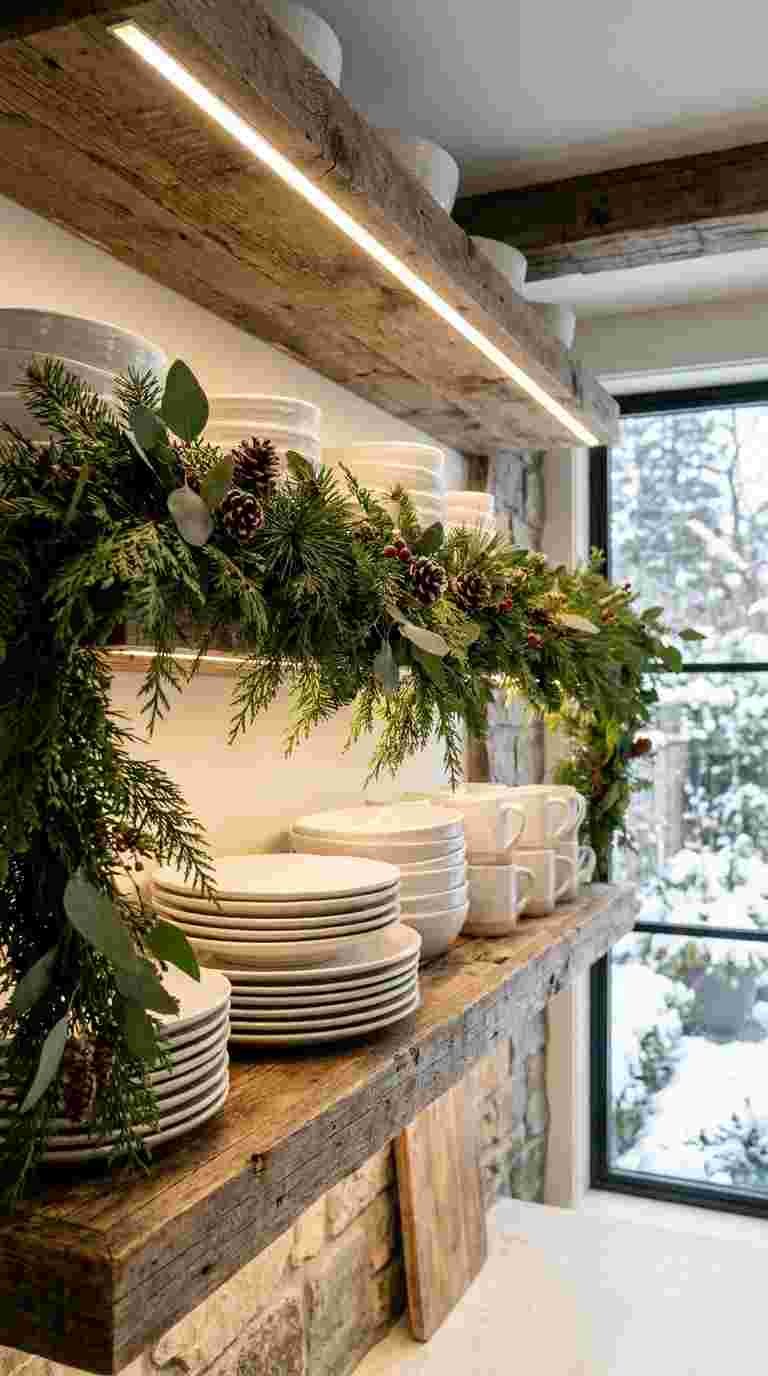
Stack beige stoneware plates and bowls on open shelving or in a glass-fronted cabinet so the soft, speckled glaze becomes part of the kitchen’s decoration. Stoneware has a handmade, slightly irregular feel that suits autumn cooking, it looks right holding soup, stew and roast vegetables, and a single neutral colour keeps a full shelf calm instead of chaotic. Mix dinner plates, side plates and bowls in the same glaze so the set reads as one family.

Store the plates you use every day at shoulder height and the rarely used serving pieces higher up, so the shelf works as well as it looks. Stoneware chips if it is knocked against a hard edge, so slide plates out rather than lifting a whole stack. Wash the pieces by hand when you can, since a dishwasher’s harsh cycle can dull a matte glaze over time, and keep one or two spare bowls for guests.
7. Brass Hardware Accents
Swap standard cabinet handles for brushed brass or antique gold knobs and pulls. The warm metal glows against white, cream or pale grey cabinets and gives a plain kitchen an instant sense of age and craft, like a piece of jewellery on a simple outfit. Choose one finish and use it on every door and drawer so the effect is consistent, and match the knobs to the tap or the light fittings if you can.

Measure the existing screw holes before you order, since most replacement handles use the same standard spacing and you will not need to drill new holes. Keep the old handles in a labelled bag in case you move house, and polish brass with a soft cloth and a little warm soapy water rather than a harsh cleaner, which can strip the finish. Brushed brass hides fingerprints far better than polished chrome, which is a real advantage in a busy kitchen.
8. Neutral Runner Rug
Lay a narrow runner rug in jute, wool or a flat-weave cotton in front of the sink or the stove, where you stand longest. A runner softens hard tile or wood floors, warms bare feet on cold autumn mornings, and adds a band of texture that pulls the kitchen together. Choose a pattern so subtle it reads as a texture, a fine stripe, a small diamond, a tone-on-tone weave, and keep the colours to oatmeal, stone and warm grey.

Measure the space before you buy, leaving at least fifteen centimetres of bare floor on each side so the rug looks placed rather than crammed in. Use a non-slip underlay, especially on tile, and shake the runner outdoors weekly since kitchen rugs collect crumbs fast. A washable cotton runner is the practical choice near the sink, while a wool runner suits a drier spot by the island, where it will last for years.
9. Stone Mortar and Pestle
Keep a stone mortar and pestle on the counter as a working sculpture. Granite or marble in grey, white or black suits a neutral kitchen, and the heavy, cool stone looks beautiful beside wooden boards and ceramic jars. Use it for grinding whole spices, crushing garlic with salt, or making a small batch of pesto, and it will earn its place on the worktop every week rather than sitting there as pure decoration.

Season a new granite mortar by grinding a handful of dry rice to a powder and discarding it, which removes stone dust and smooths the bowl. Rinse it with warm water and let it dry completely before storing, and never use soap on unsealed stone, since it can absorb the taste. Keep the pestle inside the bowl so the pair reads as one object, and place it near the spice jars so the whole prep zone works together.
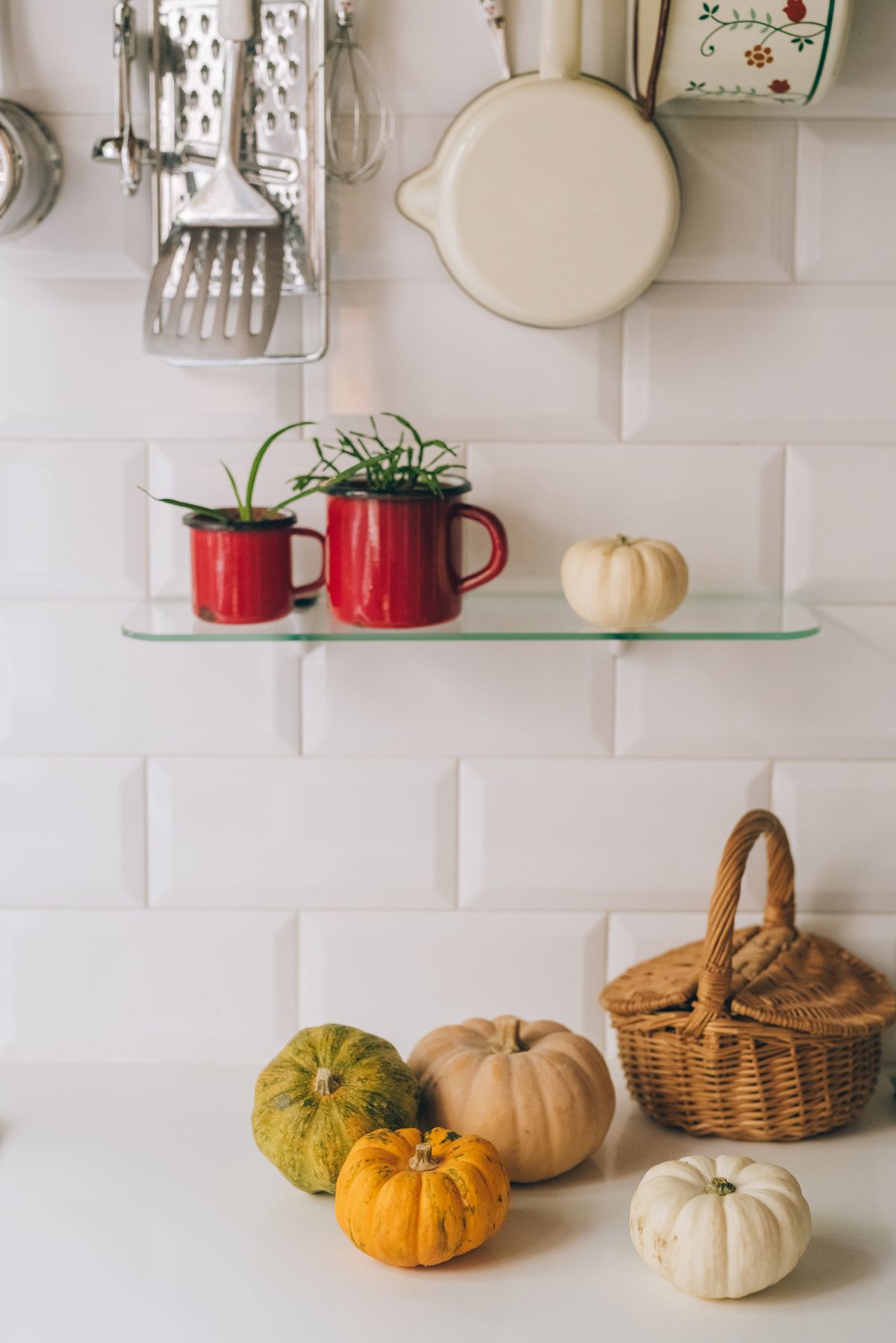
10. A White Pumpkin Container on the Counter
Set a white pumpkin-shaped container with a lid on the counter or the island, and use it to hold sugar cubes, wrapped caramels, or a few small treats for the family. The pumpkin form is unmistakably autumnal, but the clean white finish keeps it elegant rather than novelty, and a lidded container looks tidy in a way an open bowl never does. Place it beside the coffee machine or the tea tray, where it becomes part of the morning routine.

Fill the container with something you actually use, so it is opened daily and never becomes a dust trap. A glass cloche works the same way for a small display, a few pinecones, a candle, or a cluster of small gourds under the dome, and the glass keeps the arrangement clean. Keep lidded containers away from the hob, where heat can crack ceramic, and wash the lid weekly since sugar dust sticks to it.
11. Wooden Utensil Holder
Fill a tall crock, jar or wooden container with wooden spoons, spatulas, tongs and whisks, and keep it beside the stove where you cook. Wooden utensils are gentle on pans, do not melt or scratch, and their warm honey tones soften a kitchen full of steel and stone. Choose a holder wide enough that the utensils stand upright without crowding, and keep the ones you use daily at the front.

Wash wooden utensils by hand and dry them straight away, since a dishwasher can split the wood and leave it rough. Oil them lightly with food-safe mineral oil every few months so they do not dry out, and replace any spoon with a crack, since bacteria can hide in it. A ceramic or stoneware crock is easy to wipe clean, while a wooden holder matches the utensils and adds to the natural, layered look.
12. Minimalist Wall Clock
Hang a large minimalist wall clock with a plain face and a slim wood or black metal frame above the dining nook, the island, or a free stretch of wall. A clock is one of the few decorative objects a kitchen genuinely needs, and a quiet, uncluttered design suits a neutral palette far better than a busy novelty face. Choose a diameter of at least thirty centimetres so it reads clearly from across the room.

Hang the clock at eye level when you are standing at the counter, and keep it away from steam above the hob, which can fog the glass and damage the movement. A silent sweep movement is worth the small extra cost in a room where you eat, and a clock with a second hand helps when you are timing pasta or baking. The same calm, functional approach works in the living room too, as our 21 fall living room ideas show.
13. A Fresh Pumpkin on the Cutting Board
Set a single fresh pumpkin on a wooden chopping board on the counter or the island, and let it be the kitchen’s autumn centrepiece. One pumpkin, chosen for a good shape and a strong stem, has more impact than a crowd of small ones, and the warm orange against pale wood is the classic harvest contrast. Choose a pumpkin that sits flat without wobbling, and wipe it clean with a damp cloth before you display it.

Keep the pumpkin out of direct sun and away from the heat of the oven, since warmth speeds up softening, and turn it every few days so no one side sits damp against the board. When the season ends, cook with it, pumpkin soup, roasted seeds, or a simple puree, rather than throwing it away. A cutting board with a juice groove is ideal, since it catches any moisture and protects the worktop underneath.
14. Cork Coasters
Set cork coasters on the kitchen table, the island or a coffee station to protect the surface from mugs and glasses. Cork has a warm, natural feel that balances the coolness of stone and stainless steel in a neutral kitchen, and its soft brown tone sits comfortably beside wood, linen and marble. Choose coasters with a smooth, natural cork surface so they cushion mugs and absorb the small drips and condensation that would otherwise mark the table.

Keep a stack of four or six coasters in a small holder or a linen pouch beside the kettle, so they are always within reach and never scattered across the counter. Wipe them with a damp cloth and dry them straight away, since cork can stain if tea or coffee sits on it. If a coaster starts to crumble at the edge, replace it, and replace any coaster that wobbles, since an uneven coaster will rock a full mug.
15. Cream-Colored Appliance Accents
Choose small appliances in cream, matte white or pale beige, a kettle, a toaster, a stand mixer, so the tools you leave on the counter become part of the decoration rather than a visual interruption. Cream appliances warm up a white kitchen and blend into a beige one, and a matching pair, such as a kettle and a toaster in the same finish, looks deliberate and calm. Keep the appliances you use daily on the counter and store the rest.

Wipe cream enamel weekly with a soft cloth, since fingerprints and splashes show more on a pale finish than on stainless steel, and avoid abrasive pads that can scratch the coating. If you are not replacing appliances, a cream kettle cover or a linen cloth draped over a toaster achieves a similar softening effect. Better Homes & Gardens has useful guides to styling small appliances so they look intentional rather than cluttered.
16. Hanging Herb Garden
Hang a small rail, a floating shelf or a row of hooks beside a sunny window and fill it with pots of fresh herbs, rosemary, thyme, sage and parsley are the autumn staples. Fresh herbs add a living green note to a neutral kitchen, and snipping a sprig while you cook is one of the small pleasures that makes a kitchen feel loved. Use matching terracotta or cream pots so the display reads as one idea rather than a jumble.

Give each herb its own pot with drainage, since herbs hate sitting in water, and water them only when the top of the soil feels dry. Rosemary and thyme like sun and little water, while parsley and basil want more moisture, so group them by their needs rather than by their looks. Pinch the tips regularly to keep the plants bushy, and bring the pots indoors before the first frost if they have spent the summer outside.
17. Textured Placemats
Lay woven placemats in cotton, linen or jute on the dining table or the island for every meal, even a quick breakfast. Placemats protect the table, define each place setting, and add a layer of texture that makes a plain table look considered. Choose a tight weave in oatmeal, natural or stone grey, and keep the shape simple, rectangles for a rectangular table, rounds for a round one, so the setting feels calm.

Shake placemats outdoors after meals and wash them weekly, since food and drink spill on them daily. A set of six matching mats is enough for most tables, and a contrasting table runner down the centre adds a second layer without competing. Store spare mats flat in a drawer rather than folded, so they do not crease, and replace any mat with a stain that will not wash out, since a marked mat undermines the whole table.
18. Stone Soap Dispenser
Replace a plastic soap bottle with a refillable stone or ceramic dispenser at the kitchen sink. A solid, weighty dispenser in grey stone, speckled ceramic or matte white turns a purely practical object into a small piece of sculpture, and it sits comfortably beside a marble backsplash or a wooden draining board. Choose a pump that delivers a smooth, even dose, and fill it with a mild, unscented soap so the kitchen does not smell of perfume.

Refill the dispenser from a large bottle kept under the sink, which saves money and reduces plastic waste, and rinse the pump mechanism monthly so it does not clog. Wipe the dispenser dry after use, since water spots show on stone, and keep a matching hand cream or a small dish for a sponge beside it so the whole sink area reads as one tidy group. If the pump stiffens, soak it in warm water for ten minutes.
19. Neutral Window Treatments
Dress the kitchen windows with Roman shades or simple linen curtains in a light, natural fabric. A soft window treatment filters the low autumn light, adds privacy without blocking the view, and introduces a textile note that balances all the hard surfaces in a kitchen. Choose a fabric that lets light through, a loose linen weave or a sheer cotton, and keep the colour to white, oatmeal or pale stone so the window does not dominate the room.

Mount the shades inside the window frame for a tailored look, or hang curtains on a slim rod just above the frame so the window appears taller. Wash linen curtains at the start of the season, since kitchen windows collect grease and steam, and keep the fabric clear of the hob and the sink splash zone. A simple tie-back lets you pull the curtains aside on bright days and close them for privacy in the evening.
Cultivating Quiet Sophistication
A neutral fall kitchen works because it lets texture, light and a few well-chosen objects do the talking: oatmeal linen, pale wood, matte ceramic and the soft green of herbs are enough. Start with the pieces that solve a real problem, a runner where you stand, a holder for the utensils, a dispenser at the sink, and add the decorative layers once the practical ones work. Keep the palette warm, the counters clear, and the herbs watered, and the kitchen will feel like the heart of the home all season. The same calm, layered approach works at the front door too, and our 17 fall entryway decor ideas show how to carry that warm welcome from the threshold into the kitchen. However you style it, let your kitchen be a place the whole household gathers around.
If you are working to a budget, start with the cheapest swaps first: linen tea towels, a woven basket for fruit, and a bunch of dried eucalyptus cost very little and change the room immediately. Save the bigger changes, such as brass hardware or new window treatments, for a second round once you have lived with the smaller ones for a few weeks. Shop your own home before you buy anything new, a wooden board from the pantry, a ceramic jar from a cupboard, or a plant from another room can all find a new purpose in the kitchen.
When the room is finished, step back and look at it as a whole. If a surface feels crowded, remove one object; a kitchen that breathes looks more expensive than one that is full. Leave at least one stretch of clear worktop so cooking stays easy, and keep the strongest autumn colours, the orange pumpkin, the green herbs, to one or two spots rather than spreading them everywhere. A neutral kitchen does not need to shout about autumn; it only needs to feel warm, calm and ready for the season ahead.
A final note on keeping it fresh: swap the fruit in the basket and the herbs on the rail each week, and change the tea towels as often as you change the bed linen. A neutral kitchen stays elegant only when it stays clean, so wipe the canister lids, shake the runner, and dust the clock face as part of your weekly routine. Small, regular care keeps the room looking as good in November as it did on the day you styled it.



3 Comments