

14 Fall Bedroom Decorations Ideas 2026 That Create a Cozy Autumn Vibe
When the evenings start drawing in earlier and the first cool air slips through an open window, the bedroom becomes the room that matters most. It is where the day loosens its grip, where a book, a warm drink, and an extra blanket suddenly feel like the whole plan for the evening. Autumn brings that shift into focus, with its deep rusts, soft golds, and the quieter light that makes even a plain room feel more settled. The fourteen ideas below work as a set, yet each one stands on its own, so you can begin with a single change and add more as the season settles in. You will find pumpkin fall bedroom decor ideas woven through the same thinking, with bedding, light, scent, and storage all playing a part. Together, they turn a summer bedroom into a room that feels ready for long, unhurried nights.
Before you buy anything, look at the room at the time you actually use it, in the early evening, when the light is low and the corners start to feel bare. That is the moment to judge: does the bed look inviting, is there enough soft light to read by, and is there a place for the extra layer you reach for after midnight? Work from the bed outward, because bedding sets the color and texture for everything else, then let the headboard, curtains, and lighting echo that choice rather than compete with it. Keep one surface clear, too, since a room that is full to the edges never feels restful, however pretty its pieces are. The aim is not to fill the bedroom, but to give each autumn detail enough room to be noticed, touched, and used every day.
1. Rust-Colored Linen Duvet
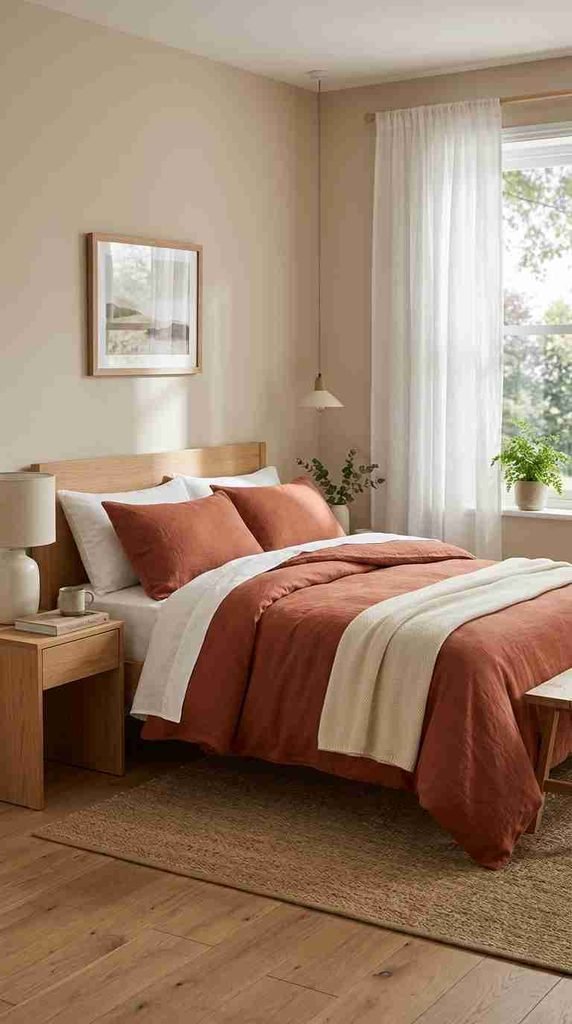
A rust-colored linen duvet cover does more than change the color of the bed; it changes the temperature of the whole room, visually at least, because that burnt-orange tone reads as warmth even before you climb under it. Washed linen suits this job especially well, since its slightly rumpled surface catches the light in uneven ways and stops a strong color from looking flat or severe. Choose a shade that leans toward terracotta rather than bright orange, and the bed will sit comfortably beside cream sheets, pale wood, and the soft neutrals that already live in most bedrooms. The cover itself becomes the anchor for the rest of the palette, so you can echo it in a single cushion, a throw folded at the foot, or the edge of a curtain, without repeating it everywhere. At night, the weight of linen feels substantial without trapping heat, which matters when autumn evenings are cool but the room is still warm from the day. Look for a cover with hidden buttons or a zip fastening, so the fastening never interrupts the smooth fall of the fabric across the mattress.
2. Chunky Knit Bed Runner
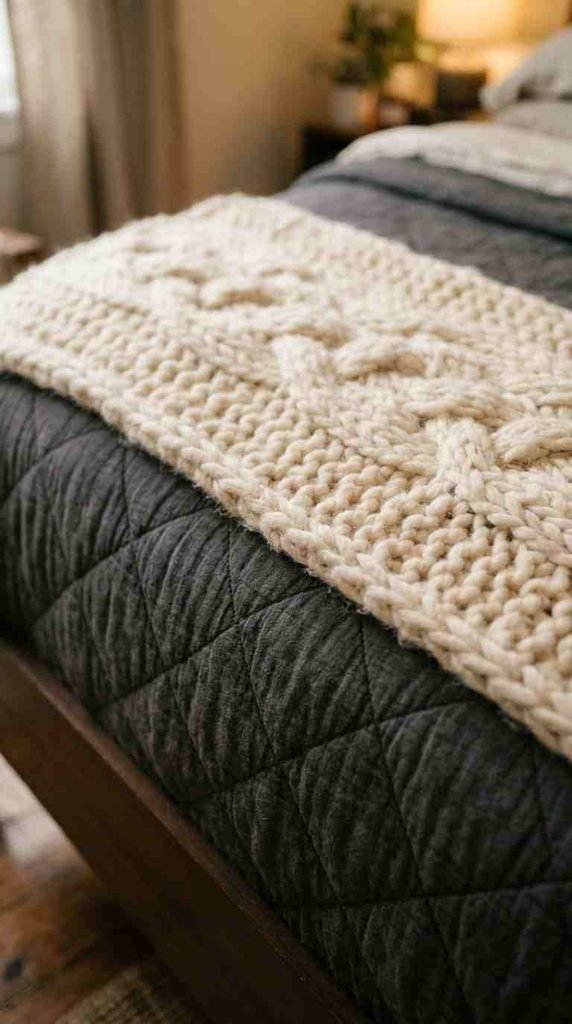
A chunky knit runner laid across the foot of the bed is the fastest way to make the whole room feel hand-made and warm, because the oversized stitches read as softness from the doorway. Unlike a flat throw, a runner keeps its shape, so it frames the bed like a wide band of texture and gives the eye a place to rest between the duvet and the floor. Cream and oatmeal are the easiest colors to live with here, since they lift a rust duvet without fighting it and pick up the pale tones in the headboard and rug. The knit itself matters as much as the color: look for a loose, open weave with visible loops, rather than a dense blanket that could belong to any season, and the runner will look deliberately autumnal. In the evening it is the layer you pull up over cold feet while you read, and in the morning it is the first thing you smooth back into place, which is a small, satisfying ritual. Let the ends fall a little past the sides of the mattress, so the runner looks generous rather than carefully measured.
3. Warm White String Lights
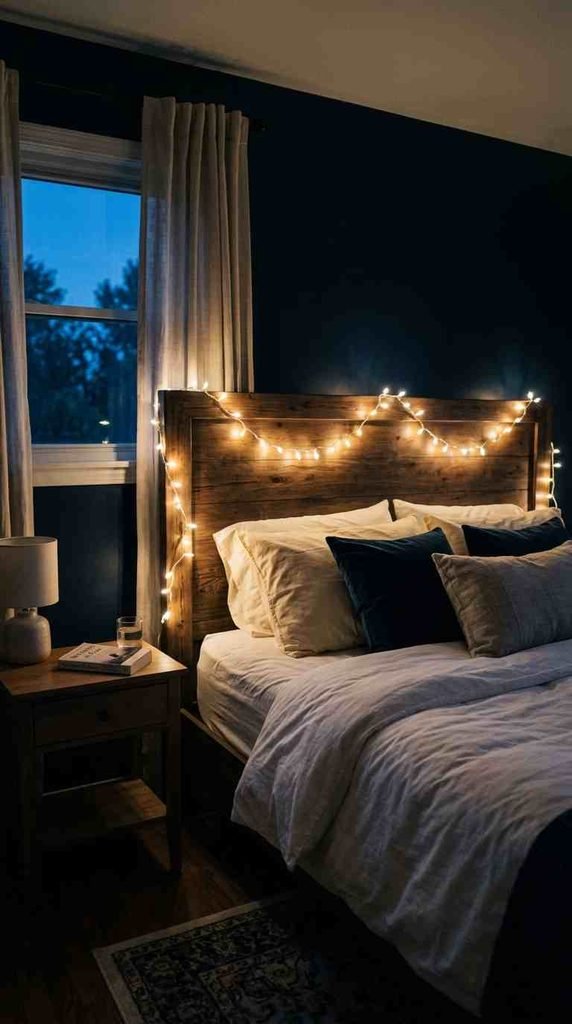
Warm white string lights work best when they are treated as a second, quieter layer of light, rather than as decoration for its own sake, because their job is to soften the room after the main lamp goes off. Draped in a loose swag along the headboard, they trace the shape of the bed and turn an ordinary wooden frame into the focal point of the room. The color temperature is what makes the difference: a warm white, close to candlelight, flatters skin, wood, and linen, while a cool white would feel clinical and undo the autumn mood in a single evening. Space the bulbs so the glow is even, and let the wire follow the line of the headboard instead of crossing the wall in a straight run. They are at their best on the nights when you want to read for twenty minutes without waking the house, since the light is bright enough for a page but gentle enough to signal that the day is ending. Choose a set with a dimmer or a low setting, so you can turn the brightness down as the evening goes on.
4. Velvet Accent Pillows
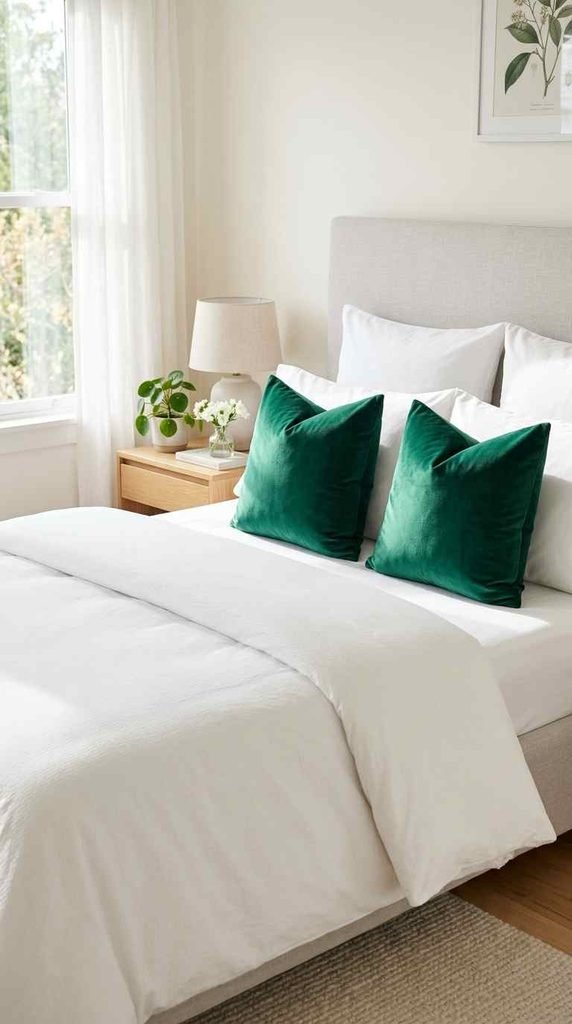
Velvet accent pillows bring a depth of color that flat cotton simply cannot match, because the pile of the fabric shifts from dark to light as you move around the room. Emerald green is a natural partner for rust bedding, since the two colors sit opposite each other and make each other look richer, yet the combination still feels calm when the rest of the room stays neutral. Start with two pillows in the same green, placed in front of the sleeping pillows, and add a smaller one in a warm gold or burnt orange only if the bed still looks bare. The contrast that matters most is not color but texture: smooth linen, a rough knit, and soft velvet side by side give the bed a layered, considered feel that a single fabric never achieves. Choose cushion inserts that are slightly larger than their covers, so the pillows keep a full, plump shape instead of collapsing into flat squares by the end of the day. In daylight, the velvet will catch the window light and glow; in the evening, under a lamp, it will darken and make the bed look even more inviting.
5. Wooden Headboard Upgrade
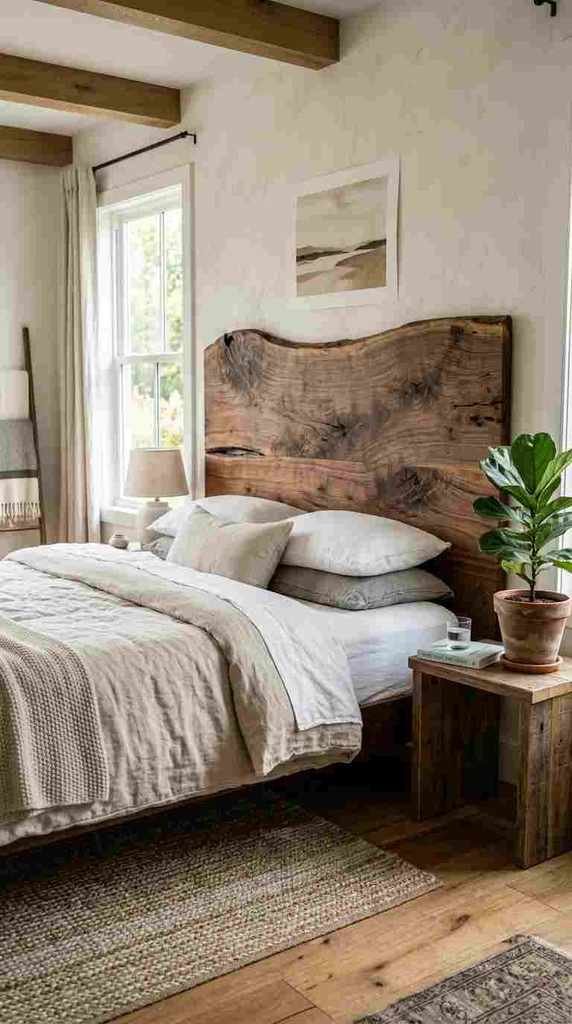
A wooden headboard changes the architecture of the bedroom in a way that bedding alone cannot, because it gives the wall behind the bed a clear, solid shape. Walnut is a good autumn choice, with its deep brown grain and warm undertones, and it pairs easily with rust, cream, and forest green without making the room feel dark. The grain itself is the decoration here: a wide, live-edged board or a simple panel with visible knots brings the texture of the outdoors inside, and it needs no carving or ornament to look finished. Height matters more than width, since a headboard that rises well above the pillows creates a backdrop for the whole bed, while a low one disappears behind them. If you are choosing between a freestanding board and one fixed to the wall, the fixed option sits tighter and never shifts when you lean back to read, which is a small comfort that adds up night after night. Keep the bedding simple against it, with plain linen and one or two cushions, so the wood remains the star and the bed does not look crowded.
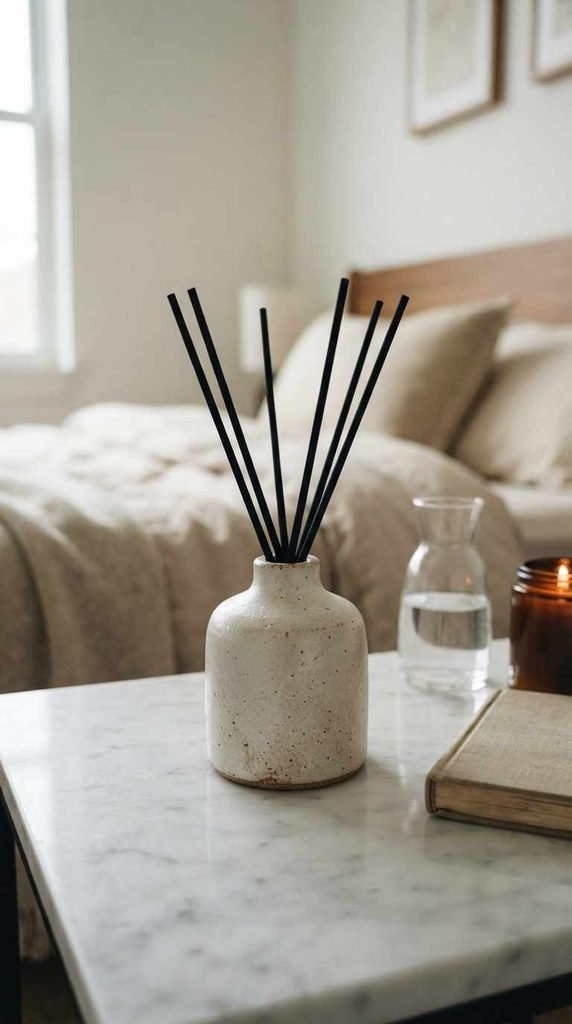
6. Cedarwood Reed Diffuser
A cedarwood reed diffuser adds scent to the bedroom gently, releasing a dry, woody fragrance that settles into the room without announcing itself. Cedarwood has a calm, slightly resinous character, quite different from the sweet scents of summer, and it sits comfortably beside clean linen and old wood. Place the vessel on a nightstand or dresser where the air moves, so the scent spreads gently across the room instead of gathering in one heavy patch. Start with three or four reeds, and add more only if the fragrance fades after a few days, since it is easier to strengthen a scent than to soften one that is too strong. When the fragrance fades, turn the reeds over, so the dry ends go back into the oil and the scent returns. The vessel itself can be part of the decoration, too: a matte ceramic or dark glass bottle looks at home beside a lamp and a book, with no flame to worry about. If you want to learn more about the oils behind these blends, read about essential oils, and for ideas that carry the same mood into the holidays, explore these Thanksgiving bedroom decor ideas.
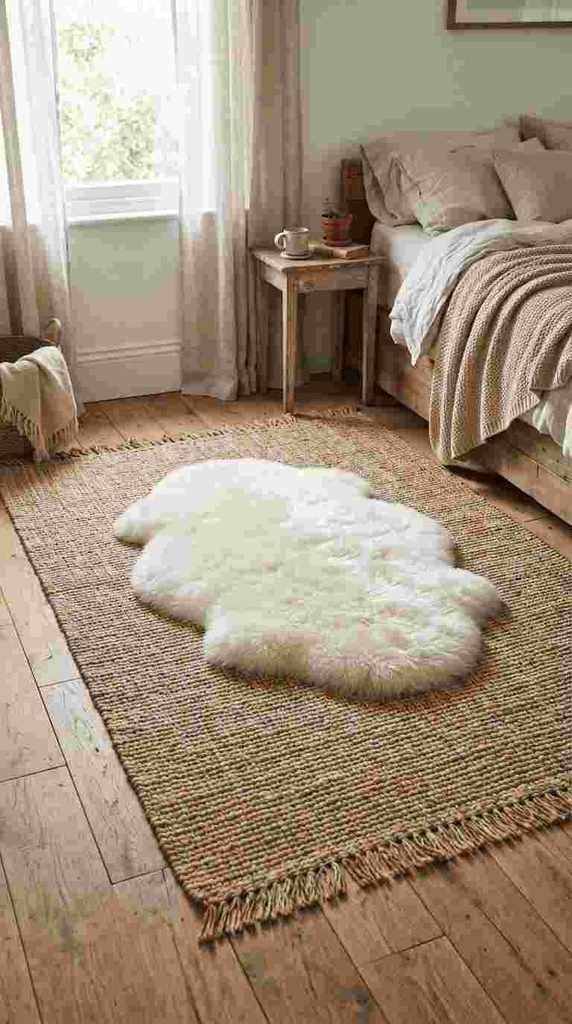
7. Layered Area Rugs
Layered rugs change the way a bedroom feels underfoot, which is the first thing you notice on a cold autumn morning, and they do it without any need for new furniture. A large, flat jute rug makes a good base, because its rough, natural texture covers a wide area and gives the room a warm, earthy foundation. Over it, a smaller, softer rug, such as a sheepskin or a thick wool piece, marks the spot where you step out of bed, so the first touch of the day is soft rather than scratchy. The contrast between the two layers is the point: the jute brings structure and a hint of the outdoors, while the top layer brings comfort and a paler color that lifts the floor. Keep the top rug clear of the bed legs, so it lies flat and does not bunch up when you walk across it, and let the base rug extend beyond the bed on the side you use most. The colors should stay close to the rest of the room, with cream, oatmeal, and pale brown working better than a bold pattern that would fight the bedding.
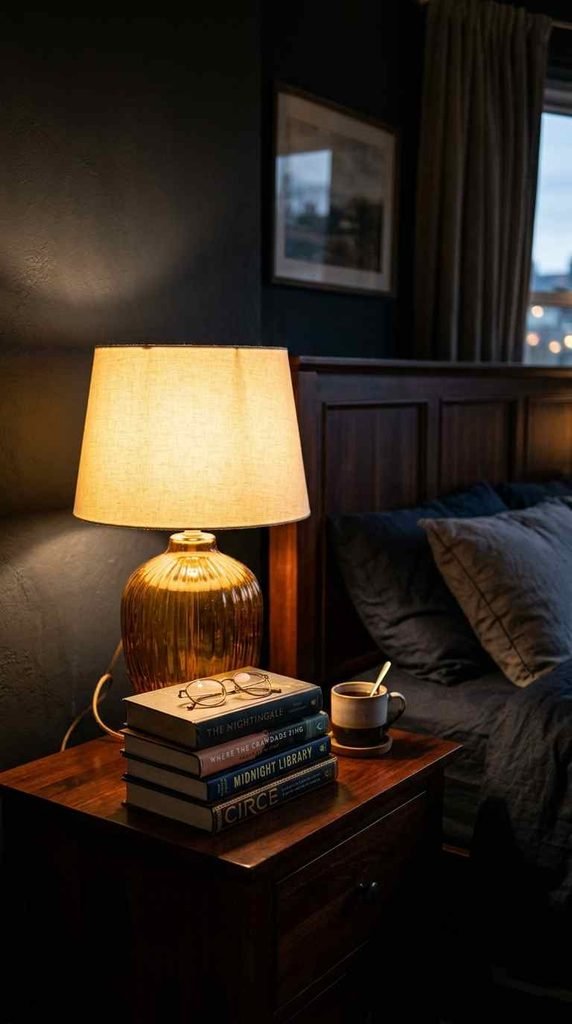
8. Amber Glass Table Lamps
An amber glass lamp does something a plain white lamp cannot: it colors the light itself, so the whole corner of the room takes on a honeyed glow as the evening goes on. The glass filters the bulb and softens its edges, which makes the light feel closer and more personal than the flat, even light of a ceiling fitting. On a nightstand, a lamp of this kind becomes a small evening ritual in itself, switched on as the sky darkens and left to burn low while you read or talk. Choose a shade in a warm, pale linen, because it will diffuse the amber light further without hiding it, and keep the lamp in proportion to the nightstand, with a base that leaves room for a book and a glass of water. A matching pair, one on each side of the bed, gives the room a sense of balance, and the two pools of light frame the headboard in a way that a single lamp never quite manages. Use a warm bulb, close to the color of candlelight, and the glass will do the rest, turning an ordinary bedside table into the warmest spot in the room.
9. Dried Eucalyptus Bundles
Dried eucalyptus brings the garden indoors in a form that lasts for months, and its soft, silver-green leaves are a quieter autumn color than the oranges and reds that dominate the season. A bundle in a tall glass vase on the windowsill catches the low autumn light and casts a gentle shadow, which gives a plain corner a sense of life without needing water or daily care. The leaves themselves are the attraction, with their round, coin-like shape and their muted tone, and they sit happily beside wood, ceramic, and linen, none of which compete with them. Keep the stems in a vase that is tall enough to hold them upright, and trim the ends if they start to look ragged, so the arrangement keeps a clean, upright line. The scent is faint, a cool, green note that appears when you brush past the leaves, rather than a perfume that fills the room, and that subtlety suits a bedroom. Over time, the leaves will dry further and turn a paler gray-green, which is part of their charm, and a bundle that has faded can be moved to a shelf or a dresser, where it will still look intentional.
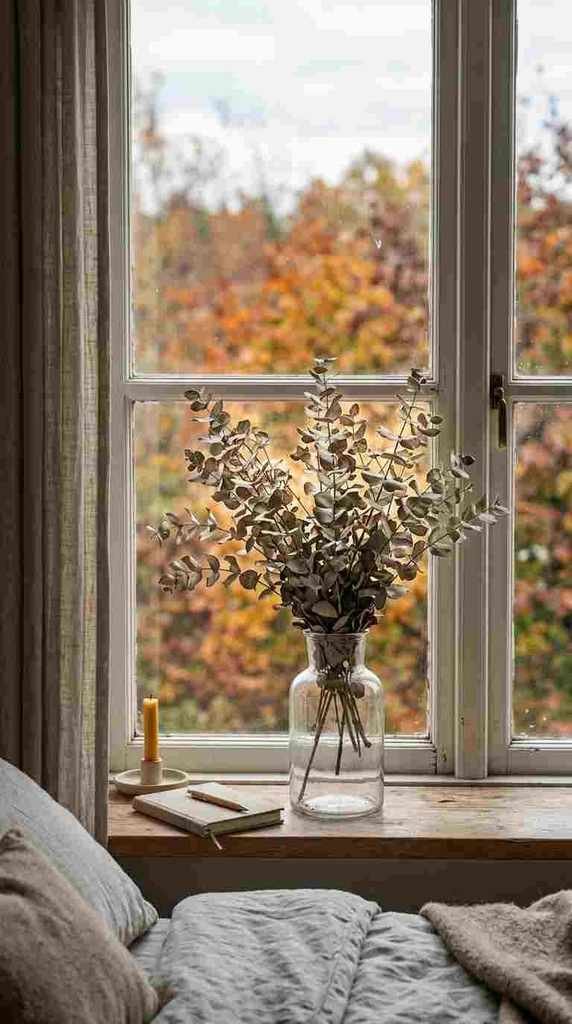
10. Heavyweight Taupe Curtains
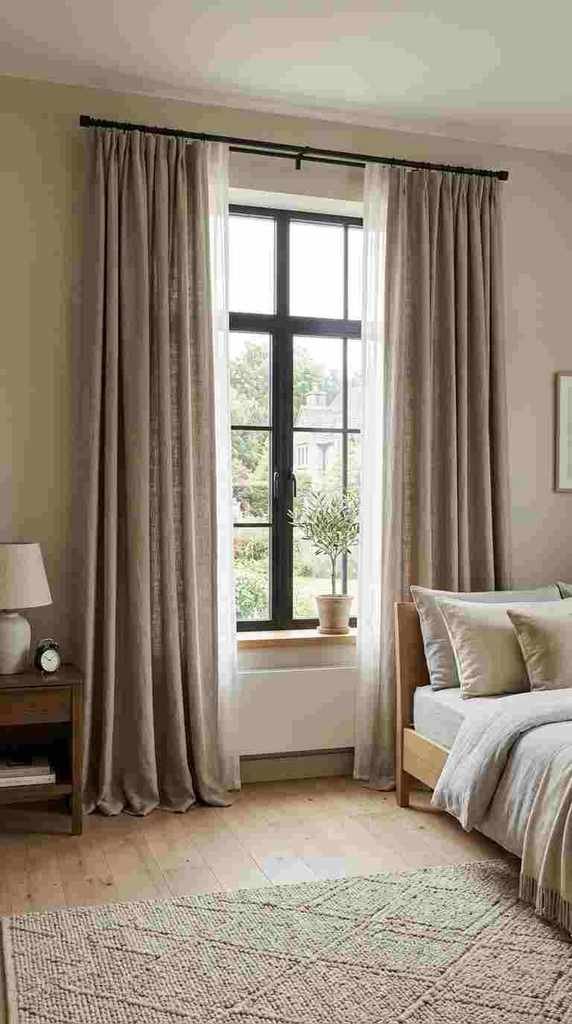
Heavyweight taupe curtains do more than dress a window; they change the feel of the whole wall, turning a cold sheet of glass into a soft, fabric surface. Taupe is a forgiving color for autumn, warm enough to echo the season without pulling the room toward brown, and it works with rust bedding, pale wood, and the green of a velvet cushion. The weight of the fabric is what makes the difference, because a curtain with some body to it hangs in deep, even folds, rather than fluttering or clinging to the frame. Choose a pair that is wide enough to gather generously when closed, and long enough to reach the floor, so the window looks fully dressed rather than half covered. In the evening, drawing them closed shuts out the dark glass and the cold air that gathers around it, and the room immediately feels smaller, quieter, and more private. During the day, pull them back to the sides of the frame, so the low autumn sun can still reach the bed, and the folds will catch the light and show off the texture of the weave.
11. Ceramic Mug Warmer
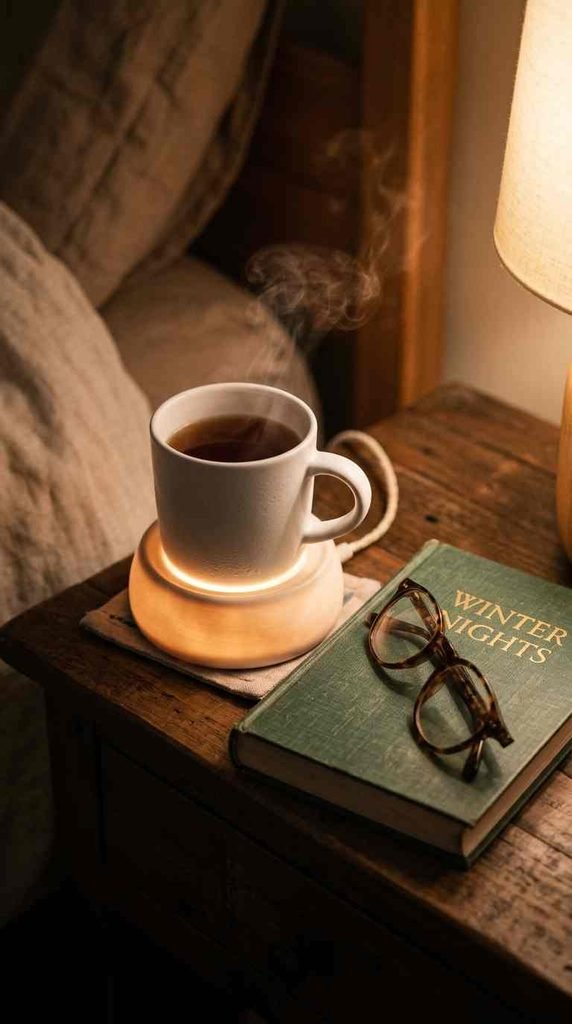
A ceramic mug warmer is a small, practical luxury, and it earns its place on the nightstand because it keeps a drink warm through the slow part of the evening. The ritual is the point as much as the warmth: a cup of tea or cocoa, a book open beside it, and no reason to get up and go back to the kitchen. Choose a warmer with a flat, stable base and a low, even heat, so a ceramic mug sits securely on it and the drink stays warm without ever reaching the point of scalding. Look for one that switches itself off after a set time, or that you can switch off easily from the bed, since a bedroom gadget should never need you to remember it in the dark. Keep the warmer on a clear patch of nightstand, away from books and bedding, with its cord tucked behind the furniture, so the surface still looks tidy and nothing can be knocked over in the night. A simple white or cream ceramic mug suits it best, because it matches the rest of the bedroom and lets the warmth of the drink, rather than a bright pattern, take center stage.
12. Botanical Wall Art Prints
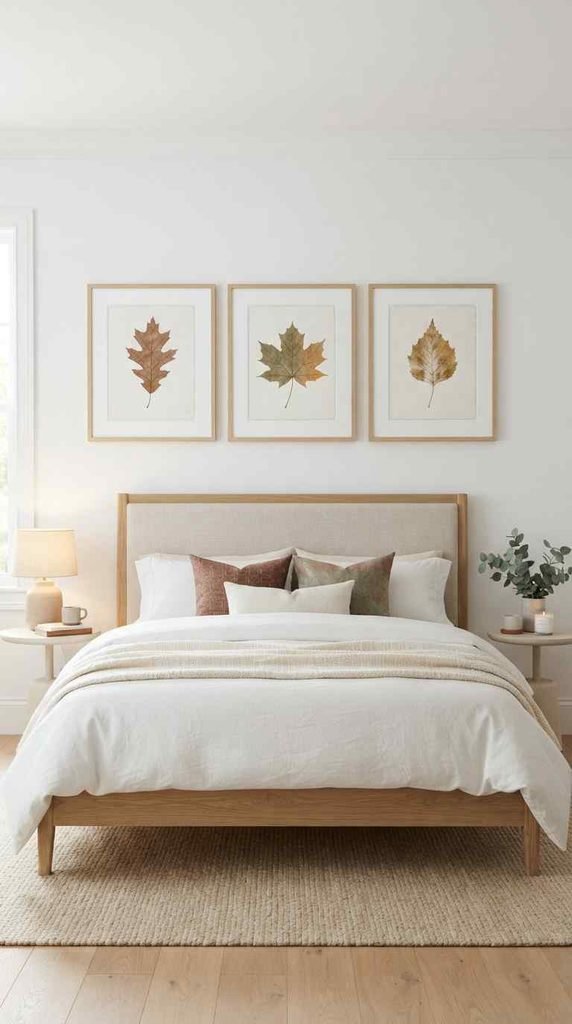
Botanical wall art brings the shapes of autumn into the bedroom without the upkeep of living plants, and a set of framed leaf prints above the bed can anchor the whole room. The drawings themselves do the work: simple, clear outlines of maple, fern, and oak leaves, printed in muted greens and browns, read as autumn even before you notice the colors. A row of three matching frames, hung in a straight line above the headboard, is the easiest arrangement to get right, because the repetition gives the wall a rhythm and the eye a clear place to land. Choose frames in a thin black or a pale natural wood, and keep the mounts plain white, so the prints stay the focus and the frames do not compete with the headboard below them. Hang the row so its center sits at about eye level when you are standing at the foot of the bed, and leave the wall on either side empty, so the group reads as one deliberate piece. The prints also pick up the other natural textures in the room, and that quiet repetition is what makes a bedroom feel put together.
13. Woven Basket Storage
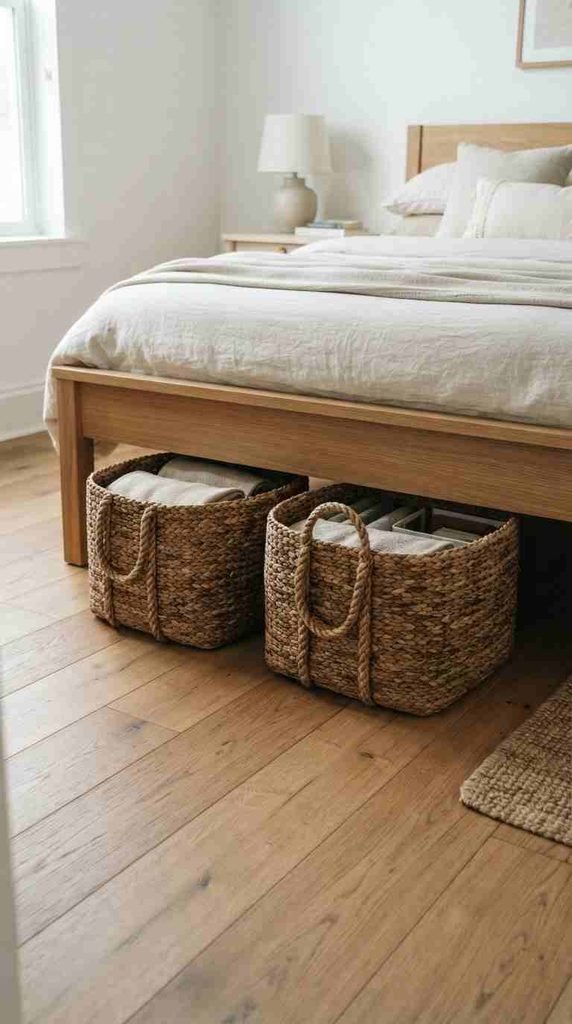
Woven baskets are the quiet workhorses of an autumn bedroom, because they add texture and warmth while hiding the things that would otherwise make the room look untidy. Seagrass and rattan are the natural choices, with their pale, sandy tones and their visible weave, and they sit comfortably beside wood, linen, and wool without looking like storage at all. Slide two or three under a platform bed, and they become a home for spare blankets, out-of-season bedding, and the extra cushions that come out in the evening, all within reach but out of sight. The size matters: a basket that fits its space with a little room to spare looks intentional, while one that has to be forced into place will always look like an afterthought. Use one basket for each kind of thing, rather than mixing everything together, so you can find a blanket in the dark without emptying the whole basket onto the floor. An open basket is best for the things you reach for every day, while a basket with a lid suits the items you only need once a week, and that simple split keeps the system working.
14. Flannel Sheet Sets
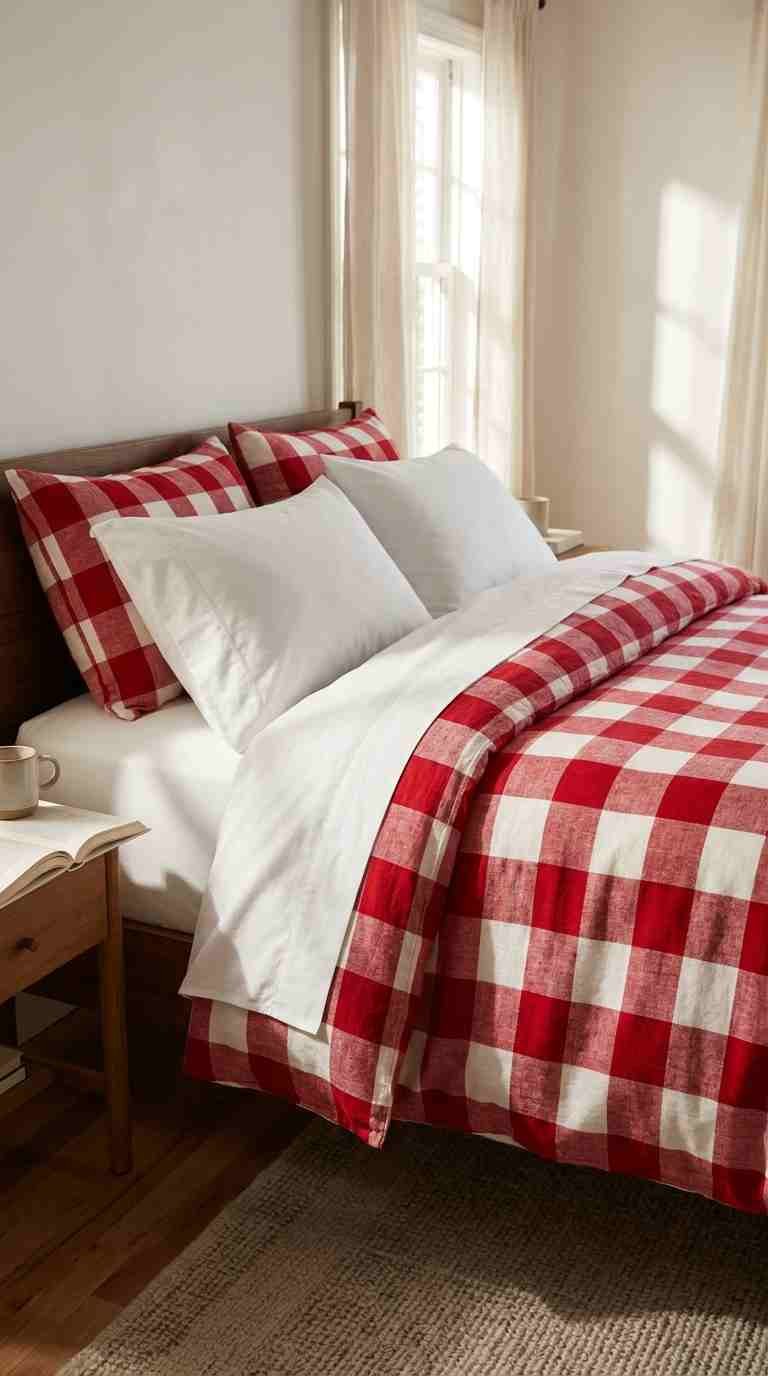
Flannel sheet sets are the final layer of an autumn bedroom, and they change the first minute in bed, when the sheets feel warm and soft against the skin instead of cool and crisp. The brushed surface is what makes the difference, because the fibers stand up just enough to trap a thin layer of warm air, and that is why flannel feels cozy on a cold night without needing a heavier duvet. A red and black plaid is the classic autumn choice, and it looks at home against plain bedding, especially when the flat sheet is folded back over the duvet to show the pattern. Keep the plaid to the sheets themselves, and let the duvet cover and pillowcases stay in a solid color taken from the plaid, so the pattern has room to breathe and the bed does not look busy. The weight matters, too: a medium-weight flannel suits most autumn nights, while a very heavy set can feel too warm in a room that is already heated. Change the sheets as the weather turns, rather than waiting for the first frost, so the bed is ready for the cold nights before they arrive.

Creating Your Autumn Sanctuary
Start with the change that appeals to you most, whether that is the rust duvet, the amber lamps, or the diffuser on the nightstand, and live with it for a few nights before you add the next one. A bedroom that grows in small, deliberate steps feels more personal than a room that is changed all at once, and it is easier to tell which details you actually reach for. When the first cold snap arrives, the heavier layers, the curtains, the rugs, and the flannel, will already be in place, and the room will be ready. For ideas that carry the same warmth into the colder months, look at these rustic winter bedroom decor ideas and these cozy winter bedroom decor ideas, and borrow the textures and colors that suit your room best.
The point of all fourteen ideas is not to create a perfect room, but to create a room that helps you rest, and that is a simpler goal than it sounds. Keep the pieces you use, move the ones you do not, and let the bedroom change with the season, a little at a time. By the time the leaves are gone and the nights are at their longest, the room you wake up in will feel like it was made for exactly that moment.






One Comment