
16 Scandinavian Winter Living Room Ideas 2027 for a Cozy Minimalist Feel
When the nights turn long and the daylight thins to a few pale hours, the Scandinavian approach to winter is to bring the light back inside — softly, and on purpose. Hygge, the Danish idea of quiet contentment, runs through every choice in this room: pale wood that catches what light there is, wool and sheepskin that warm the touch, and candlelight instead of harsh overheads. The sixteen ideas below keep the palette calm and the lines clean, so a living room of almost any size can feel open, warm, and easy to live in through the whole winter — and if you are starting from a different season, our fall living room ideas show the same room in its warmer, autumn colors first.
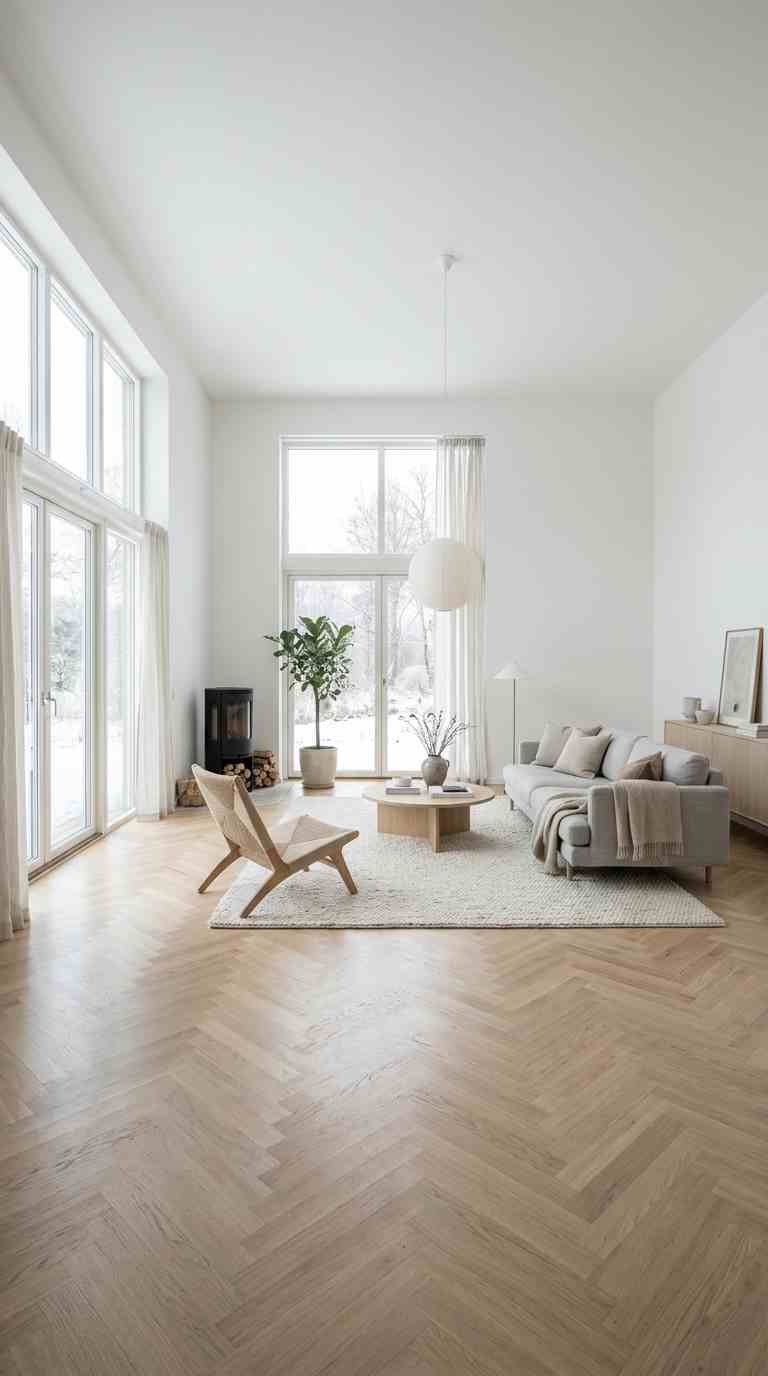
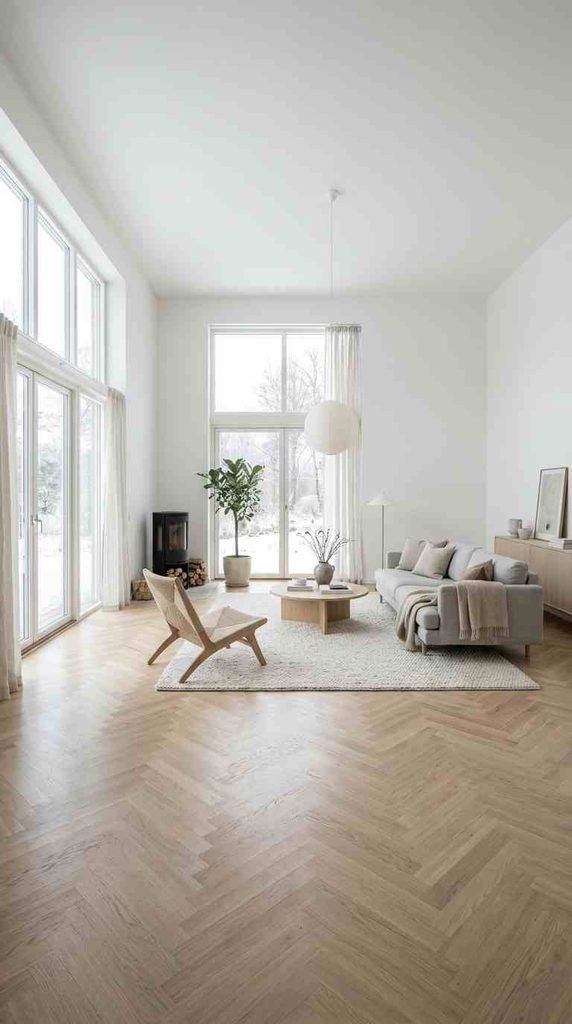
1. Light Wood Flooring with White Walls
Start with a bright foundation by pairing pale oak or ash wood flooring with crisp white walls. This combination maximizes the limited natural light available in winter, making the room feel larger and more open. The contrast between the warm wood tones and the cool white surfaces creates a clean, fresh backdrop for layering other elements. Pale oak and ash are the usual choices because their honey tones warm a white room without darkening it, and wide planks with a matte finish show fewer marks than a gloss floor. Leave a small gap between the rug and the skirting so the pale floor reads as a deliberate border, and choose a washable finish if wet boots come through the living room in winter.
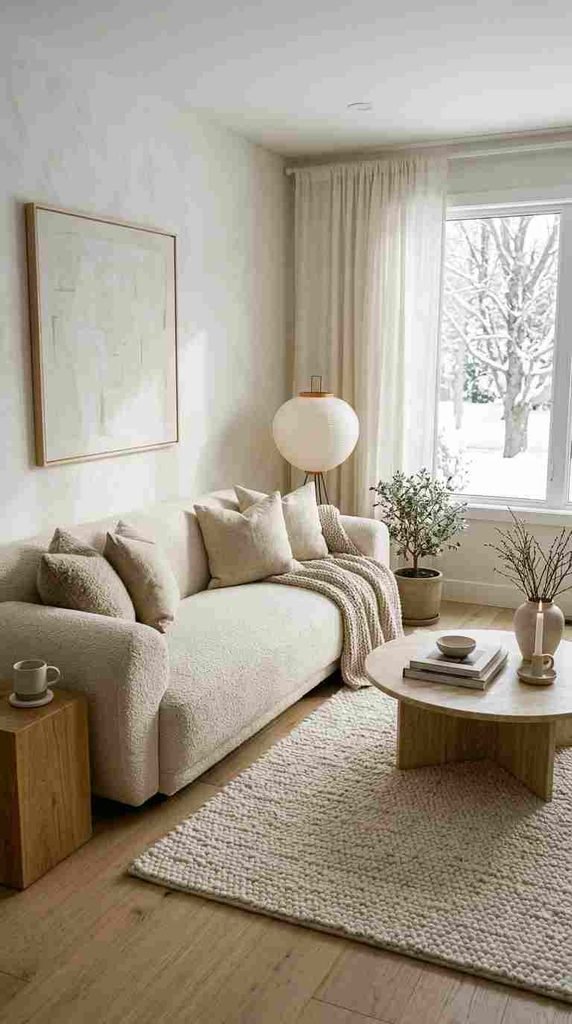
2. Bouclé Sofa in Cream
Anchor the seating area with a low-profile sofa upholstered in textured cream bouclé fabric. The nubby, looped weave adds visual interest and tactile warmth without introducing busy patterns or bold colors. Its soft, inviting appearance encourages lounging and fits perfectly within a minimalist aesthetic. Choose a sofa about 200 to 220 cm wide for a three-seater so two people can stretch out without the room feeling crowded, and keep the legs in pale wood or slim black metal to hold the Scandinavian line. A removable, washable cover is worth having in winter, when mugs and wet coats are never far from the sofa.
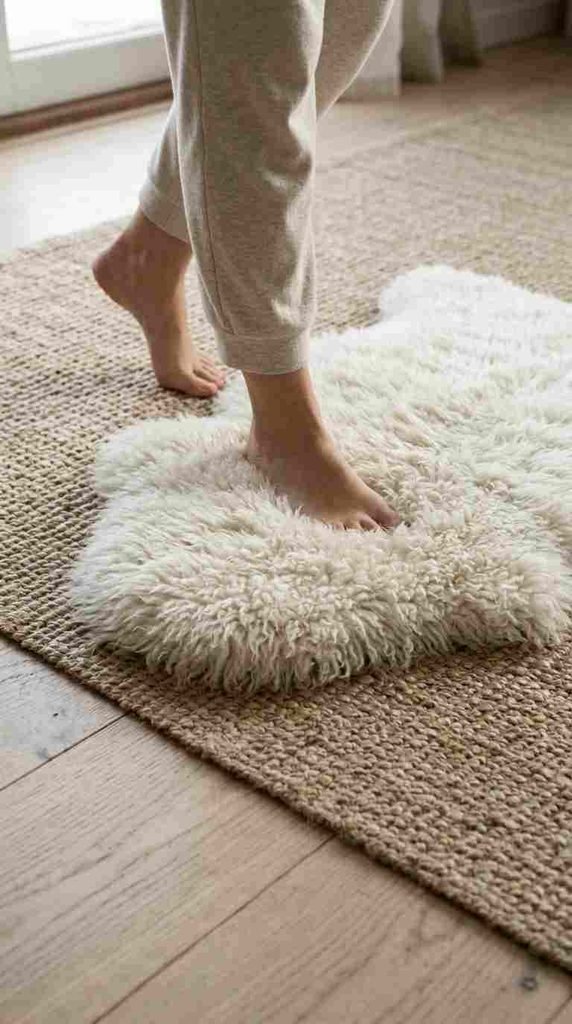
3. Sheepskin Rug Layering
Layer a fluffy white sheepskin rug over a larger, neutral jute or wool area rug. This technique adds depth and extreme softness underfoot, providing immediate warmth against cold floors. The organic shape of the sheepskin breaks up the straight lines of the room, adding a touch of nature indoors. Lay the sheepskin with its longest edge toward the seating so bare feet meet the soft pile first, and overlap the edge of the rug beneath by about 15 cm so the layers read as one. A sheepskin about 90 by 130 cm suits most seating areas; brush it lightly each week and shake it outdoors so it stays lofty through the season.
4. Paper Pendant Lighting
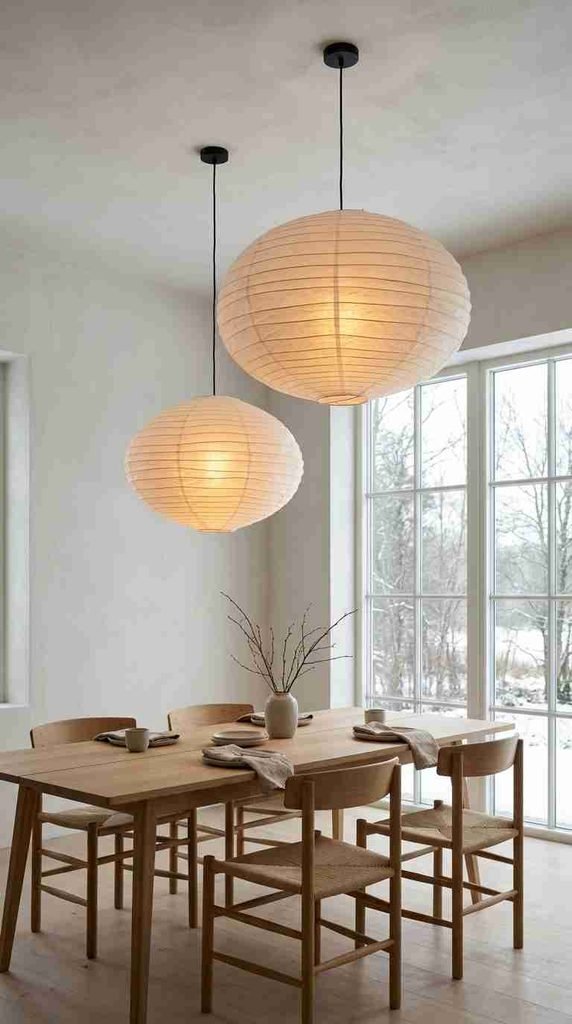
Replace harsh overhead lights with large, spherical paper pendant lamps that diffuse light softly. The ribbed paper structure casts gentle shadows and creates a warm, ambient glow that is essential for creating a hygge atmosphere. These fixtures are lightweight and visually unobtrusive, maintaining the airy feel of the room. Hang the pendant about 70 to 80 cm above the coffee table so it lights the center of the room without blocking sight lines across the sofa, and choose a shade about 45 to 60 cm across for a standard living room. A warm-white bulb of about 2700K keeps the paper glowing honey-colored in the evening, and a dimmer lets the same lamp carry the room from afternoon to late night.
5. Natural Wool Throw Blankets
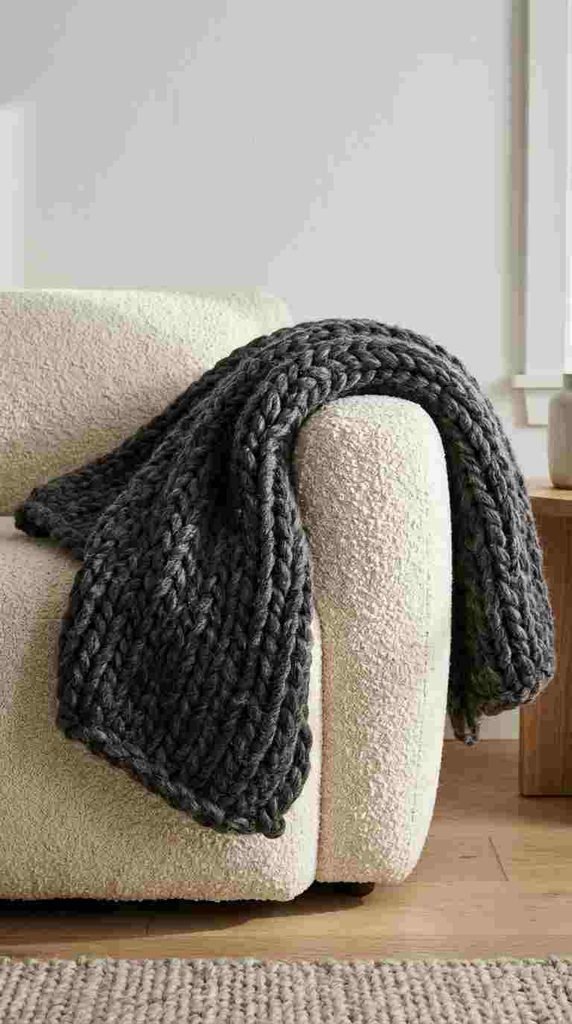
Drape chunky knit wool throw blankets in shades of gray, oatmeal, or charcoal over the sofa arms. The layers add instant warmth and texture, giving the living room a cozy feel even on the coldest days. Fold one throw over the arm and one over the back of the sofa so the layers look intentional rather than dropped, and keep the total to two or three so the sofa stays clean-lined. Mix a chunky knit with a smoother wool so the textures read against each other, and keep the colors inside one family — grays with oatmeal, or charcoals with cream — so the palette stays calm.
6. Minimalist Wooden Coffee Table
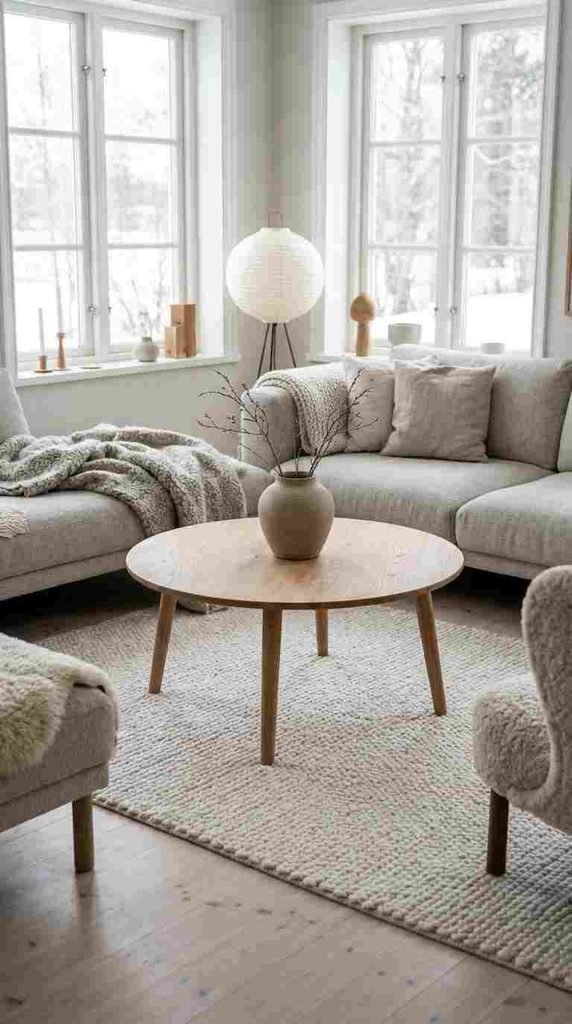
Choose a coffee table made from light wood with simple, functional lines and perhaps some storage. Avoid ornate details or heavy dark stains; instead, opt for a piece that feels lightweight and organic. A round or oval shape can soften the rectangular geometry of the room and improve flow. A table about 110 to 120 cm long and 55 to 60 cm wide leaves about 40 cm of leg room between the sofa edge and the table, which is a comfortable reach for a mug. Choose a single lower shelf rather than drawers so blankets can be tucked out of sight, and keep the top to three objects — a vase, a candle, and a book — so the surface stays usable. For more centerpiece ideas built around this same table, see our winter coffee table centerpiece ideas.
7. Dried Pampas Grass Arrangement
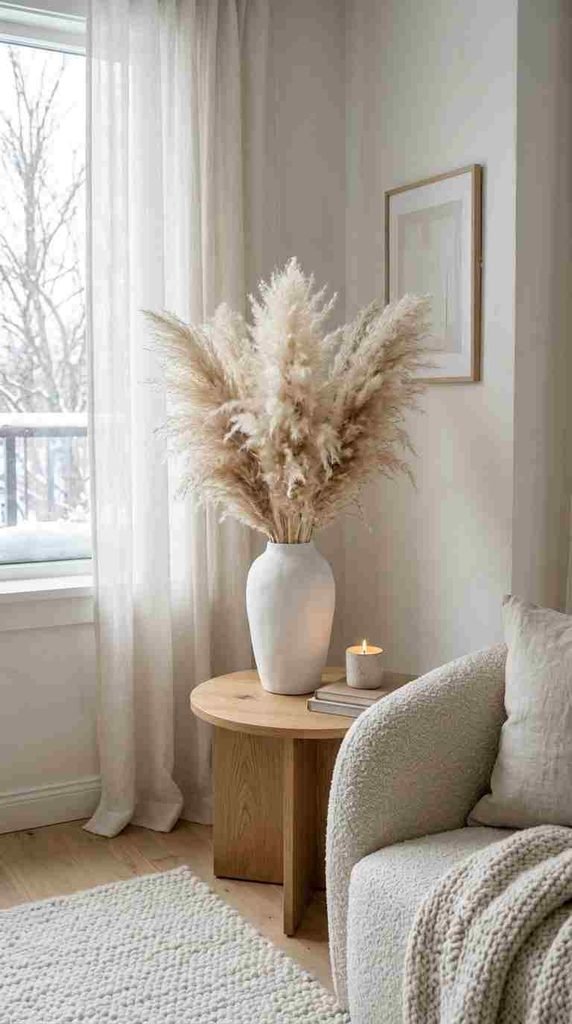
Fill a tall, matte ceramic vase with stems of dried pampas grass or bunny tails. These dried botanicals add height and a feathery, soft texture that mimics snow and winter landscapes. They require no water and last all season, providing a low-maintenance natural element. Cut the stems to about one and a half times the height of the vase so the plumes arch without touching the pendant light above, and use a tall, narrow-necked vase so the stems stay upright. Keep the arrangement in a corner or beside the fireplace rather than in the middle of the table, where tall plumes can block conversation.
8. Candle Clusters on Surfaces
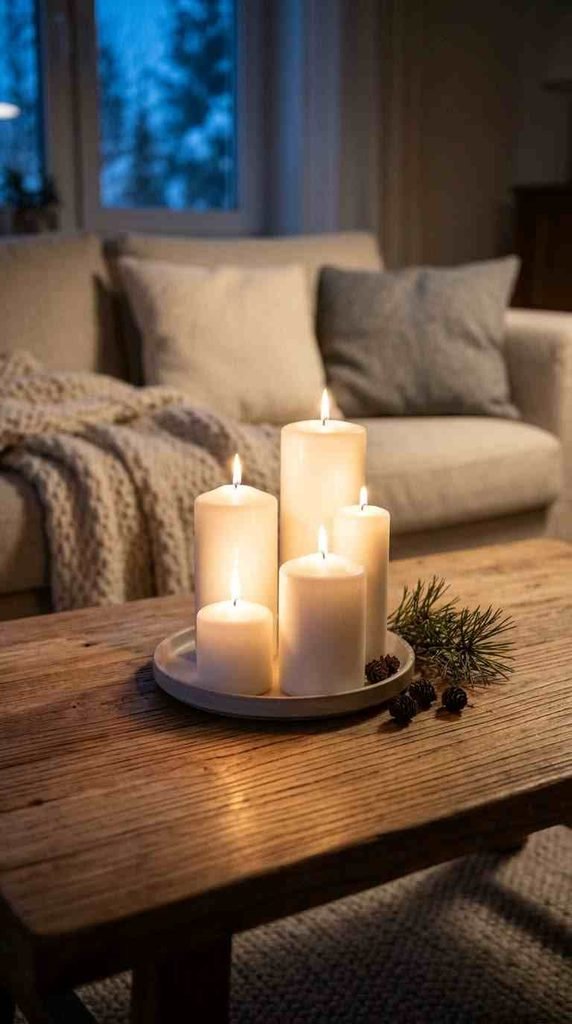
Group several unscented pillar candles of varying heights on trays or directly on surfaces like the mantle or coffee table. The flickering flame is central to the hygge concept, providing a calming focal point and warm illumination in the evening. Use white or cream candles to keep the look cohesive and clean. Group the candles in odd numbers — three or five — and vary their heights by at least 5 cm so the flames step up in a row rather than lining up flat. Set the cluster on a stone or metal tray at least 30 cm across so wax and heat stay off the wood, and never leave the group burning when the room is empty.
9. Functional Storage Baskets
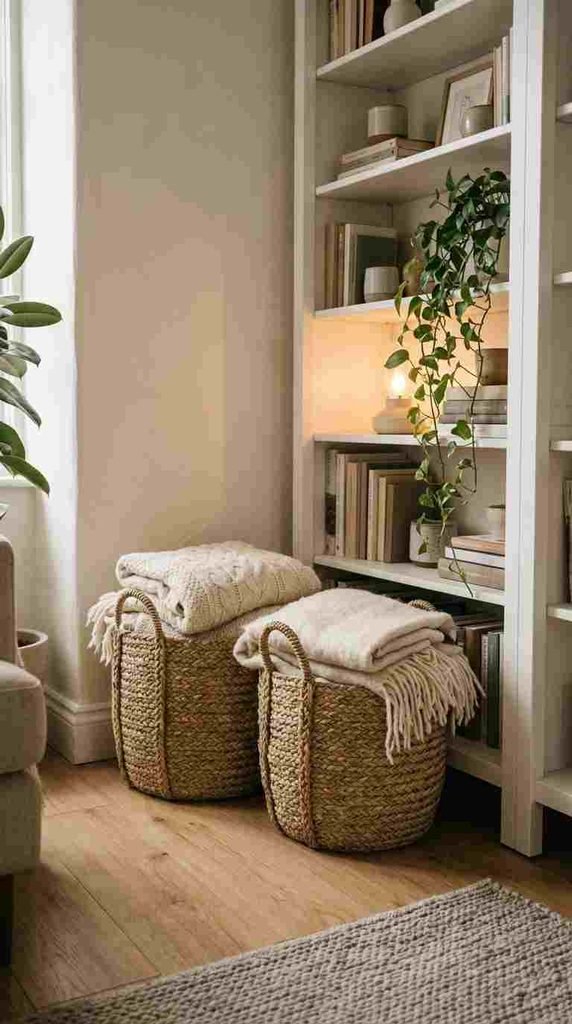
Use woven seagrass or wicker baskets to store blankets, magazines, or toys out of sight. Clutter is the enemy of minimalism, so having stylish storage solutions is key. The natural texture of the baskets adds warmth and complements the wood and wool elements in the room. Choose baskets about 40 to 50 cm across so a folded blanket fits without stuffing, and keep one by the sofa and one by the door so blankets are always within reach. A lid, or a folded throw over the top, hides the contents and keeps the basket looking like a design object rather than a laundry bin.
10. Green Houseplants for Life
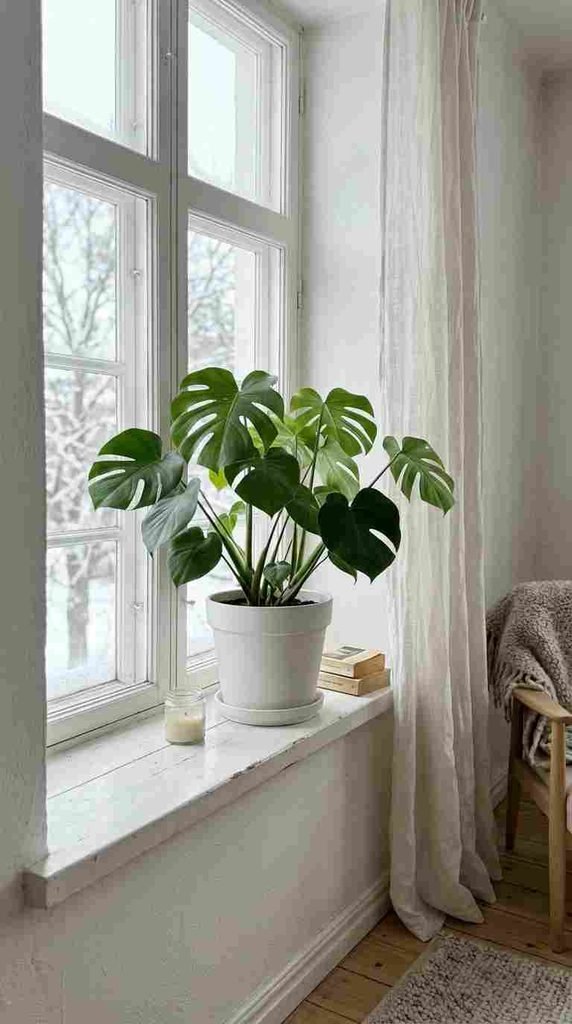
Add a few resilient houseplants like a snake plant, monstera, or fiddle leaf fig to bring life and color to the space. The vibrant green contrasts beautifully with the neutral palette and improves air quality. Place them near windows to ensure they thrive during the darker months. Place the tallest plant in the brightest corner and the smaller ones on the sill or a stool so the green rises in steps around the room, and keep the pots in matte white or pale clay so they disappear into the palette. Wipe the leaves with a damp cloth once a month — dusty leaves take in less of the weak winter light — and water sparingly, since most houseplants grow slowly in the dark months.
11. Black Metal Accents
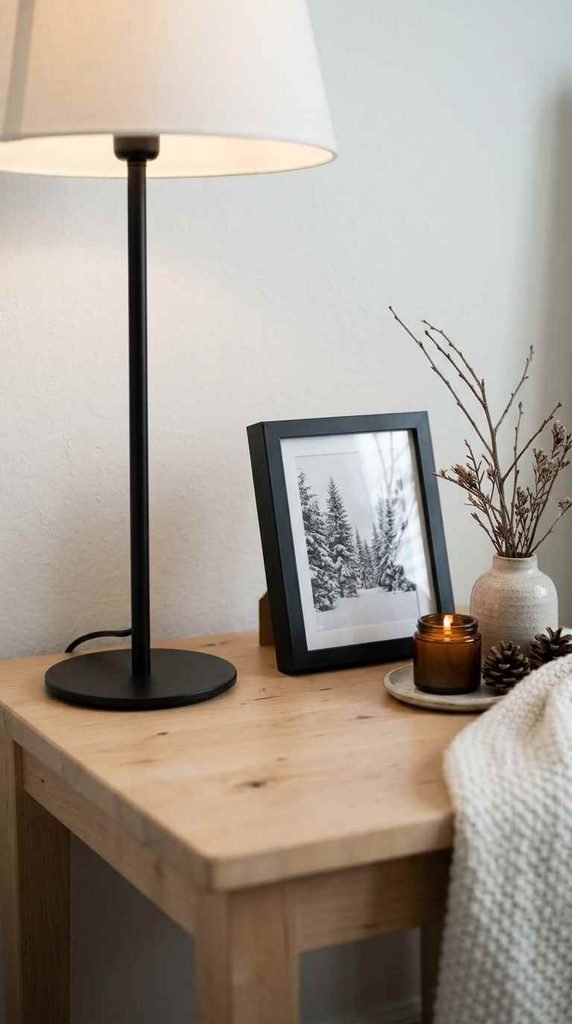
Introduce small black metal accents through lamp bases, picture frames, or table legs to add definition. These dark touches provide visual contrast against the light woods and whites, grounding the space and preventing it from feeling too washed out. Keep the shapes simple and geometric for a modern look. Repeat the black in three places — for example a lamp base, a frame, and a table leg — and keep each piece small, so the dark reads as punctuation rather than a theme. Matte black suits the palette better than gloss, and a single slim black floor lamp can also carry the reading nook at the end of the day.
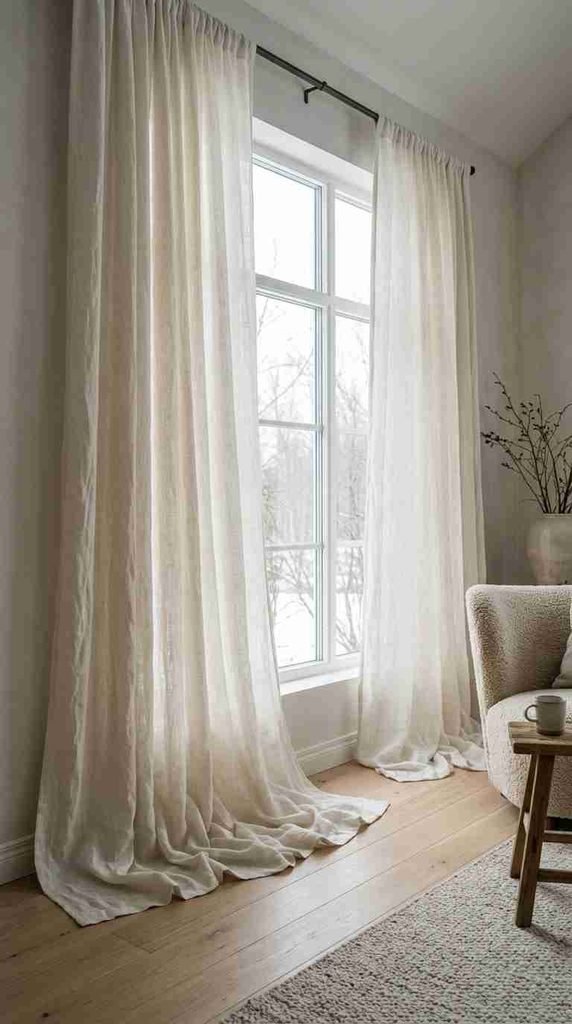
12. Linen Curtains for Softness
Hang floor-length linen curtains in a natural off-white or light gray to frame your windows. The fabric filters light beautifully, creating a soft, diffused glow during the day while adding insulation at night. Their relaxed drape adds a sense of ease and informality to the room. Hang the rod about 10 to 15 cm above the window frame and 10 cm wider on each side so the closed curtains clear the glass and let in the full width of daylight. Linen in a natural off-white lets the low winter sun through as a soft glow, and floor-length panels that just brush the floor add insulation on freezing nights.
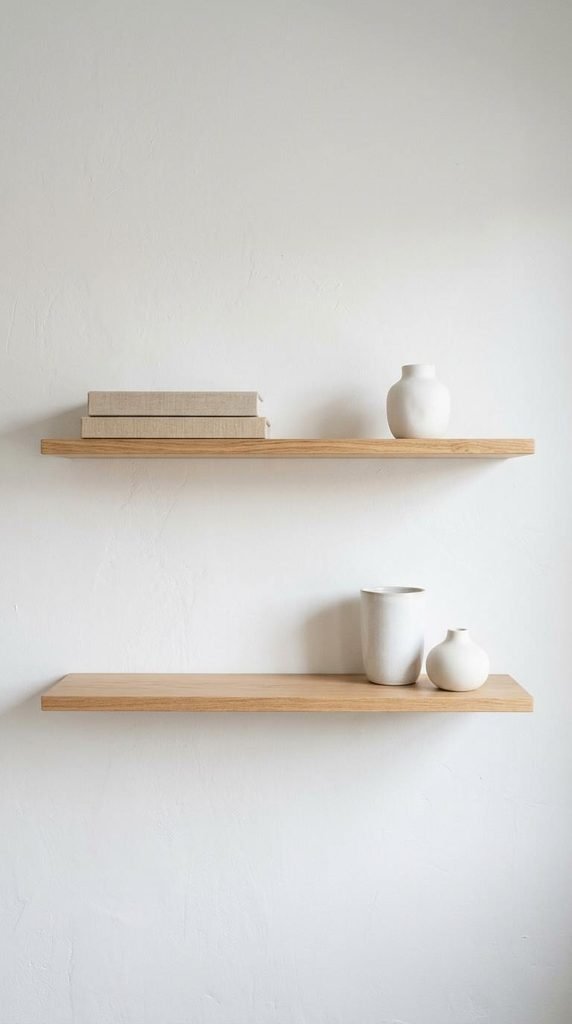
13. Open Shelving with Curated Objects
Install simple floating shelves to display a few carefully chosen objects like ceramics, books, or small sculptures. Avoid cluttering the shelves; instead, leave plenty of negative space to let each item breathe. This curated approach maintains the minimalist aesthetic while adding personal character. Hang shelves about 30 to 40 cm apart so taller ceramics fit without crowding, and leave at least a third of each shelf empty so the objects have room to breathe. Group in threes — a vase, a book, a small sculpture — and repeat one material, like pale oak or white ceramic, across both shelves to tie them together. The same shelving can carry a warmer autumn look too — see our fall living room decor ideas for shelf styling in richer colors.
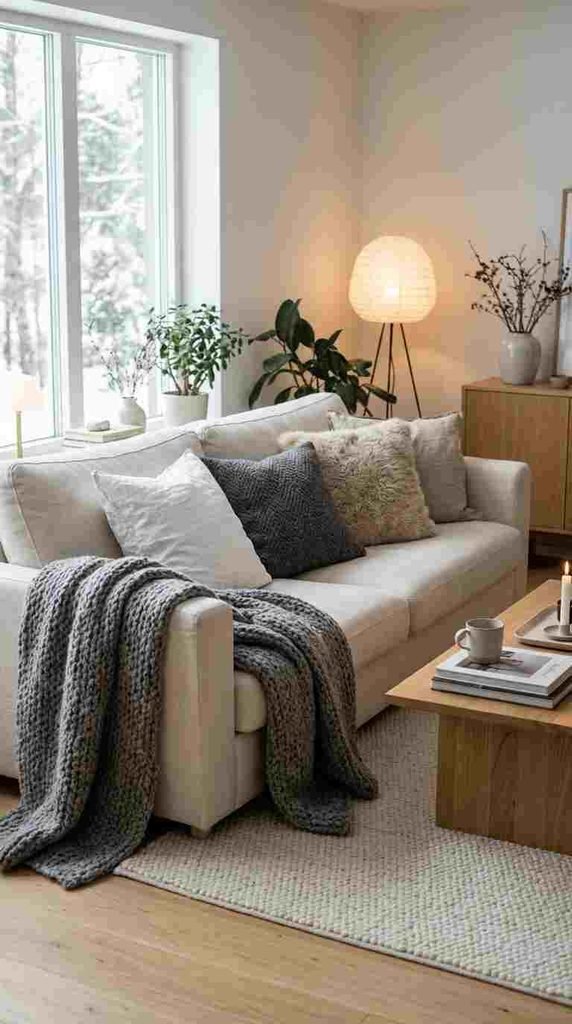
14. Neutral Textured Pillows
Mix and match pillows in various neutral textures such as linen, wool, and faux fur. Stick to a palette of whites, grays, and beiges to maintain harmony. The variety of textures adds depth and interest to the sofa without relying on patterns or bright colors. Use two large square pillows (about 50 by 50 cm) at the corners and one smaller lumbar (about 30 by 50 cm) in the middle so the sofa reads layered rather than stuffed. Mix linen, wool, and faux fur in the same pale tones, and fluff the inserts daily so the shapes stay plump through the season.
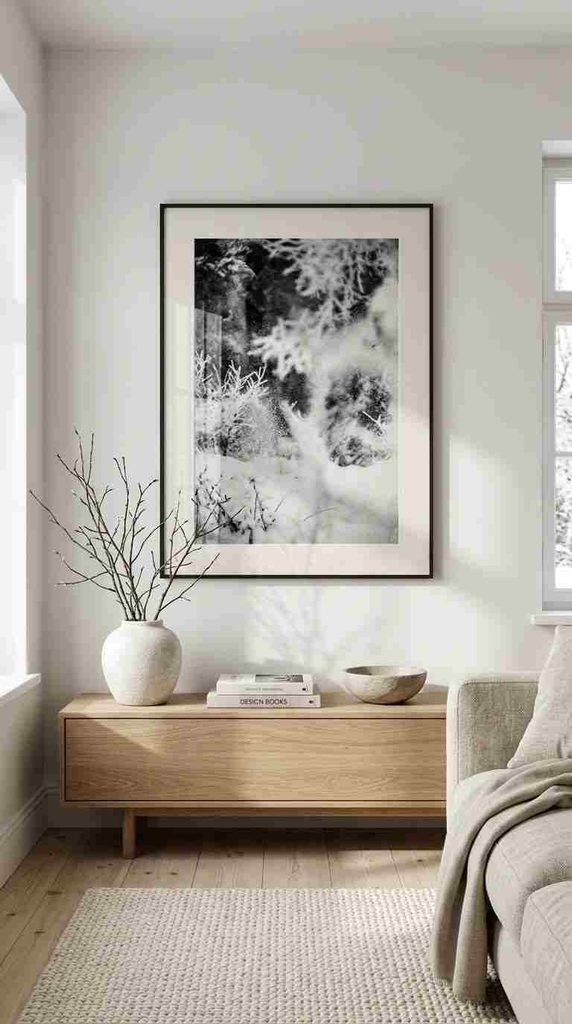
15. Simple Wall Art in Black and White
Hang one or two large pieces of abstract black and white art or photography on the main wall. The monochromatic scheme keeps the focus on form and composition rather than color. Use thin black frames to tie in with other metal accents in the room. Hang the piece so its centre sits about 145 to 150 cm from the floor — roughly eye level from the sofa — and leave at least 15 cm between the frame and the sofa back so the art does not crowd the seating. One large piece (about 70 by 100 cm) makes a stronger statement than several small ones in a minimalist room, and a thin black frame echoes the metal accents elsewhere.
16. Compact Reading Nook
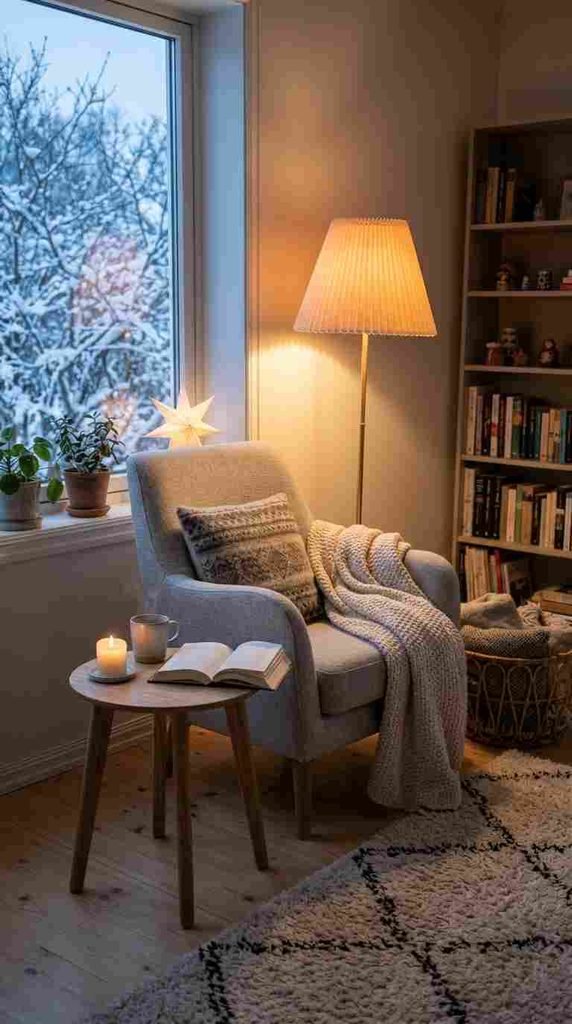
Create a small reading nook with a comfortable armchair, a floor lamp, and a small side table. This dedicated spot encourages slowing down and enjoying a book, which is a core part of the hygge lifestyle. Keep the furniture scaled appropriately for the space to avoid overcrowding. Place the armchair at an angle near the brightest window, with the lamp on the window side so it lights the page from over the shoulder without casting a shadow. A side table about 45 cm high holds a book and a mug within easy reach, and a folded sheepskin over the chair arm turns the nook into the warmest seat in the house.
Final Thoughts
A Scandinavian winter living room is not finished in a weekend — it is layered, one warm texture at a time, until the room holds its light a little longer each evening. Start with the biggest surfaces, the floor and the sofa, then add the small warmths: a sheepskin where your feet land, a candle cluster on the coffee table, and a reading nook that invites you to sit down with a book. Keep the colors quiet, keep the surfaces clear, and let the room’s calm do the work — and if you want more warmth in the same spirit, our cozy winter living room decor ideas build on these same principles with a slightly richer palette. When the snow settles outside, that is the room you will want to come home to.