
17 Layered Winter Living Room Ideas 2027 with Blankets, Pillows & Texture
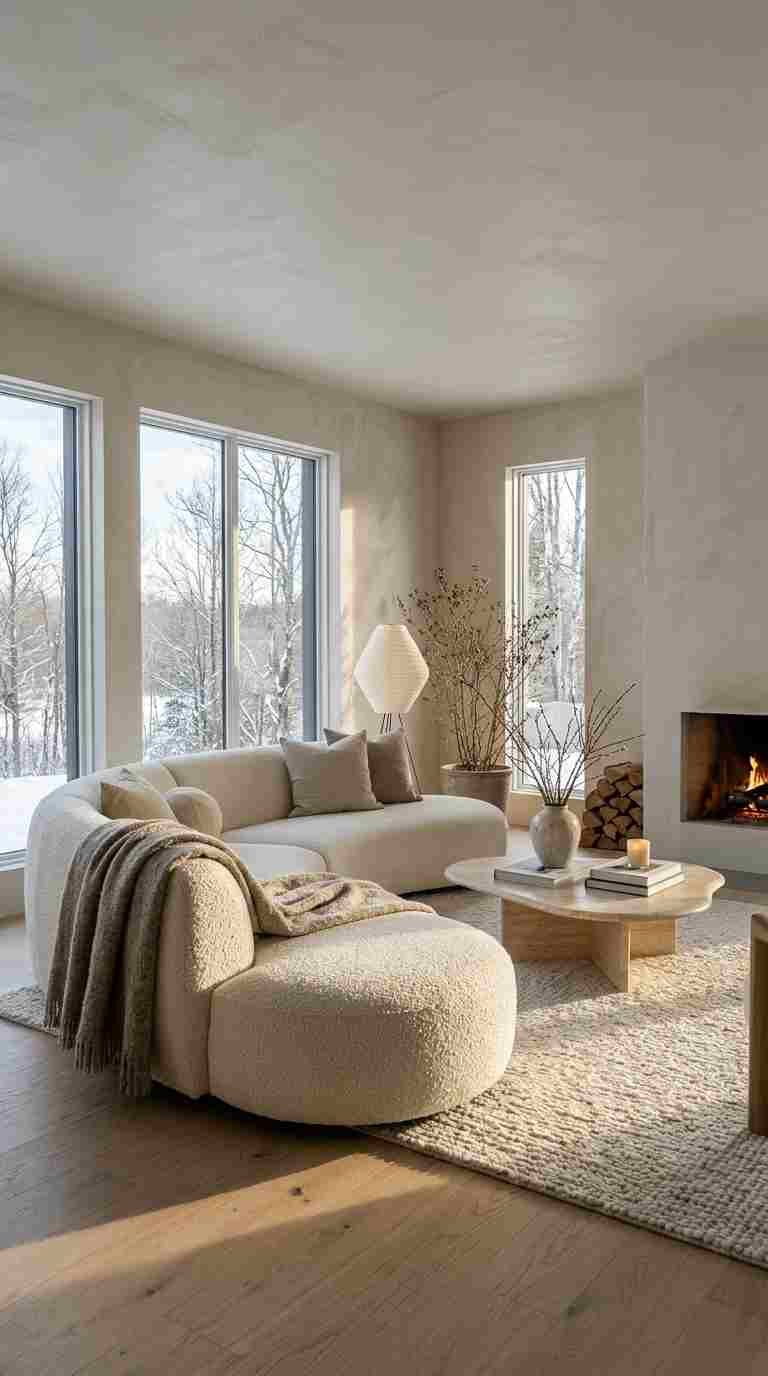
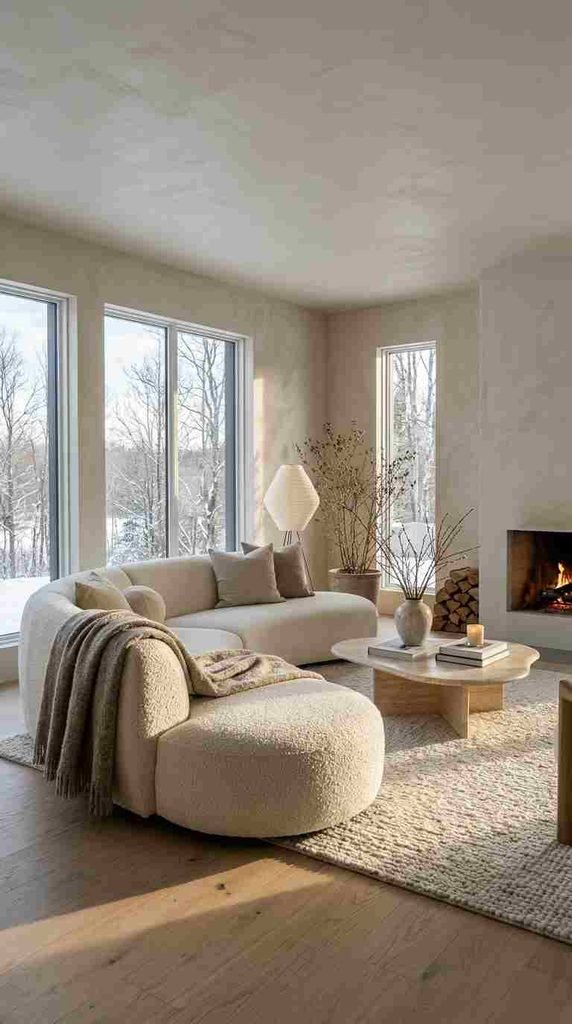
The living room is where winter is enjoyed — long evenings by the fire, books, blankets, and everyone gathered in one place. In winter, that room earns its layers: soft rugs underfoot, nubby bouclé against smooth velvet, chunky knit over flat-weave linen. These 17 layered winter living room ideas show how to build that warmth up piece by piece, starting on the floor and ending with the small accents that make the room feel finished.
1. The Foundation: Jute and Wool Rug Combo
Start your layering journey at the floor level by placing a large, natural jute rug as a base and topping it with a smaller, plush wool rug. The rough, organic texture of the jute provides durability and earthy contrast, while the soft wool adds immediate underfoot comfort and insulation. This combination defines the seating area visually and physically, grounding the space with warmth. Size the jute base at least 20 cm wider than your coffee table on every side so the seating group sits fully on the rug, then center a wool rug about 60 cm smaller on top. Vacuum the jute weekly with a suction-only head — a beater bar can snag the fibers — and rotate both rugs every month so they wear evenly. Leave the edges of the top rug un-taped so you can shake it out easily.

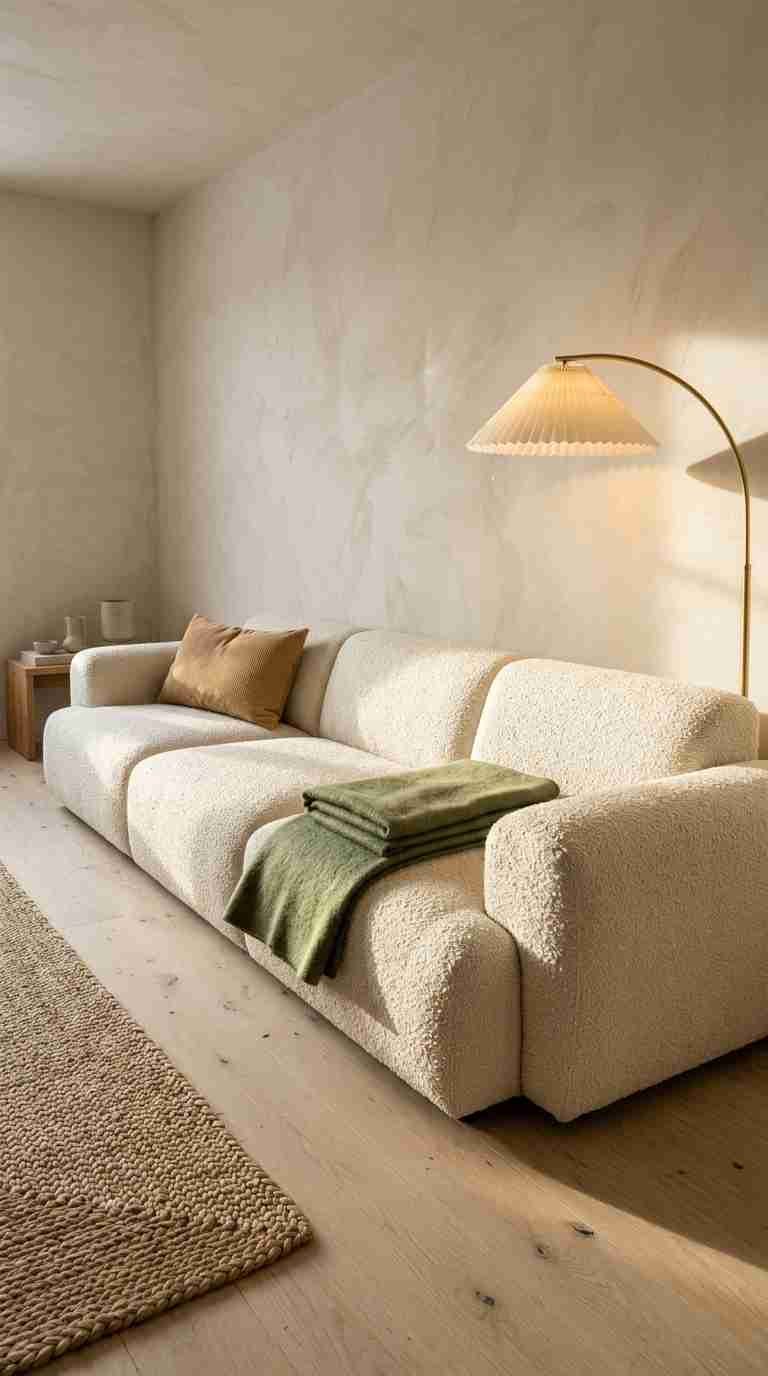
2. Bouclé Sofa as a Textural Anchor
Choose a sofa upholstered in bouclé fabric to serve as the primary textural element in the room. The looped, nubby yarn creates a three-dimensional surface that catches the light and invites touch, adding significant visual weight without heavy colors. This foundational piece sets the tone for a cozy, high-end aesthetic that feels both modern and timeless. Choose a bouclé in ivory or light oatmeal rather than bright white, since the looped fibers show marks less easily and suit a winter palette. Vacuum the sofa with an upholstery attachment once a week, since dust settles into the loops, and blot spills quickly rather than rubbing them in. The soft, looped yarn that gives the fabric its nubby feel is bouclé.
3. Velvet Lumbar Pillows for Contrast
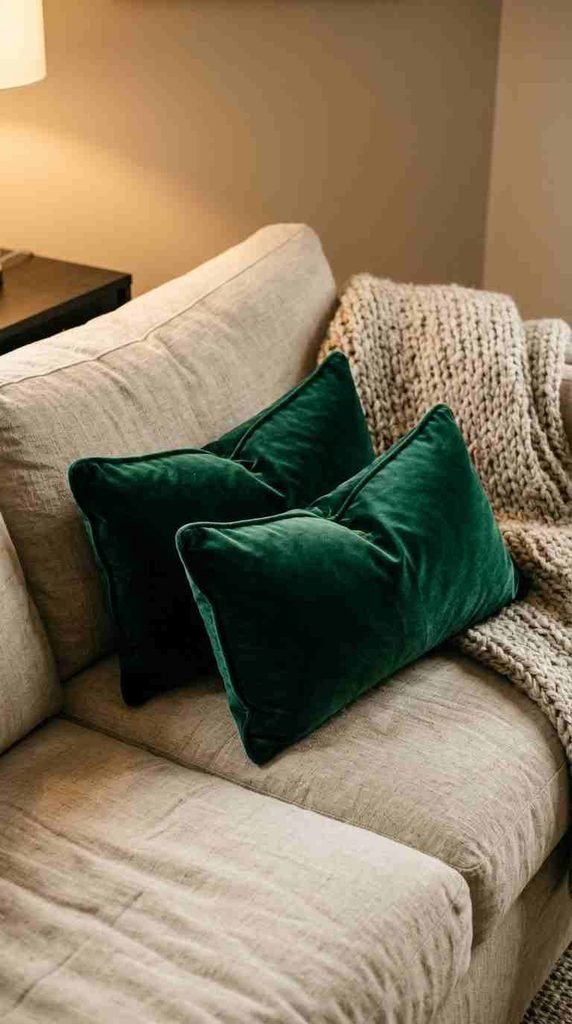
Introduce smooth, light-reflecting velvet lumbar pillows in deep jewel tones like emerald or sapphire to contrast with matte fabrics. The sleek surface of the velvet plays beautifully against rougher textures like wool or linen, adding a layer of sophisticated shine. These pillows provide ergonomic support while elevating the visual richness of the seating arrangement. Style two lumbar pillows in deep emerald or sapphire across the center of the sofa, with plain cushions at each end, so the jewel tones read as a deliberate line of color. Flip the pillows monthly so the velvet pile wears evenly, and brush them lightly with a dry cloth to revive the sheen. For more velvet-filled room schemes, see our cozy winter living room decor ideas.
4. Chunky Knit Throw Blankets
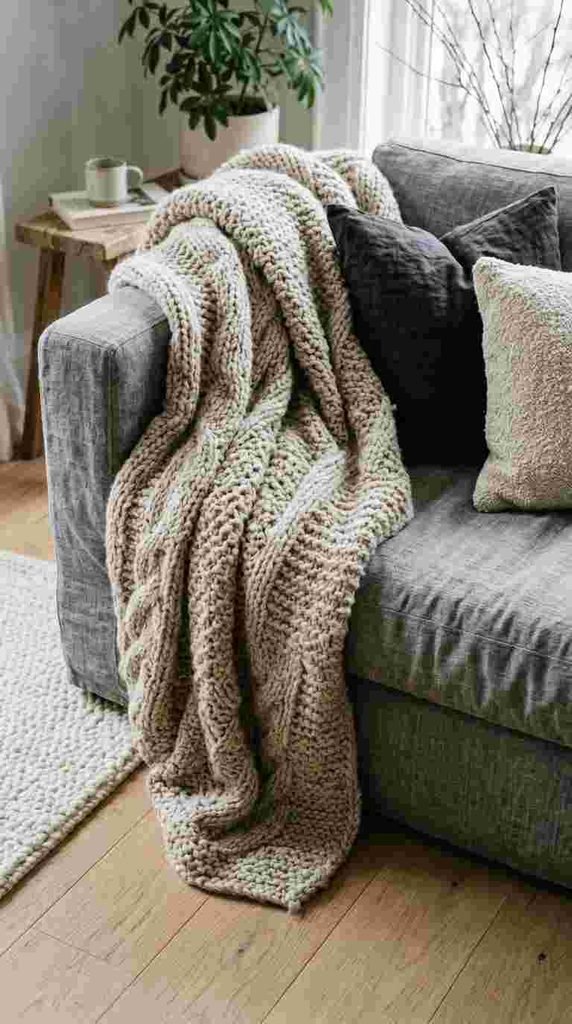
Drape oversized chunky knit throw blankets over the arms or back of your sofa for instant tactile warmth. The thick, exaggerated weave adds substantial visual bulk and coziness, making the furniture look more inviting and lived-in. Choose neutral shades like oatmeal or charcoal to keep the look cohesive while maximizing the textural impact. Fold one throw into a long rectangle and lay it across the sofa arm so it stays in place when you sit down, rather than sliding off a cushion. Choose an acrylic or washable wool blend so the throw can be machine-washed on a gentle cycle and air-dried flat. Keep a second throw folded in a basket beside the sofa, so guests never have to search for one.
5. Faux Fur Accent Pillows
Scatter plush faux fur pillows among your other cushions to introduce a layer of ultra-soft luxury. The long, silky pile contrasts sharply with structured fabrics like cotton or leather, adding a sense of indulgence and comfort. Mixing different fur lengths and subtle neutral tones creates a dynamic, cloud-like effect on your seating. Place faux fur pillows at the corners of the sofa, where arms rest, so the plush texture is the first thing you feel when you sit down. Choose a short pile rather than a long shag, since shorter fibers shed less and stay neat through the season. Shake the pillows out weekly and keep them away from direct radiator heat, which can flatten the fur.

6. Linen Slipcovers for Softness
Refresh existing furniture with loose-fitting linen slipcovers in natural flax or oatmeal tones. The breathable, slightly wrinkled fabric adds a relaxed, airy quality that prevents the room from feeling too stiff or formal. Linen’s natural texture layers beautifully with heavier winter wools, creating a balanced, organic aesthetic. Pick slipcovers a size larger than your furniture, then tuck the extra fabric into the seat and back creases for a soft, tailored fit. Wash slipcovers in cold water on a gentle cycle and put them back on the furniture while they are still slightly damp so they dry to shape. Keep a second set in a linen chest so you can swap covers after a spill instead of waiting for laundry.

7. Woven Seagrass Basket for Storage
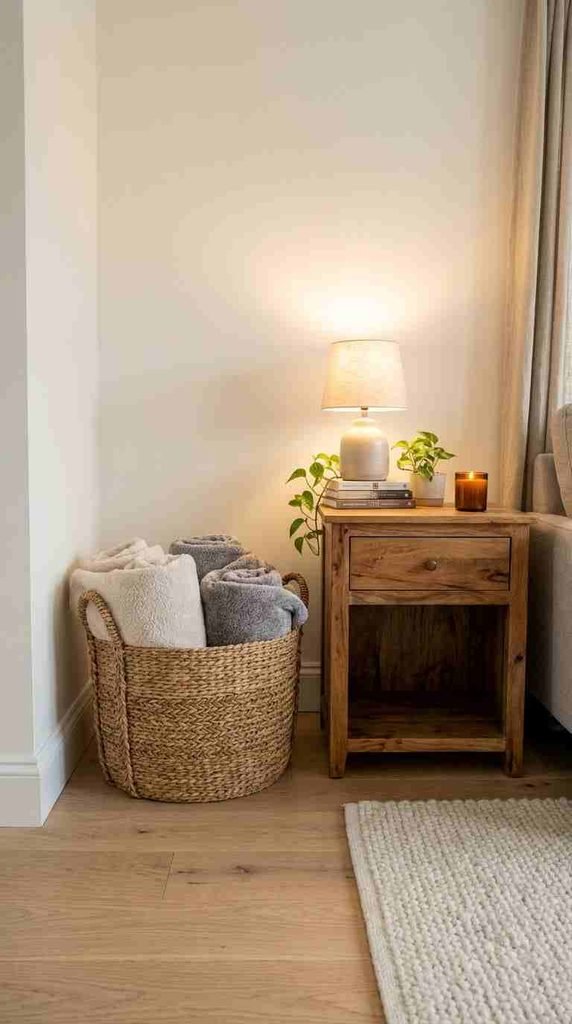
Use a large woven seagrass basket to store extra blankets and pillows, keeping them accessible yet tidy. The natural fibers of the basket add another layer of organic texture to the room, complementing the jute rug and wooden elements. It serves as both a functional storage solution and a sculptural decor piece. Choose a basket at least 50 cm wide and 40 cm tall so it holds four or five folded throws and spare cushions without hiding them. Set it beside the sofa arm or under a side table where it is easy to reach, and line the bottom with a folded sheet to keep dust off the contents. Wipe the seagrass with a damp cloth monthly so the fibers do not dry out and flake.
8. Cable-Knit Ottoman Cover
Slip a cable-knit cover over a plain storage ottoman to transform it into a textured focal point. The intricate knit pattern adds visual interest and softness to the furniture piece, making it more inviting to touch. This simple update turns a functional item into a cozy centerpiece that encourages relaxation. Measure your ottoman before buying a cover — a cable-knit cover should fit snugly, with 2 to 3 cm of stretch over the top and sides. Choose a superwash wool or an acrylic-wool blend that can be hand-washed and dried flat. Slip a small tray on top of the ottoman when it is not in use as a footrest, so it doubles as a side table.

9. Sheer Linen Curtains Over Blinds
Layer sheer linen curtains over existing blinds or shades to soften the window treatment and diffuse light. The lightweight fabric adds vertical texture and movement, breaking up the hard lines of the window frame. This layering technique maintains privacy while allowing soft, glowing daylight to fill the room. Hang the sheer linen on a rod at least 10 cm above the window frame and 5 cm wider on each side than the glass, so the fabric hangs in soft folds. Layer the sheers behind a heavier blind for evenings, and pull the blinds up during the day so the sheer fabric filters the light. Wash the panels on a gentle cycle and hang them while damp to avoid ironing.

10. Sheepskin Rug on Chair
Drape a genuine or high-quality faux sheepskin rug over the seat or back of an accent chair. The irregular shape and soft white fibers create a striking contrast against dark wood or leather furniture, adding a layer of primal comfort. This small addition makes the chair more inviting and visually interesting. Drape the sheepskin over the seat and the back of the chair, folding it in half so the thick pile cushions both areas and the skin stays in place. Comb the wool monthly with a wide-toothed brush to keep it fluffy, and shake it outdoors on dry days. Keep the sheepskin off the radiator, since direct heat dries the leather backing and makes it stiff.

11. Mixed Pillow Sizes and Shapes
Combine square, lumbar, and round pillows in varying sizes to create a dynamic, layered look on your sofa. The variety in shape breaks up the monotony of standard cushions and adds architectural interest to the seating area. Mix firm supports with soft, squishy options for both style and comfort. Start with two large square cushions (50 by 50 cm) at the back, then layer two lumbar pillows (30 by 50 cm) in front, and finish with one round cushion (40 cm) for a shape that breaks the straight lines. Keep three colors at most — a deep tone, a light neutral, and one pattern — so the mix looks intentional. For more pillow-layering inspiration, see our soft and cozy winter living room ideas.

12. Heavy Wool Area Rug
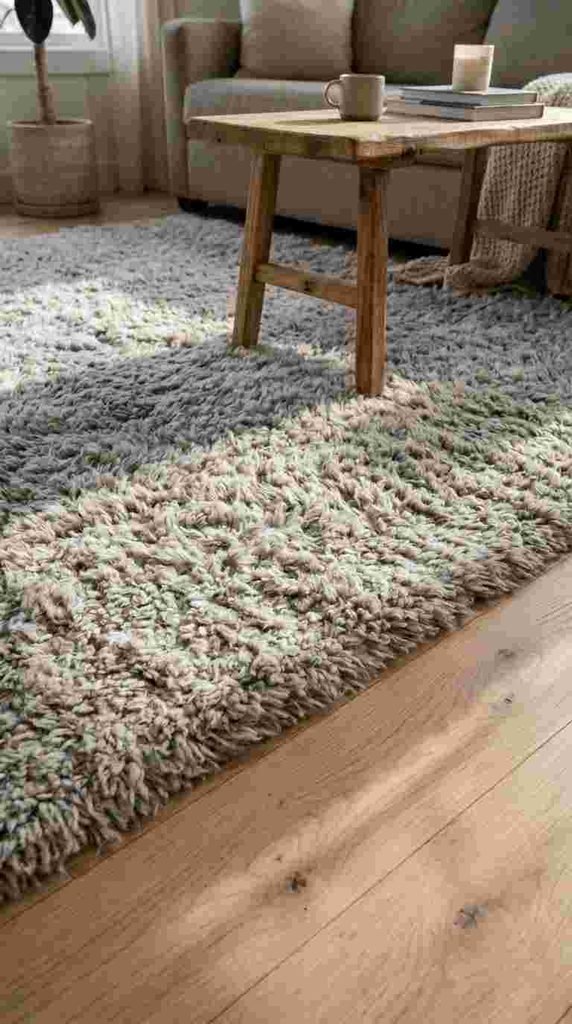
Place a thick, high-pile wool area rug under the coffee table to add density and warmth to the floor plan. The dense fibers provide excellent insulation against cold drafts and add a profound sense of acoustic warmth to the space. This heavy layer grounds the furniture and creates a cozy island within the room. Choose a wool rug at least 240 by 300 cm for a standard three-seat sofa, so the front legs of the sofa and the chairs all sit on the rug. Vacuum it twice a week with a suction-only head to keep the pile full, and rotate it 180 degrees every month. Place a 5 mm felt underlay beneath it, which keeps the rug from sliding and adds an extra layer of warmth underfoot.
13. Textured Wall Hanging
Hang a large woven tapestry or macrame piece on the wall to add acoustic softness and visual depth. The textile absorbs sound, reducing echo in hard-surfaced rooms, and adds a handmade, artistic touch. Choose neutral fibers like cotton or wool to maintain a calm, cohesive palette. Hang the piece so its center sits at eye level — about 145 cm from the floor — and at least 30 cm from the sofa so it does not get knocked when someone stands up. Use two hooks for heavy weavings, spaced at least 20 cm apart, so the piece hangs level and does not swing. For the classic knotted look that never dates, choose macramé.

14. Leather and Fabric Combination
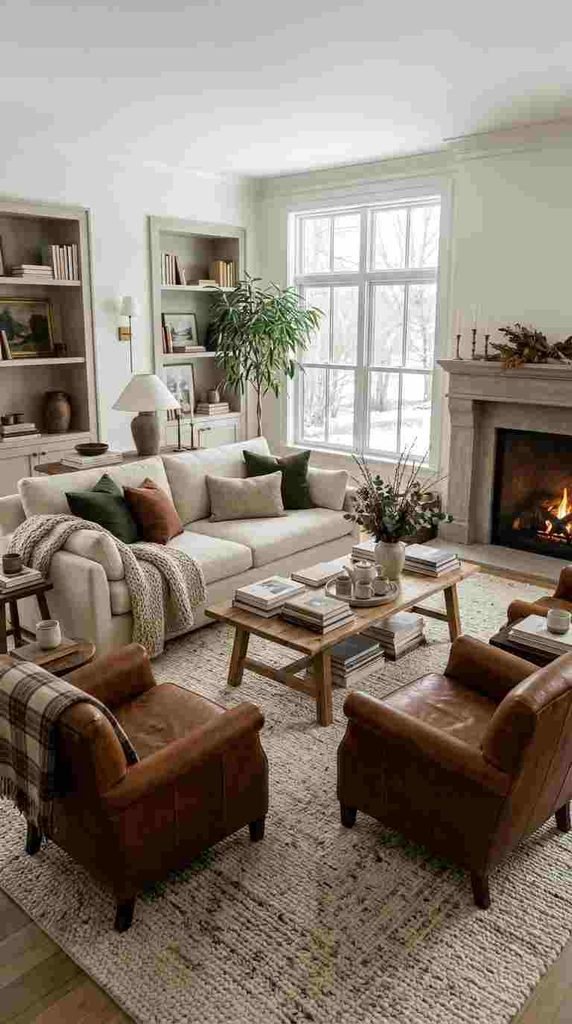
Mix leather chairs with fabric sofas to create a rich interplay of smooth and soft textures. The cool, sleek surface of leather contrasts beautifully with the warmth of upholstered pieces, adding sophistication and durability. This combination prevents the room from feeling too monochromatic or flat. Pair a smooth leather chair with a nubby fabric sofa so the contrast of textures is obvious at a glance. Keep the leather conditioned with a leather cream twice during the season so the seat does not dry out and crack in heated air. Place a soft throw over the leather chair arm, since leather feels cold on first contact in winter.
15. Corduroy Accent Pillows
Incorporate corduroy pillows in warm earth tones to add a ribbed, tactile dimension to your decor. The vertical lines of the fabric catch the light differently than smooth materials, adding subtle visual complexity. Corduroy is durable and soft, making it a practical yet stylish choice for high-use areas. Choose corduroy in warm earth tones — rust, camel, or deep olive — and mix a wide wale (8 mm) with a narrow wale (3 mm) for a subtle contrast. Brush the fabric with a soft brush monthly to lift the pile and keep the ribs clear. Keep corduroy out of direct sunlight, where the color can fade unevenly across the ribs.

16. Layered Throw Blankets
Fold and layer two different types of throw blankets on the arm of a chair, such as a wool plaid under a faux fur throw. This technique showcases multiple textures at once and provides extra warmth for chilly evenings. It creates a curated, styled look that appears effortless and inviting. Fold a wool plaid throw in half lengthwise and lay it over the arm of the chair, then drape a lighter knit throw across the seat so both textures are visible at once. Keep the throws within reach of the seat rather than piled at the other end of the room. Wash each throw separately on a gentle cycle and dry flat so the plaid keeps its shape.

17. Natural Wood and Stone Accents
Introduce natural wood and stone elements through coffee tables, side tables, or decor objects to ground the soft textiles. The hard, cool surfaces provide a necessary counterpoint to the abundance of soft fabrics, preventing the room from feeling overly mushy. This balance of hard and soft textures creates a harmonious, well-rounded space. Pair a solid wood coffee table with stone objects — a travertine bowl, a marble bookend — so the room has both warm and cool surfaces to touch. Use the stone pieces sparingly, one per surface, so they read as accents rather than clutter. Apply wood oil to the table once a season to keep the surface rich and protected against glass rings.

Final Thoughts
Layering a living room for winter is less about buying a lot of new pieces and more about combining the textures you already love. Start with the floor, add one soft layer to the sofa, then one to the chair beside it. If you can run your hand across a surface and feel the difference, the layer is working — and by the time the coldest weeks arrive, your living room will feel like the warmest room in the house. If you have a fireplace to dress up, see our winter fireplace styling ideas. When the living room is done, carry the same softness into sleeping quarters with our cozy winter bedroom decor ideas.





One Comment