
23 Winter Balcony Plant Decor Ideas 2027 to Add Natural Beauty to Your Outdoor Space
A balcony does not have to go quiet when the cold arrives. With the right plants, it can stay green, scented, and alive all the way through winter, even while snow settles on the railing. The trick is choosing plants that like the cold, evergreens, winter flowers, and tough shrubs, and giving them pots that drain well and shelter from the worst wind. This guide walks through 23 plant ideas that work on balconies of every size, from a single window box on a city ledge to a wide terrace. Start with one or two hardy anchors, then add colour and texture around them, and your balcony will give you something worth looking at every morning, frost or not.
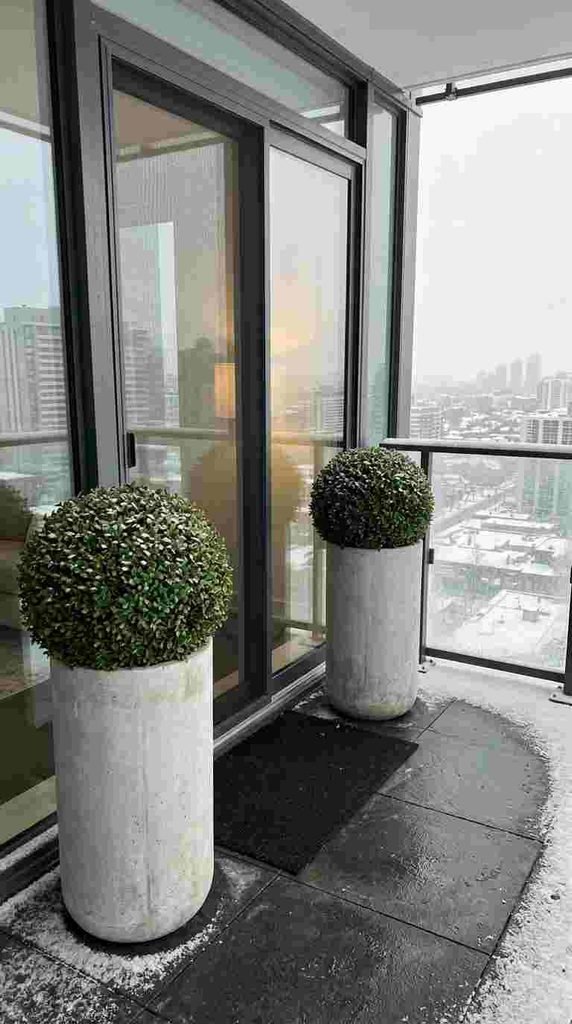
1. Boxwood Topiaries in Tall Planters
Create a classic, structured look by placing tall, cylindrical planters on either side of your balcony door and filling them with round boxwood topiaries. The dense, evergreen foliage provides a lush, manicured appearance that remains vibrant all winter long. This symmetrical arrangement adds a touch of formal elegance and frames your outdoor space beautifully. Choose planters 45 to 60 cm tall so the topiaries stand at door height and frame the entrance properly. Water boxwood sparingly in winter, only when the soil feels dry 5 cm down, because wet roots freeze and rot in cold pots. Clip lightly in late autumn to keep the shape, and turn the planters every few weeks so both sides get even light. For more balance and greenery, see our winter balcony decor ideas.
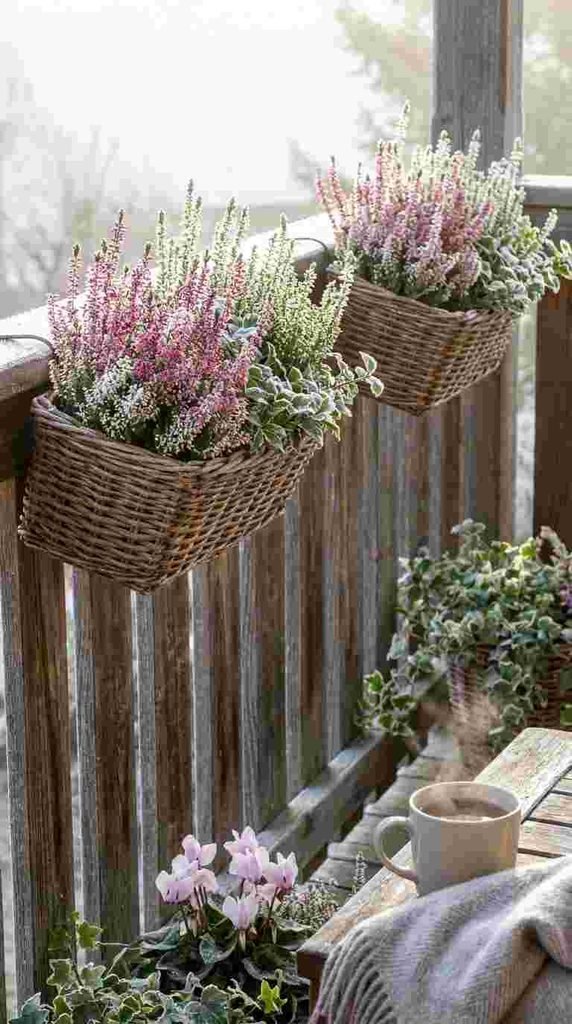
2. Winter Heathers in Hanging Baskets
Add a splash of delicate color to your balcony railing with hanging baskets overflowing with winter heather. These hardy plants produce tiny, bell-shaped flowers in shades of pink, purple, and white that bloom even in the coldest months. The trailing habit of the foliage softens the hard lines of the balcony and brings a cheerful, cottage-like vibe. Hang baskets at eye level, about 160 cm from the floor, so the colour shows without blocking the view from inside. Use a light, free-draining compost and water only when the top 3 cm feels dry, since heathers dislike wet feet in cold weather. Deadhead spent flower spikes to stretch the display into early spring.
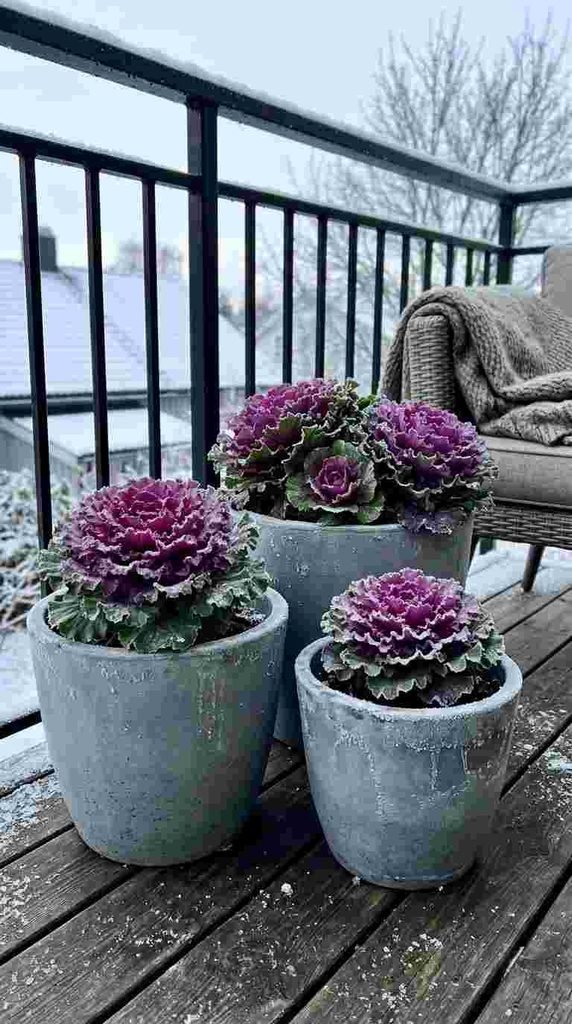
3. Ornamental Kale in Frosted Pots
Bring striking texture and unexpected color to your balcony with ornamental kale planted in matte, frosted-gray ceramic pots. The ruffled leaves come in stunning shades of deep purple, creamy white, and vibrant green, looking almost like giant winter roses. This cold-hardy vegetable thrives in freezing temperatures and adds a dramatic, sculptural element to your plant display. Plant kale in pots at least 25 cm wide so the leaves have room to open into full rosettes. The colours deepen after the first frosts, so a cold snap actually improves the display. Water at the base, not over the leaves, to keep the centres dry and stop rot in damp weather.
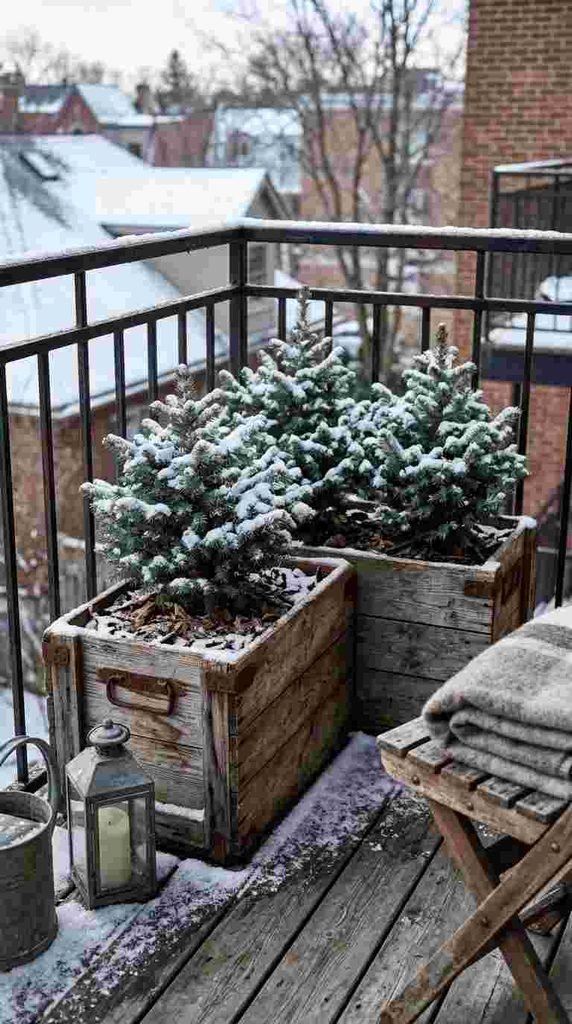
4. Dwarf Conifers in Wooden Crates
For a rustic and natural feel, plant small dwarf conifers, like blue spruce or mugo pine, in reclaimed wooden crates. These compact evergreens provide year-round greenery and a wonderful pine scent, while the weathered wood adds a cozy, cabin-like charm. They are perfectly sized for smaller balconies and require very little maintenance. Line wooden crates with a plastic sheet with drainage holes punched through, so the wood survives the winter without rotting. Place the crates against the wall where wind is weakest, and raise them 5 cm off the floor on pot feet so rain drains away. A handful of slow-release fertiliser in early spring restarts growth after the cold months.
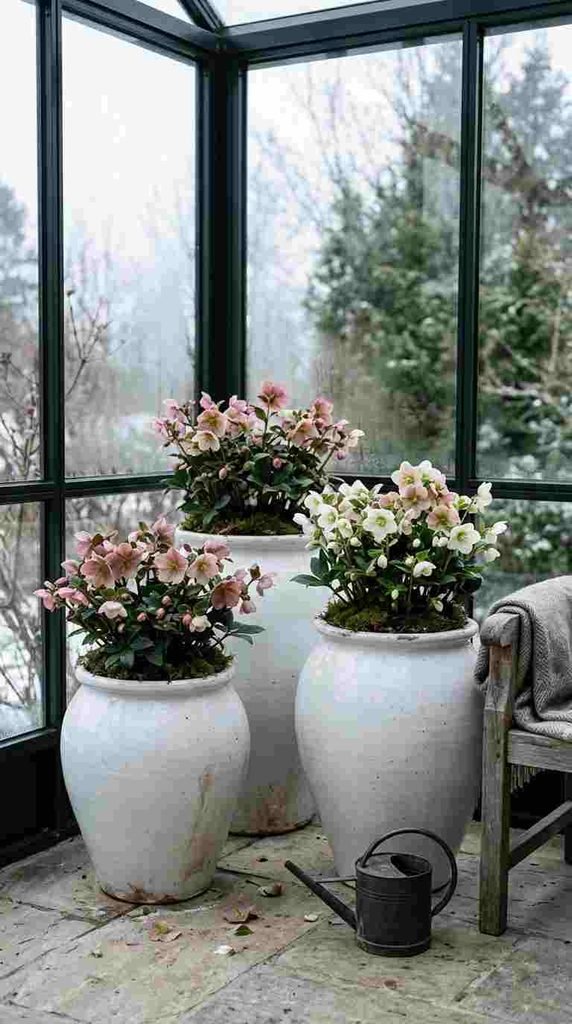
5. Hellebores in Large Ceramic Urns
Brighten up a shaded corner of your enclosed or covered balcony with large, elegant ceramic urns filled with blooming Hellebores, also known as Lenten roses. These incredible winter bloomers produce nodding flowers in shades of white, pink, and deep plum, often pushing right through the snow. Their leathery, dark green foliage provides a beautiful backdrop for the delicate blossoms. Set urns 40 to 50 cm wide in a sheltered corner, since hellebores dislike drying wind even though they love the cold. Keep the soil moist but never waterlogged, and remove old leaves in late winter so the flowers show clearly. Hellebores are poisonous if eaten, so wash your hands after handling them and keep them away from curious pets. For a sheltered setup, see our enclosed winter balcony decor ideas.
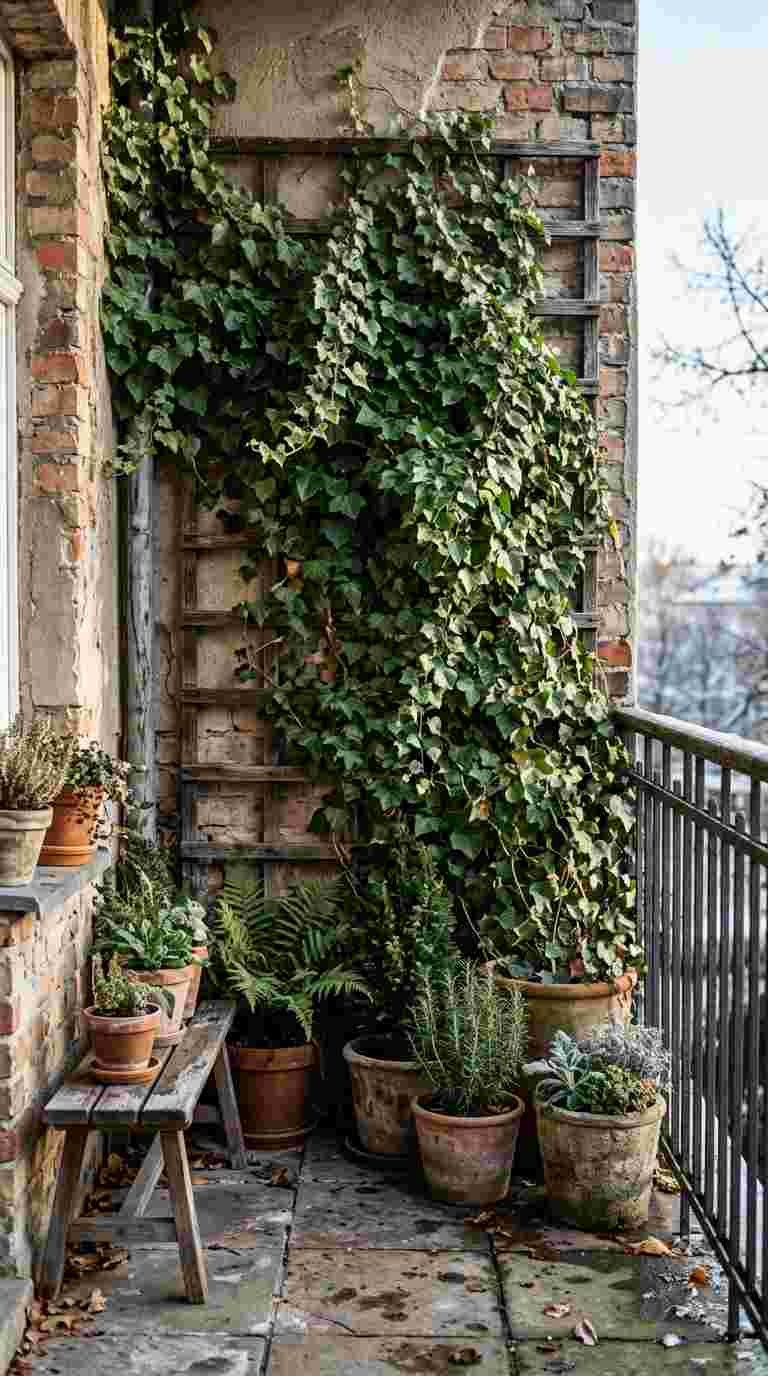
6. Trailing Ivy on a Wooden Trellis
Maximize your vertical space by training hardy English ivy up a wooden trellis attached to your balcony wall. The thick, glossy green leaves create a living wall of privacy and insulation, helping to block chilly winds. This classic climbing plant remains evergreen throughout the winter, adding a lush, romantic feel to your outdoor retreat. Train young ivy stems through the trellis every two weeks while they are still flexible, tying them loosely with soft twine. A trellis 120 to 150 cm tall gives enough height for a real screen without shading the balcony too much. Cut back any stem that reaches the neighbour’s side, and check the ties after storms so the vines do not pull loose.

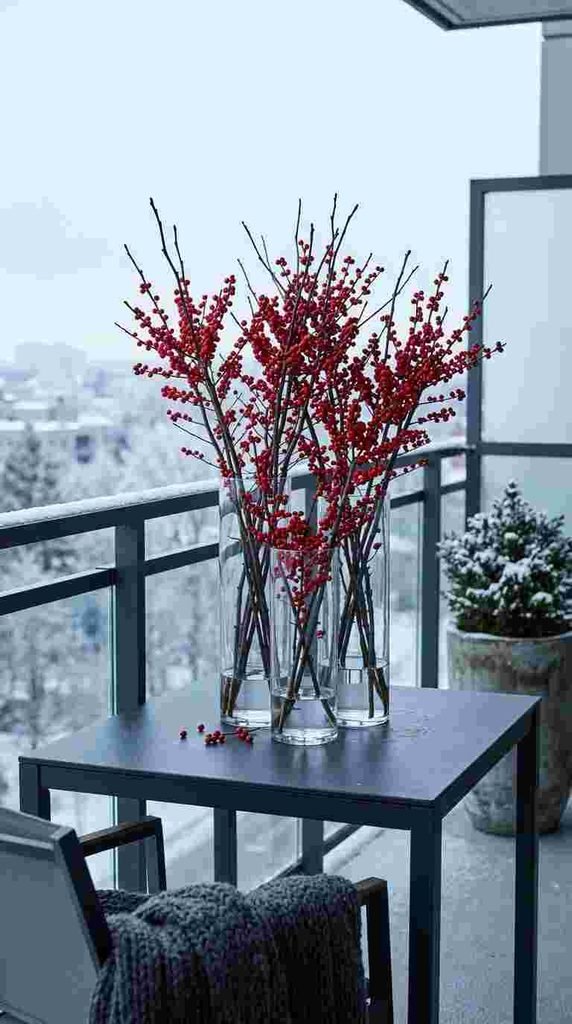
7. Winterberry Branches in Tall Glass Vases
If you prefer a low-maintenance, structural approach, arrange tall, bare branches loaded with bright red winterberries inside clear glass cylinder vases. The striking contrast of the vivid red berries against the clear glass and the gray winter sky creates a stunning, modern art piece. This decor requires no watering and will last beautifully throughout the entire season. Use vases at least 30 cm tall and half-filled with water to keep cut winterberry branches fresh for two to three weeks. Change the water weekly and trim the stem ends by 2 cm each time to help them drink. A few stems in red, orange, and gold give the best colour against grey winter light.
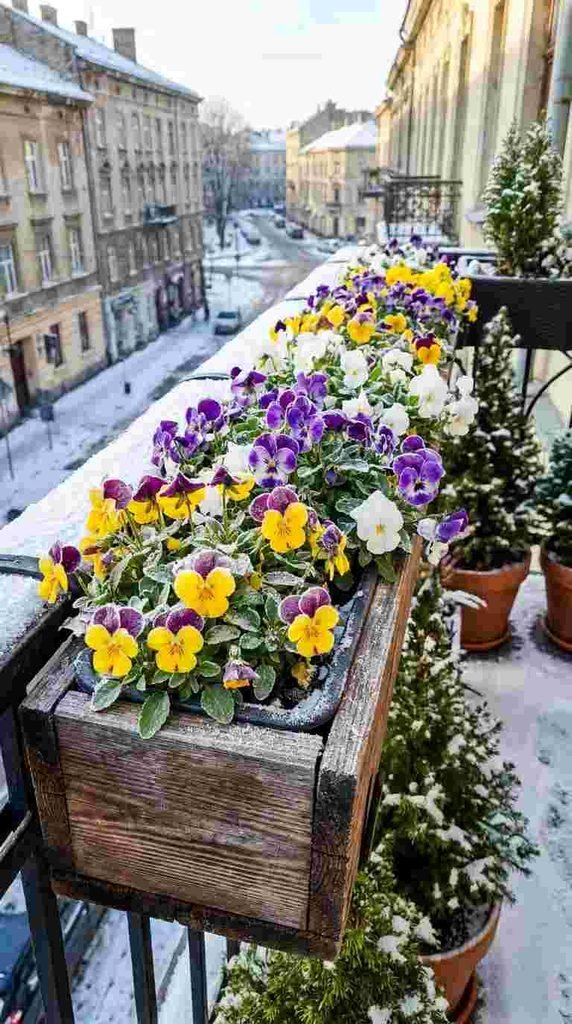
8. Pansies and Violas in Window Boxes
Line your balcony window boxes with cold-hardy pansies and violas in a mix of bright yellows, deep purples, and crisp whites. These cheerful little flowers are incredibly resilient and can survive light freezes, bringing a much-needed pop of color to dreary winter days. Plant them densely for a vibrant, carpet-like effect that lifts your spirits every time you look outside. Plant window boxes with pansies 15 cm apart so the plants fill in quickly without crowding. The flowers keep blooming in mild spells, so pick off faded heads every few days to encourage more. In a hard frost, the blooms may droop but they usually recover once the temperature rises above freezing.
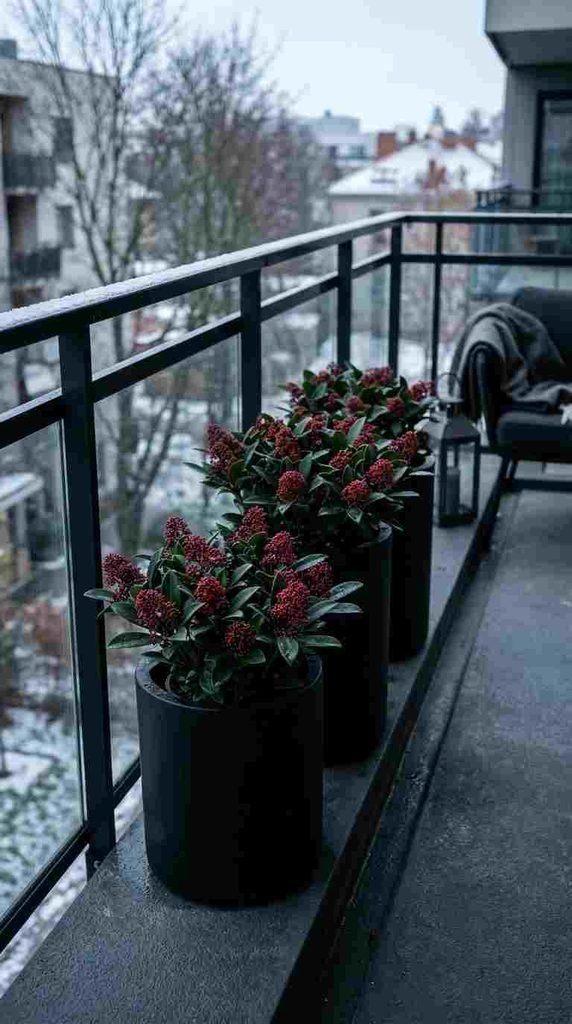
9. Skimmia Japonica in Matte Black Pots
Introduce a touch of moody elegance with Skimmia Japonica planted in sleek, matte black cylindrical pots. This compact evergreen shrub features dark green leaves and produces clusters of bright red buds in the winter that look like tiny jewels against the dark foliage. It thrives in cooler temperatures and adds a sophisticated, contemporary edge to your balcony. Choose matte black pots 30 to 35 cm across, since skimmia roots like room and the dark colour makes the red buds stand out. Water when the top 4 cm of compost is dry, and feed with an ericaceous fertiliser in spring, because skimmia prefers acidic soil. Keep the pots out of harsh midday sun on a south-facing balcony to protect the leaves from scorch.
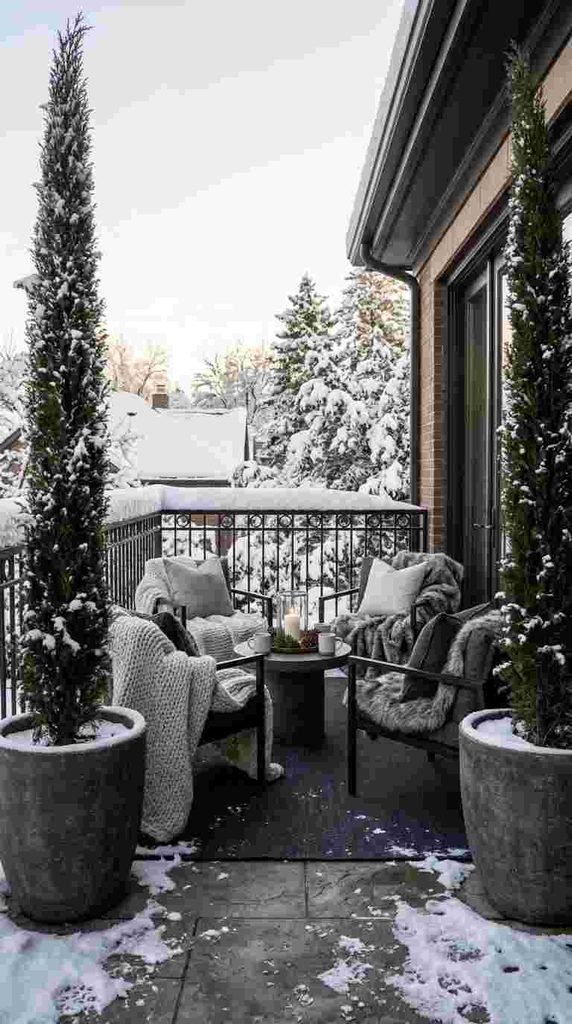
10. Italian Cypress Trees Flanking the Seating Area
Create a grand, Mediterranean-inspired look even in the dead of winter by placing tall, narrow Italian cypress trees in dark gray pots on either side of your seating area. Their strict, columnar shape draws the eye upward and provides a beautiful architectural backdrop. The deep green foliage remains dense and vibrant, offering a sense of privacy and structure. Place the cypress trees so they leave at least 60 cm of clear walking space between the planters and the seating. Use pots 40 cm wide and heavy enough that wind cannot topple them, and add a layer of gravel at the base for drainage. Prune lightly in late winter to keep the slim, upright shape that makes them such good sentinels.
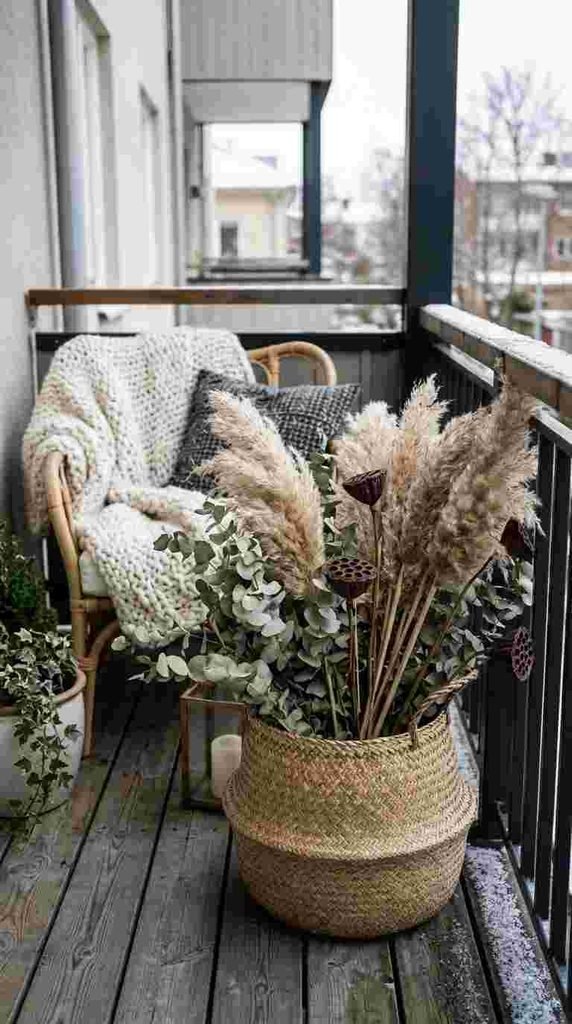
11. Dried Botanicals in a Woven Basket
For a completely frost-proof plant display, fill a large, textured woven basket with a mix of dried pampas grass, eucalyptus branches, and lotus pods. The neutral, earthy tones blend seamlessly with winter landscapes, while the varied textures add visual interest without the need for watering. This arrangement sways beautifully in the winter breeze and adds a relaxed, bohemian touch. Fill the basket two-thirds full with dried stems, then add a few fresh evergreen sprigs at the front for contrast. Mist dried botanicals very lightly, or not at all, since moisture makes them go limp and mouldy. Bring the basket indoors during heavy rain to keep the arrangement crisp for weeks. For more plant styling, see our beautiful balcony plant decor ideas.
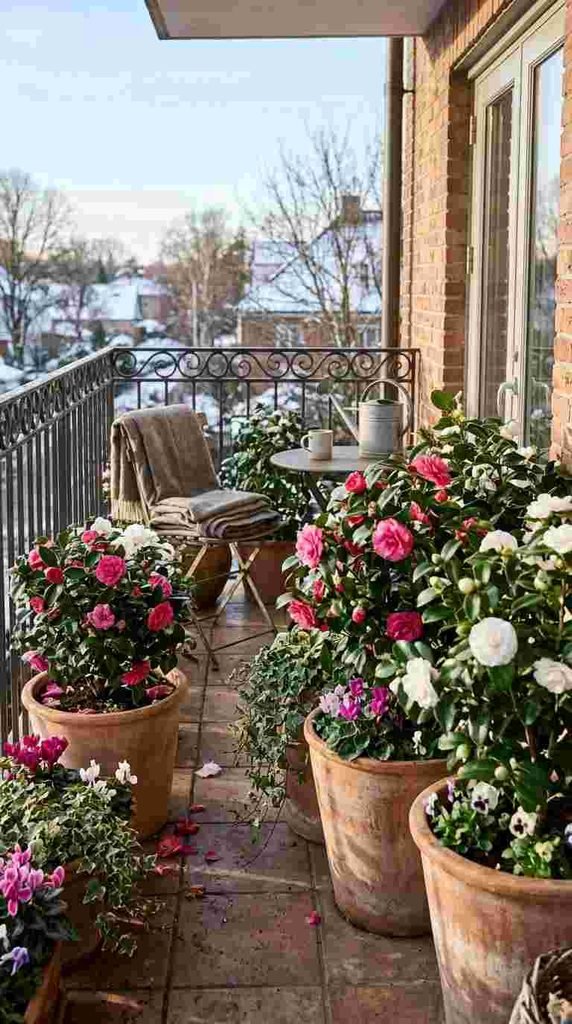
12. Camellias in Large Terracotta Pots
Bring the beauty of winter blooms to your sunny balcony with large terracotta pots planted with Camellia bushes. These stunning evergreen shrubs produce large, rose-like flowers in shades of pink, red, and white during the coldest months. The warm, earthy tone of the terracotta complements the rich green foliage and vibrant blossoms perfectly. Choose terracotta pots at least 35 cm wide with a drainage hole, and stand them on pot feet so rain runs away freely. Camellias like acidic, well-drained compost, so mix in ericaceous soil and top up with bark mulch to keep the roots cool. Shelter the buds from morning sun after frost, which can scorch them before they open.
13. Witch Hazel in a Sleek Metal Planter
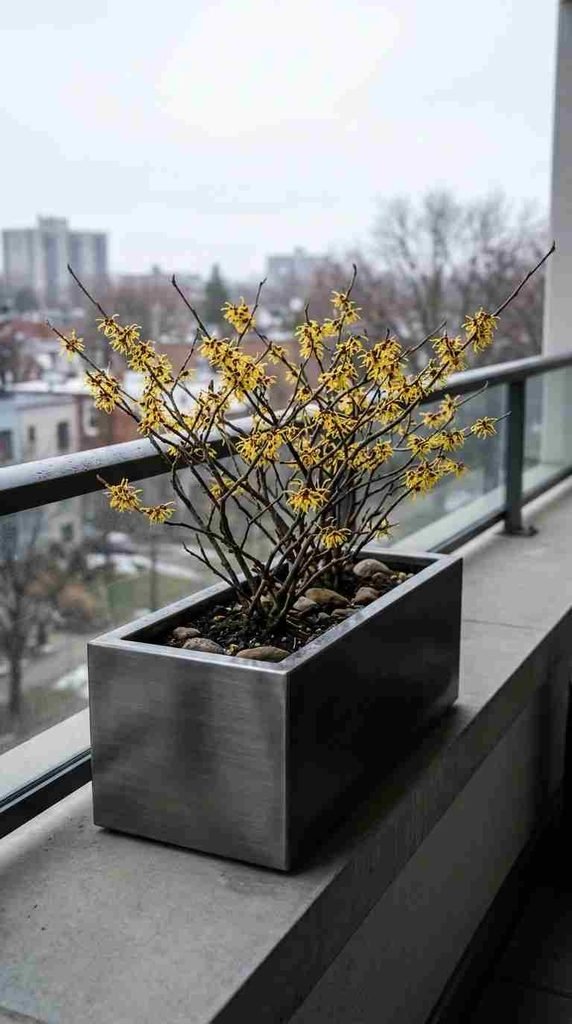
Plant a compact Witch Hazel shrub in a sleek, brushed metal planter to enjoy its unique, spidery yellow flowers and intoxicating fragrance. Witch Hazel blooms in the depths of winter, sending out curly, ribbon-like petals that stand out brilliantly against the gray sky. The metallic planter adds a modern, industrial contrast to the organic, wild shape of the blooms. Set the planter where you will catch the scent as you step outside, ideally within a metre of the door. Witch hazel flowers on bare branches, so give it a sleek metal planter 40 cm wide to balance the height of the shrub. Water sparingly in winter and add a slow-release feed in early spring as the leaves return.
14. Hardy Succulents in a Fairy Garden Bowl
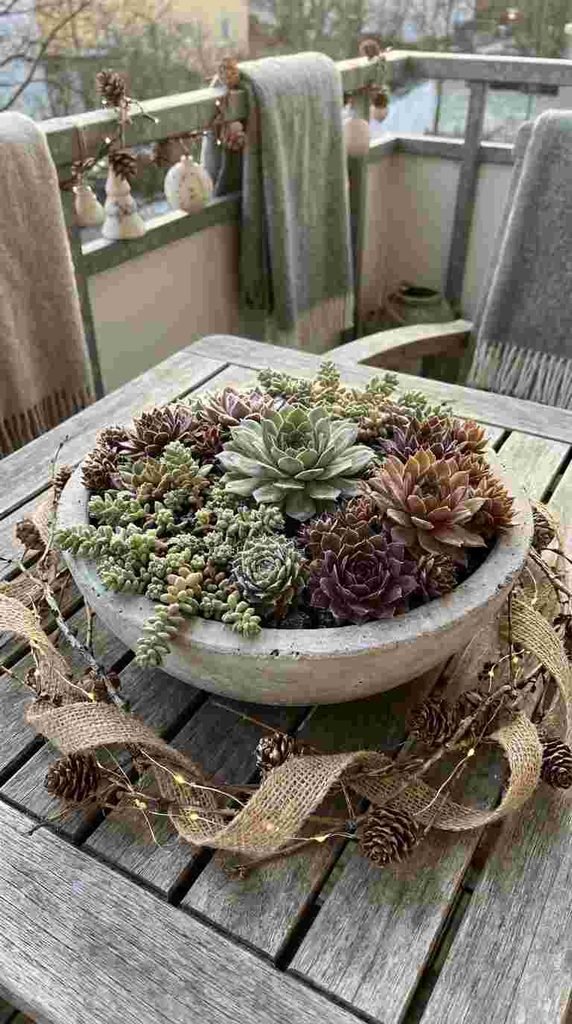
Create a miniature, frost-resistant landscape in a wide, shallow concrete bowl using hardy winter succulents like Sempervivum (hen and chicks) and Sedum. These rosette-shaped plants change color in the cold, taking on beautiful hues of red, purple, and bronze. This low-profile arrangement is perfect for a balcony table and adds a touch of whimsical charm. Use a bowl 30 cm across and 12 cm deep, filled with cactus compost mixed with coarse grit for sharp drainage. Keep the bowl under the balcony overhang if possible, since hardy succulents survive cold but rot in constant rain. A thin layer of small pebbles on the surface stops soil splashing and keeps the plants looking tidy.
15. Red Twig Dogwood in a Tall Cylinder
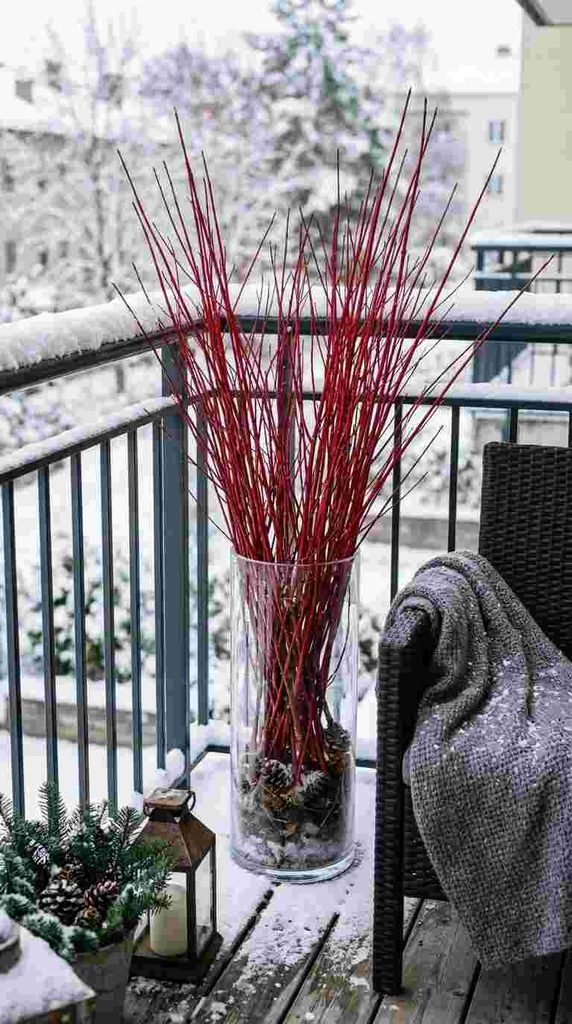
Highlight the striking color of Red Twig Dogwood by planting it in a tall, clear glass cylinder planter. The bright, fiery red stems provide a stunning visual contrast against the snow and the transparent glass, acting as a natural sculpture. This deciduous shrub loses its leaves in winter, allowing the vivid bark to take center stage. Cut stems 60 to 90 cm long and stand them in a tall cylinder at least 40 cm high, with 10 cm of water in the base. Replace the water every five days and keep the vase out of direct sun so the stems stay bright for a month. The coral-red colour glows best against a dark wall or a plain fence panel.
16. Mahonia in a Woven Rattan Planter
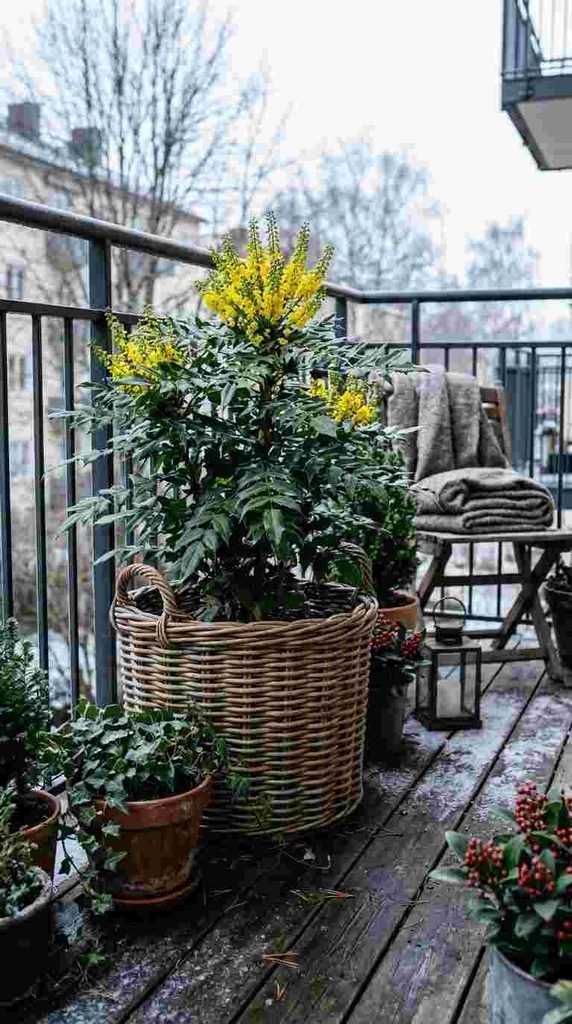
Add architectural interest to your balcony with a Mahonia plant housed in a large, woven rattan planter. This evergreen shrub features holly-like leaves and produces bright yellow, fragrant flower spikes in the middle of winter. The natural texture of the rattan basket complements the bold, structured foliage of the plant beautifully. Pick a rattan planter 35 to 40 cm wide and line it with a coir liner to slow the compost drying out in wind. Mahonia likes shade and shelter, so place it in the balcony’s least sunny corner and water when the top 5 cm of soil dries. Cut off spent flower spikes in spring to keep the shape tidy and encourage fresh leaves.
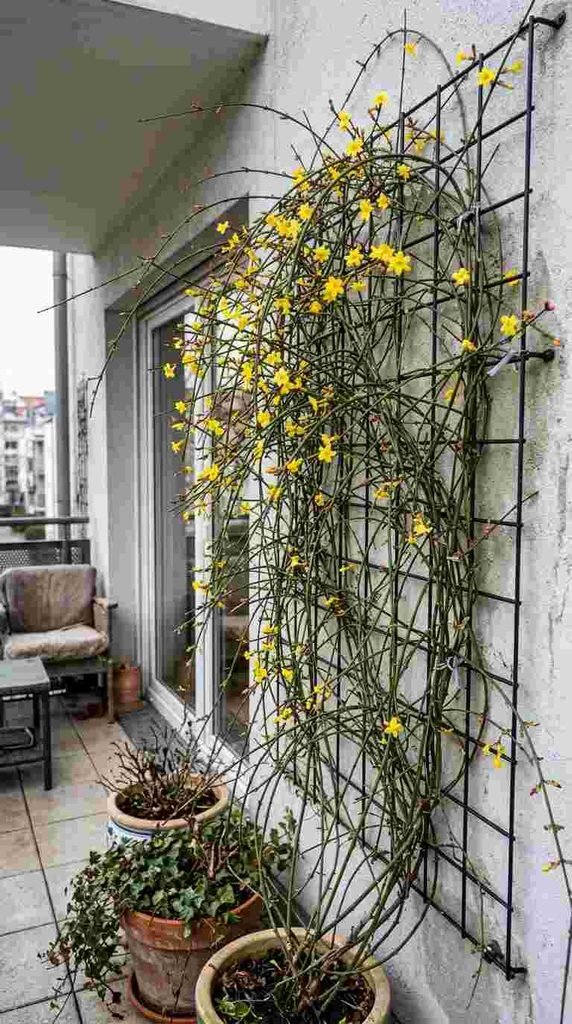
17. Winter Jasmine on a Wire Grid
Train Winter Jasmine to climb up a black wire grid attached to your balcony wall for a stunning display of bright yellow blooms. Unlike other jasmine varieties, this one flowers on bare, green stems in the dead of winter, creating a spectacular splash of color. It is incredibly hardy and will bring a cheerful, sunny vibe to your outdoor space. Fix the wire grid 10 cm clear of the wall so air can move behind the stems and the leaves stay healthy. Tie new growth to the grid every few weeks, aiming for a loose, open pattern rather than a dense mat. The yellow flowers open in mild spells, so a sunny wall helps them show through the cold season.
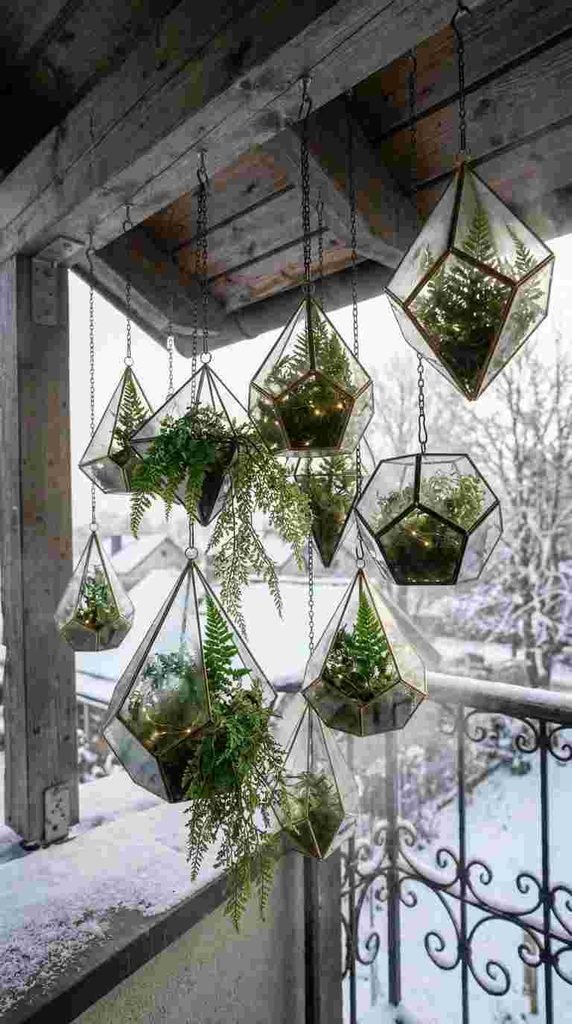
18. Evergreen Ferns in Hanging Glass Globes
Suspend a cluster of geometric glass terrariums from your balcony ceiling and fill them with lush, evergreen ferns. The enclosed glass protects the delicate fronds from harsh winds and frost, while the greenery adds a vibrant, tropical contrast to the winter chill outside. This elevated planting method saves floor space and adds a magical, floating effect. Hang glass globes from sturdy hooks at least 25 cm apart so the ferns have room to spread. Keep the soil lightly moist and mist the fronds once a week, since balcony air dries them quickly. Move globes against the wall on the coldest nights, where they are sheltered from frost and wind.
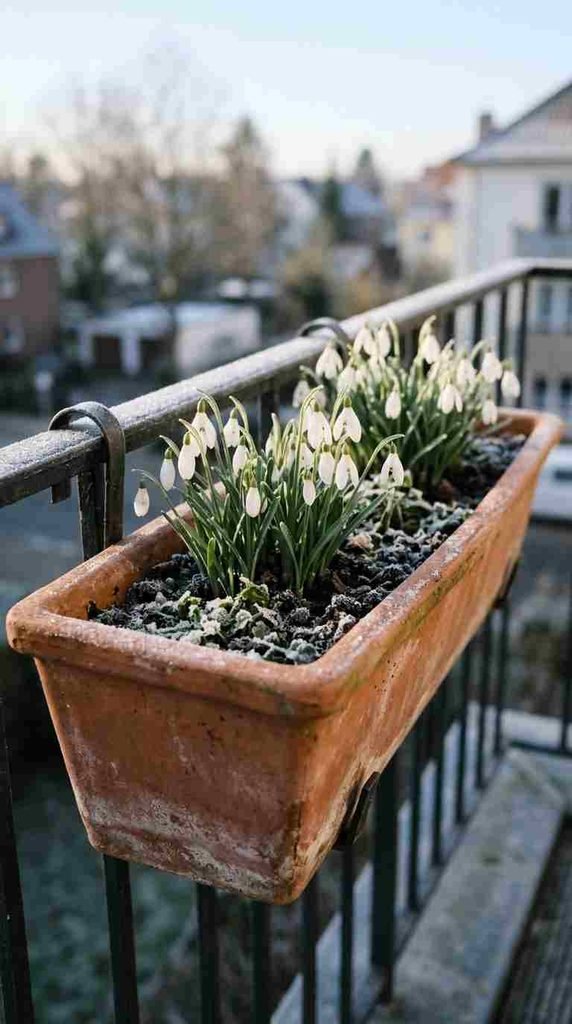
19. Snowdrops in a Shallow Clay Trough
Line your balcony railing with a long, shallow clay trough planted with delicate white snowdrops. These are among the very first flowers to bloom in late winter, often pushing their little white heads right through the snow. Their fragile beauty and subtle fragrance make them a highly rewarding and charming addition to your winter balcony. Plant snowdrop bulbs 8 cm deep and 5 cm apart in a shallow clay trough, with a 3 cm gravel layer at the bottom for drainage. Water once after planting, then leave them alone until shoots appear in late winter. Once they flower, the white cups look best against the dark trough and a few sprigs of evergreen.
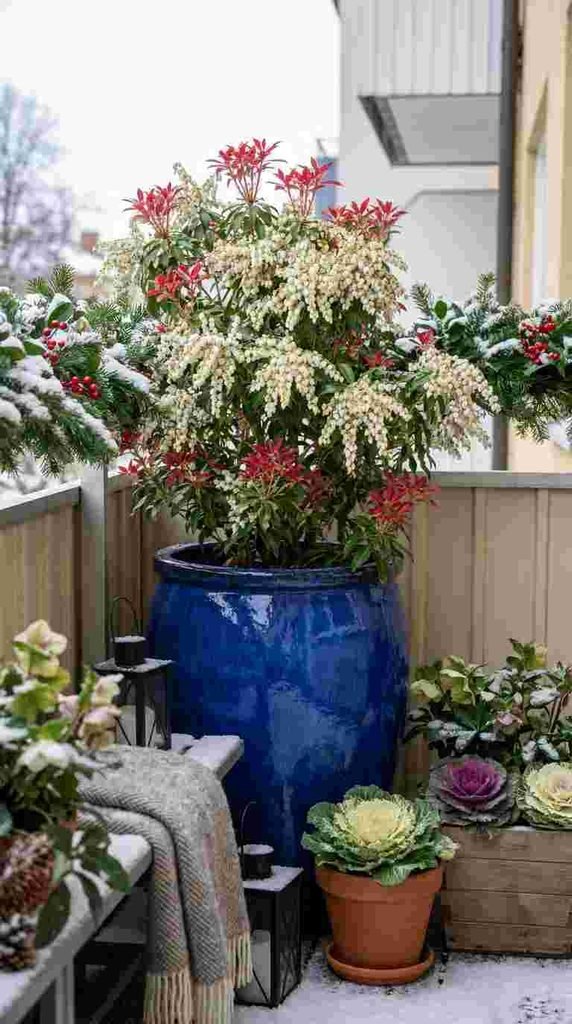
20. Pieris Japonica in a Glazed Blue Pot
Create a stunning color contrast by planting Pieris Japonica in a glossy, glazed blue ceramic pot. This evergreen shrub features cascading clusters of white, lily-of-the-valley-like flowers and striking red new growth that emerges in the winter. The deep blue of the pot perfectly complements the red and white tones of the plant. Choose a glazed blue pot 35 cm wide so the glossy leaves and pink buds contrast with the cool colour. Pieris needs acidic compost, so use ericaceous soil and water with rainwater if your tap water is hard. Position it where it gets morning sun and afternoon shade, and protect fresh growth from late frosts with fleece.
21. Rosemary Topiaries Shaped as Cones
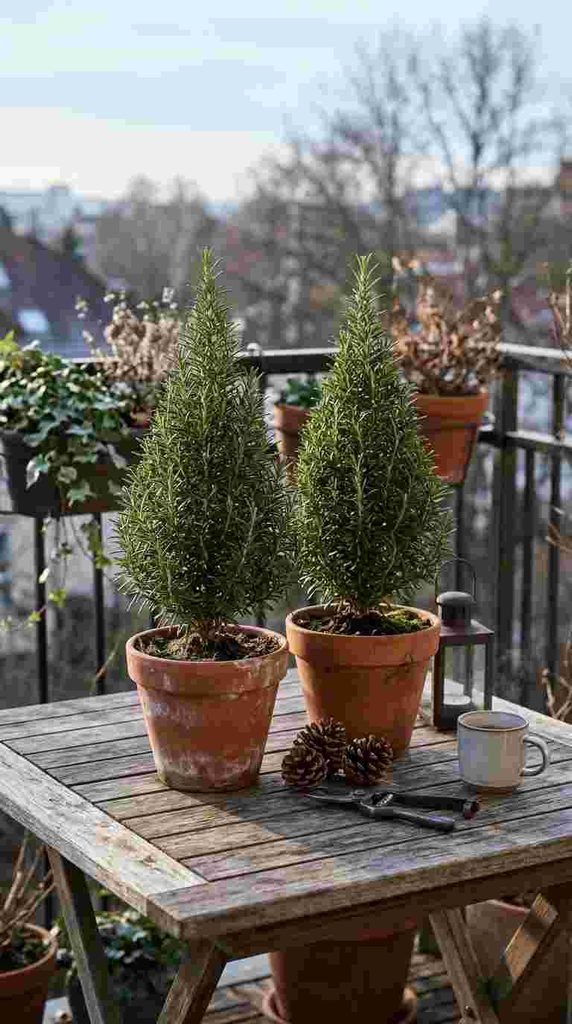
Prune hardy rosemary plants into perfect cone shapes and place them in small, matching pots on your balcony table. These fragrant evergreen topiaries add a neat, formal structure to your decor while releasing a wonderful, pine-like scent when brushed against. They are highly drought-tolerant and can withstand cold temperatures, making them ideal for winter. Trim rosemary cones lightly every six weeks in the growing season, removing no more than a third of the new growth at a time. Use a pot 30 cm wide with very free-draining, gritty compost, since rosemary hates wet roots in winter. Snip a few sprigs for cooking whenever you like, and the plant will branch out and thicken.
22. Cotoneaster on a Tiered Wooden Stand
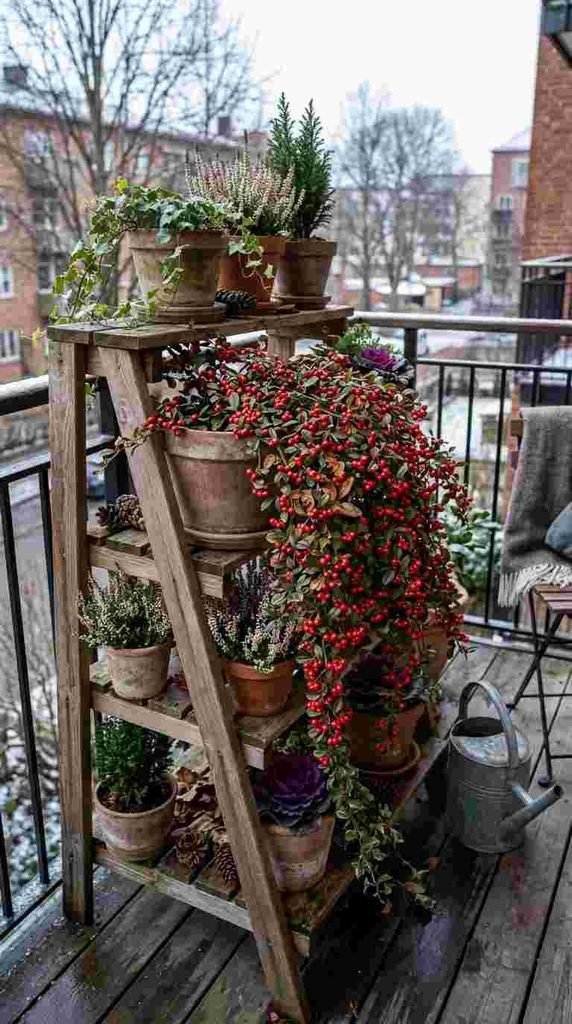
Place a cascading Cotoneaster plant on a tiered wooden plant stand to showcase its beautiful, berry-laden branches. In winter, this evergreen shrub is covered in bright red berries that persist through the cold, providing a vital food source for visiting birds. The tiered stand elevates the plant, allowing the branches to spill over gracefully. Stagger the plants on the tiers so each level gets light, and keep the heaviest pots on the bottom shelf for stability. Cotoneaster berries attract birds, so leave a few clusters for them through the coldest weeks. Prune out dead wood in late winter, and check the stand’s fixings after strong winds.
23. Evergreen Wreaths Hung on the Railing
Finish your plant decor by hanging lush, oversized evergreen wreaths directly on your balcony railing. Crafted from a mix of pine, cedar, and eucalyptus, these wreaths bring the fresh scent of the forest directly to your outdoor space. They frame your balcony beautifully and add a classic, welcoming touch of winter greenery. Hang wreaths with a sturdy hook rated for the weight, and use a second tie at the bottom so wind cannot spin them around the railing. Spray the greenery lightly with water every week to slow drying, and swap any browning sprigs for fresh ones. For a more modern look, see our modern winter balcony decor ideas.

Final Thoughts
Winter plants ask for very little and give a lot back. A few evergreens for structure, one or two winter flowers for colour, and pots that drain freely will carry a balcony through the coldest months. Check the soil before watering, since wet roots freeze faster than dry ones, and move the most tender pots against the wall on the coldest nights. Keep it simple, keep it hardy, and the balcony will stay a small green room of its own until spring opens the season again.






3 Comments