

25 Cozy Fall Bedroom Decor Ideas 2026 You’ll Want to Copy
Fall is the season when the bedroom earns its keep. Shorter days and cooler nights make us want a room that feels warm, soft, and easy to fall asleep in, and small changes can do that without a renovation. Layered bedding, warm light, natural textures, and a few autumn colors are enough to turn an ordinary bedroom into a cozy retreat. The 25 ideas below are practical, affordable, and easy to try one at a time. If you want the same warmth in the rest of the house, start with our fall bathroom decor ideas and our fall living room decor ideas, and build a home that feels cozy from room to room.
1. Layered Linen and Velvet Bedding
Start by mixing breathable linen sheets with plush velvet duvet covers or a velvet throw in deep terracotta, rust, or mustard tones. Linen keeps the bed temperature-regulated, while velvet adds a soft sheen and a feeling of warmth the moment you climb in. Make the bed in layers: a fitted linen sheet, a flat sheet folded back about 12 inches at the top, a light duvet, and a folded velvet throw across the foot of the bed. Use two sleeping pillows and two standard shams in linen, then add one velvet lumbar pillow in a deep tone for contrast. Keep the palette to two warm colors plus a neutral, so the bed looks layered rather than crowded.

Wash linen in cold water on a gentle cycle and line dry or tumble dry on low, because high heat can make linen stiff. Velvet pillow covers should be washed inside out on cold and air dried to protect the pile. Fluff the duvet and shake out the throw each morning so the layers keep their shape. If a full velvet duvet feels too warm, use velvet only on the throw and the lumbar pillow and keep the rest of the bedding in linen or cotton. A linen and velvet mix also works in a guest room, where it looks polished without needing a full set of new bedding.
2. Warm Ambient Lighting with Paper Lanterns
Swap harsh overhead lights for delicate paper lanterns or rice paper pendants that diffuse a golden glow across the room. A paper lantern is a lightweight shade made of paper stretched over a wire or bamboo frame, and it softens the light from a single bulb so the whole room feels warmer. Hang one large lantern, about 16 to 20 inches across, in the center of the room, or hang two smaller lanterns, about 12 inches across, on either side of the bed. Use a warm white bulb of about 2700K and no more than 40 watts, and keep the lantern at least 12 inches from the ceiling and away from curtains. A dimmer switch makes the glow adjustable for reading and for winding down.

Hang the lantern from a ceiling hook with a cord long enough that the bottom of the lantern sits about 7 feet above the floor, so you can walk under it without ducking. Dust the paper gently with a feather duster once a month, and replace the lantern if the paper tears or yellows. Paper lanterns are inexpensive, so you can try one in the bedroom and move it to another room if you do not like the effect. Pair the lantern with a bedside lamp for reading, because a paper lantern alone can be too dim for a book. Turn off the overhead light in the evening and let the lantern carry the room.
3. Dried Floral Arrangements in Earthy Vessels
Incorporate oversized arrangements of dried eucalyptus, wheat stalks, or cotton branches in matte ceramic or terracotta vases. Dried flowers need no water and last for months, so they are an easy way to add height and texture to a dresser or a nightstand. Choose a vase about 10 to 12 inches tall with a wide mouth, and add five to seven stems trimmed to about 24 to 30 inches so the arrangement stands about 12 inches above the vase. Mix two textures, for example feathery eucalyptus with stiff wheat, so the arrangement looks full from every angle. Place it on the dresser against a plain wall, where the stems can be seen clearly, and keep it away from the window where direct sun can fade the colors.

Spray the arrangement lightly with hairspray from about 12 inches away to reduce shedding, and dust it every two weeks with a cool hair dryer on its lowest setting. Keep dried flowers away from open flames, because they are flammable. If a stem breaks, trim it shorter and use it in a smaller vase on the nightstand. A single tall arrangement on the dresser is usually enough; a second small one on the nightstand can work if the room is large. Swap the stems in spring for fresh greenery, and store the dried ones in a tall box so they do not get crushed.
4. Chunky Knit Throw Blankets
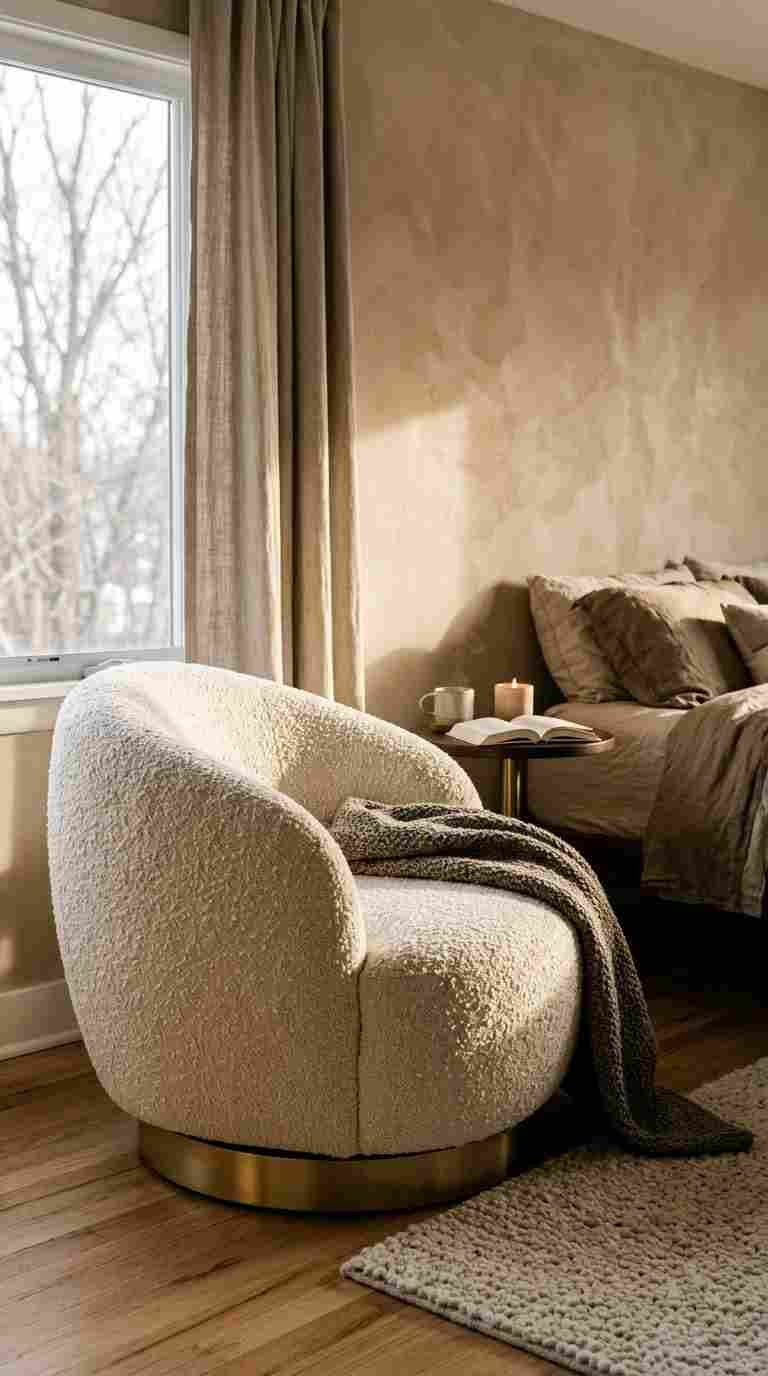
Drape an oversized cable-knit throw in cream, charcoal, or rust over the end of your bed or a reading chair. A chunky knit throw, about 50 by 60 inches, adds instant texture and a layer of warmth for cool evenings. Fold it in thirds lengthwise and lay it across the foot of the bed so about 12 inches hang over each side, or drape it over the back of a chair with one corner folded down. Choose a knit with a loose, open weave for a soft look, and keep the color solid so it does not compete with patterned pillows. A throw in a deep rust or mustard tone is the fastest way to make a neutral bedroom feel like fall.

Wash a knit throw in cold water on a gentle cycle inside a mesh laundry bag, and lay it flat to dry so the stitches do not stretch out of shape. Keep a second throw in a basket beside the bed so there is always one within reach for reading. If the knit snags, use a small crochet hook to pull the loop to the back of the fabric instead of cutting it. A chunky knit throw also works folded over the arm of a sofa or across a bench at the foot of the bed. Choose a washable acrylic or cotton blend if you have pets, because wool can pill and collect hair.
5. Rich Jewel-Toned Accent Pillows
Introduce velvet or boucle pillows in emerald, plum, or mustard to punctuate neutral bedding with color. Jewel tones are the deep, saturated colors of gemstones, and they look especially rich against cream, grey, or taupe bedding. Use three accent pillows: one lumbar pillow about 14 by 36 inches across the front of the sleeping pillows, and two square pillows about 18 by 18 inches behind it. Mix one solid velvet pillow with one textured boucle pillow so the group has both color and texture. Keep the rest of the bedding plain so the pillows are the clear focal point, and repeat one of the pillow colors in a throw or a rug so the room feels connected.

Arrange the pillows from largest at the back to smallest at the front, and fluff each one by pressing the sides inward and pulling the corners out. Swap the pillow covers seasonally rather than buying new pillows each time; covers are cheaper to store and easier to wash. Wash velvet covers inside out in cold water and air dry them. If you sleep with the accent pillows on the bed, choose covers with a hidden zipper so nothing scratches your skin. Two jewel tones are usually enough; three can work if one of them is used only in a small lumbar pillow.
6. Natural Wood Furniture Accents
Bring in raw or lightly stained wood elements through nightstands, benches, or floating shelves to ground the room in a natural, warm material. Wood adds grain and warmth that balances soft fabrics, and a single wooden piece can change the whole feel of a bedroom. Start with the piece you see most: a wooden nightstand about 18 inches wide and 24 inches high, or a bench about 48 inches long at the foot of the bed. Choose a light oak or a warm walnut finish, and keep the wood tone consistent across the pieces you add. A wooden bed frame, a dresser, and a nightstand in the same tone make the room feel calm and planned.

Leave at least 24 inches of clear space between the bed and the nightstand so you can walk around easily, and keep the top of the nightstand clear except for a lamp, a book, and a glass of water. Dust wood furniture weekly with a dry cloth, and wipe spills right away so they do not stain the finish. If you are mixing wood tones, keep one dominant tone and use the second only in small pieces like a picture frame or a tray. A wooden floating shelf above the dresser is a good way to add wood without taking up floor space, and it is strong enough for books and small plants.
7. Scented Candle Clusters for Atmosphere
Group varying heights of soy or beeswax candles in autumnal scents like cedarwood, vanilla, or spiced apple on a dresser or a nightstand. A cluster of three candles, for example one tall jar about 8 inches high, one medium jar about 5 inches high, and one small tin about 3 inches high, looks more intentional than a single candle and gives off a stronger scent. Place the cluster on a heat-safe tray at least 12 inches from the bed and away from curtains, bedding, and books. Light one or two candles at a time, trim the wick to about 1/4 inch before each lighting, and let the first burn last one to two hours so the wax melts evenly to the edges.

Never leave a burning candle unattended, and never burn one while you sleep. Extinguish the flame with a snuffer or by dipping the wick, which avoids smoke and soot on the walls. When about 1/2 inch of wax remains, stop using the jar and wash it out with hot soapy water for reuse as a small vase or a cotton ball holder. Keep the cluster away from the edge of the nightstand so it cannot be knocked off in the dark. If you have pets or small children, use battery candles in the cluster instead and keep the real candles for a shelf out of reach.
8. Textured Wall Hangings or Tapestries
Add acoustic warmth and visual interest with a woven wall hanging or macrame piece above the headboard. A textile on the wall softens a hard, echoing room and fills the blank space above the bed without the weight of a framed picture. Choose a piece about 24 to 36 inches wide, which is roughly two-thirds the width of a queen headboard, and hang it so its bottom edge sits about 6 to 8 inches above the headboard. Use a wooden dowel or a branch about 2 inches longer than the hanging on each side, and hang it from two small hooks or picture-hanging strips rated for its weight. A macrame piece in cream or natural cotton works with almost any bedding color.

Center the hanging over the bed, and step back to check that it is level before you finish. Dust it every two weeks with a feather duster or a cool hair dryer on its lowest setting, and keep it out of direct sunlight so the fibers do not fade. If you prefer a tapestry, choose one in a fall pattern, like leaves or a landscape, and hang it the same way. A wall hanging is easy to swap in spring, and it stores flat in a drawer. Pair it with a plain headboard so the texture of the hanging stands out, and keep the wall on either side clear so the piece has room to breathe.
9. Vintage Rugs with Faded Patterns
Add a vintage rug with faded patterns in muted colors to anchor the room and add character underfoot. A rug about 5 by 7 feet fits beside a queen bed, and a larger rug about 8 by 10 feet can sit under the bed with about 18 inches showing on each side. Faded patterns in soft reds, blues, and creams look warm without shouting, and they hide everyday wear better than a plain rug. Place the rug so its top edge sits under the front third of the bed and its pattern is visible where you step out in the morning. A rug pad underneath, cut about 1 inch smaller than the rug on each side, keeps it flat and stops it from sliding on hard floors.

Vacuum a vintage rug once a week on a low setting without a beater bar, and rotate it every three months so wear and sunlight are even. Blot spills right away with a clean cloth and a little cold water, and avoid steam cleaning an old rug unless a professional recommends it. If the rug is thin, a felt pad underneath adds cushioning and protects the floor. A vintage rug works best when it is the only strong pattern in the room, so keep the bedding mostly solid. It also pairs well with the layering idea in idea 19, where a smaller rug sits on top of a larger neutral one for extra warmth.
10. Basket Storage for Clutter-Free Calm
Use woven baskets to keep extra blankets, books, and seasonal items organized and out of sight. A basket about 18 inches wide and 14 inches high holds two folded throws or a stack of books, and it slides neatly under a bench or beside the nightstand. Give each basket one job: one for extra blankets, one for books and magazines, and one for out-of-season accessories. Roll blankets instead of folding them so you can see what is inside at a glance, and keep the basket within arm’s reach of the bed so it is actually used. Seagrass, rattan, and wicker all work; choose the weave that matches the other natural textures in the room.

Line each basket with a washable cotton liner so small items do not slip through the weave, and shake the liner out once a week. Keep baskets away from the radiator and from direct sun, which can dry out the fibers. If a basket starts to smell musty, air it outside for a few hours. Choose baskets with handles on the short sides so you can pull them out like drawers. Two medium baskets usually work better than one oversized one, because they are lighter to lift and easier to keep organized. A tidy basket beside the bed makes the whole room feel calmer at the end of the day.
11. Flannel Sheet Sets for Cool Nights
Switch to soft flannel sheets in muted plaid or solid earthy tones as the temperature drops. Flannel is cotton that has been brushed on one or both sides, so it feels fuzzy and traps warmth, which makes it a good choice for cool fall nights. Choose a set with a fitted sheet, a flat sheet, and two pillowcases, and look for a weight of about 170 grams per square meter, which is warm without being heavy. A muted plaid in rust, navy, or forest green adds a fall pattern to the bed, while a solid flannel in cream or taupe keeps the room calm. Wash the set before the first use, because new flannel can shed a little lint.

Wash flannel in cold water on a gentle cycle with a small amount of mild detergent, and skip fabric softener, which can coat the fibers and reduce warmth. Tumble dry on low and remove the sheets while they are still slightly damp to reduce wrinkles. Flannel pills over time, so use a fabric shaver once a month to keep the surface smooth. Keep a second flannel set in rotation so one set is always fresh while the other is in the wash. If flannel feels too warm for you, use flannel pillowcases only and keep cotton sheets on the bed.
12. Botanical Prints in Muted Frames
Choose framed prints of leaves and botanical illustrations to bring the outdoors inside. Botanical prints in muted greens, browns, and creams add color without overwhelming a calm bedroom, and they look good in almost any frame. Hang two or three prints, about 11 by 14 inches each, in a row above the dresser, or build a small gallery of four prints in a grid with about 2 inches between frames. Use simple black, white, or natural wood frames and white mats so the prints are the focus. Choose prints with a light background, because they stay bright in a bedroom that does not get much sun.

Hang the prints at eye level, with the center of the group about 57 to 60 inches from the floor, and use picture-hanging strips or small nails rated for the weight of each frame. Keep the wall around the prints clear so the group reads as one arrangement. The same framed-print idea works on a shelf, as shown in our fall kitchen shelf decor ideas, where small framed prints add warmth to open shelves. If you prefer real leaves, press them for two weeks between sheets of paper under a heavy book, then frame them behind glass. Swap the prints in spring for brighter botanical art, and store the fall set flat in a folder.
13. Upholstered Headboard in Warm Neutrals
Opt for a padded headboard in a warm beige, taupe, or soft brown fabric to create a plush focal point behind the bed. An upholstered headboard is comfortable to lean against for reading, and it softens the hardest wall in the bedroom. Choose a headboard about 48 to 54 inches high for a queen bed, so it rises about 24 inches above the mattress and gives you a good backrest. Button-tufted and channel-tufted styles both work; tufting adds texture, while a plain padded panel looks more modern. Use a performance fabric or a washable slipcover if you have pets or children, because a headboard is touched every day.

Mount the headboard to the bed frame with the brackets that come with it, or hang it on the wall with a French cleat so it stays steady. Vacuum the fabric once a month with an upholstery attachment, and blot spills right away with a clean cloth and a little cold water. Keep the headboard out of direct sunlight so the fabric does not fade. A headboard in a warm neutral pairs well with jewel-toned pillows and a chunky knit throw, because the neutral background lets the colors stand out. If a new headboard is more than you want to spend, a padded headboard cover that slips over an existing wooden headboard gives a similar look.
14. Seasonal Window Treatments in Heavy Fabrics
Replace lightweight sheer curtains with heavier linen or velvet drapes to keep warmth in and add a rich texture to the windows. Heavy drapes, about 84 to 96 inches long, should just touch the floor or pool about 1 inch on it, and they should be about 1-1/2 to 2 times the width of the window so they hang in full folds. Choose a warm color like deep grey, rust, or olive, and hang the rod 4 to 6 inches above the window frame and 3 to 6 inches wider on each side so the window looks larger. Use a blackout lining if you want the room darker for sleeping, and close the drapes at dusk to keep the heat in overnight.

Open the drapes during the day to let in light and warmth from the sun, and close them before the evening chill sets in. Vacuum the drapes with an upholstery attachment once a month, and wash or dry clean them according to the label at the end of the season. If you like the look of sheers, layer them behind the heavy drapes so you can have privacy during the day and warmth at night. Keep the drapes away from the radiator so the fabric does not dry out. Heavy drapes also soften echoes, so the bedroom sounds quieter as well as feeling warmer.
15. Ceramic Table Lamps with Organic Shapes
Select hand-thrown ceramic lamps in curved, organic forms for bedside lighting. A ceramic lamp with a rounded or bottle-shaped base adds a handmade feeling to the nightstand, and the glaze catches the light in a way that flat metal does not. Choose a lamp about 18 to 24 inches tall including the shade, so the bottom of the shade sits at about shoulder height when you are sitting in bed. Use a warm white bulb of about 2700K and no more than 40 watts, and a linen or cotton shade in cream or white so the light stays soft. Place one lamp on each nightstand, or use a single lamp on one side and a stack of books on the other.

Keep the lamp base at least 4 inches from the edge of the nightstand so it cannot be knocked off in the dark, and run the cord behind the nightstand so it does not dangle. Dust the ceramic base weekly with a dry cloth, and wipe the shade with a lint roller. If the lamp is heavy, use a small piece of museum putty under the base to keep it steady. A ceramic lamp in a muted sage, terracotta, or cream glaze pairs well with wood furniture and linen bedding. Two matching lamps look the most polished, but a single statement lamp can work if the other side of the bed has a different kind of light.
16. Faux Fur Accent Pieces
Layer faux fur throws, pillows, or a small rug to add plushness without the cost or care of real fur. Faux fur is a synthetic pile fabric that looks and feels soft, and it adds a luxury texture to a bedroom in minutes. Use a faux fur throw about 50 by 60 inches folded across the foot of the bed, or a single faux fur pillow about 18 by 18 inches in front of the sleeping pillows. Choose a color that matches the bedding, like cream, grey, or blush, so the fur reads as a texture rather than a new color. One or two faux fur pieces are enough; more than that can look messy and can shed.

Wash faux fur in cold water on a gentle cycle and air dry it, because heat can melt the fibers and make the fur look flat. Brush the fur gently with a soft brush once a month to keep it fluffy. Keep faux fur away from the radiator and from direct sun, which can fade the color. A faux fur throw also works draped over a reading chair or across a bench at the foot of the bed. If you have allergies, choose a short-pile faux fur, which sheds less and is easier to wash, and keep it out of the bed itself if it bothers you at night.
17. Reading Nook with Floor Cushions
Create a small reading corner with oversized floor cushions, a soft rug, and a stack of books near a window. A reading nook gives you a place to sit that is not the bed, which helps the bedroom feel like more than a place to sleep. Start with a rug about 4 by 6 feet to define the corner, then add two or three floor cushions about 24 inches square and 6 inches thick, leaning against the wall or the window seat. Add a small basket for books and a floor lamp or a table lamp for light. Place the nook near the window so you get natural light during the day, and keep it at least 12 inches from the radiator.

Choose cushion covers in a washable cotton or canvas so they can be cleaned easily, and use a firm foam insert so the cushions keep their shape. Stack the cushions against the wall when the nook is not in use so the corner stays tidy. A small side table or a wooden crate beside the cushions holds a mug and a book. If space is tight, a window seat with two cushions and a small shelf can work as a nook without taking up floor space. Add a throw blanket to the nook so it is comfortable on cool evenings, and keep the books in a basket so the corner does not become a pile.
18. Metallic Accents in Antique Brass
Incorporate metallic accents in antique brass or brushed gold to add warmth without the brightness of polished chrome. Antique brass has a soft, aged finish that fits fall, and it pairs well with wood, linen, and jewel tones. Start with the pieces you touch most: a pair of drawer pulls on the nightstand, a picture frame, or a small tray. Measure the screw spacing on your existing pulls, which is often 3-3/4 inches, so the new ones fit the old holes. Keep all the brass in the same finish, antique with antique and brushed with brushed, so the room looks planned rather than mixed.

Clean antique brass with warm water and a drop of mild dish soap, then dry it with a soft cloth; avoid abrasive pads and harsh cleaners that can strip the aged finish. A brass tray on the dresser can hold a candle, a small vase, and a piece of jewelry, which keeps the metal from looking like a random addition. If you like the look, add a brass floor lamp or a brass bed frame, but keep the rest of the metals in the room to one or two finishes. Antique brass also looks good with dark wood and with deep green or navy bedding, because the warm metal softens the cool colors.
19. Layered Rug Technique
Layer a smaller patterned rug on top of a larger neutral jute or sisal rug to define a zone and add extra softness. Start with a large natural-fiber rug, about 8 by 10 feet, placed under the bed with about 18 inches showing on each side, then add a smaller patterned rug, about 5 by 7 feet, on top, offset so about 6 inches of the base rug shows on two sides. The base layer should be plain and textured, while the top layer carries the pattern and color. A vintage-style rug in muted reds and blues over a natural jute base is a classic combination that works with most bedding.

Use a rug pad under the base rug, cut about 1 inch smaller than the rug on each side, and a thin non-slip pad between the two layers so the top rug does not slide. Vacuum both rugs once a week, and rotate the top rug every three months so wear is even. This layering is different from idea 9, which is about choosing a single vintage rug: here the point is the technique of stacking two rugs so the room has more texture and the floor feels warmer underfoot. If the room is small, layer only beside the bed and keep the rest of the floor clear so the room still feels open.
20. Personal Photo Displays in Sepia Tones
Showcase family photos in sepia tones or black-and-white finishes to add warmth and personal meaning to the room. Sepia is a warm brown tone that makes new photos look like old ones, and it fits the fall palette far better than bright color prints. Choose 8 to 12 photos, print them in sepia or black and white at 4 by 6 inches, and frame them in simple black or wood frames about 5 by 7 inches with a white mat. Hang them in a grid with about 2 inches between frames, with the center of the group about 57 to 60 inches from the floor, or lean them in a row along the dresser.

Mix one or two larger frames, about 8 by 10 inches, with the smaller ones so the group does not look too uniform. Use picture-hanging strips rated for the weight of each frame so you do not need to drill into the wall. Keep the photos out of direct sunlight so the prints do not fade. If you prefer a less permanent display, use a wire with small clips and hang the prints from it, which makes it easy to swap photos each season. A photo display above the dresser or on the wall beside the bed makes the bedroom feel personal without adding clutter.
21. Weighted Blankets in Breathable Covers
Choose a weighted blanket with a breathable, washable cover for deep, restful sleep on cool autumn nights. A weighted blanket is a blanket filled with small glass beads or pellets that make it heavier than a normal blanket, and the gentle pressure can feel calming. Pick a weight of about 10 percent of your body weight, so a 150-pound person would use a 15-pound blanket, and choose a size that covers the bed without hanging over the sides by more than a few inches. Use a breathable cotton or bamboo cover so the blanket does not trap heat, and keep the cover washable so the blanket itself stays clean.

Lay the weighted blanket over the flat sheet and under the duvet, so it is the layer closest to your body, and fold the duvet back if you get too warm. Wash the cover once a week in cold water and air dry it, and wash the inner blanket only as the label directs, because the beads can be heavy when wet. Do not use a weighted blanket for small children or for anyone who cannot lift it off themselves, and stop using it if it causes discomfort. A weighted blanket in a muted fall color, like deep green or rust, can also serve as the throw at the foot of the bed during the day.
22. Nature-Inspired Color Blocking
Use earthy tones like terracotta, olive, and ochre to create color-blocked walls or bedding that echoes the colors outside. Color blocking means using large, solid blocks of color next to each other, for example a terracotta throw across the foot of a white bed, olive pillows against cream sheets, and an ochre lumbar pillow in front. Keep each block solid and at least 12 inches wide so the colors read as deliberate bands rather than a jumble. Use two or three earthy colors plus one neutral, and repeat each color at least twice in the room, for example terracotta in the throw and in a small rug, so the palette feels connected.

If you want to color block the wall, paint the lower third of one wall in a deep earthy tone and keep the upper two-thirds white or cream, with a straight line at about 36 inches from the floor. Use painter’s tape and a level to get a clean edge, and let the paint dry for 24 hours before you hang anything on the wall. On the bed, fold the duvet back about 12 inches to show a contrasting sheet, and lay a solid throw across the foot so the bed reads as two or three clear bands of color. Keep the rest of the room plain so the blocks are the only strong pattern.
23. Tray Styling for Nightstand Organization
Organize your nightstand with a decorative tray holding essentials like a book, a small plant, and a phone charger. A tray about 12 by 8 inches corrals the small items that otherwise spread across the nightstand, and it makes the whole surface look tidy even when it is full. Place the tray on the side of the nightstand away from the bed, leaving the area closest to you clear for a glass of water. Set the tallest item, like a small vase or a candle, at the back, and the flattest items, like a book or a phone, at the front. Leave about 1 inch of clear space at the edges of the tray so nothing hangs over the side.

Choose a tray in wood, brass, or ceramic that matches the other materials in the room, and keep only the items you use every night on it: a book, a charger, a lip balm, and a small plant or a candle. Once a week, empty the tray, wipe it with a damp cloth, and put back only what you need; the rest can live in the nightstand drawer. If the tray has no handles, it is still fine for a nightstand that you do not move often, but handles make it easier to lift the whole group for cleaning. A tray also protects the nightstand from water rings and candle wax, which keeps the wood looking new.
24. Seasonal Wreaths Above the Bed
Hang a seasonal wreath made of dried leaves, pinecones, and berries above the bed for a festive focal point. A wreath about 18 to 24 inches across fits above a queen headboard without overwhelming it, and it adds a round, natural shape that balances the straight lines of the bed and the furniture. Hang it from a small nail or a picture hook centered over the bed, with the bottom of the wreath about 6 to 8 inches above the headboard. Choose a wreath with dried maple leaves, pinecones, and a few berries in warm reds and oranges, and keep the colors muted so the wreath reads as fall rather than Christmas.

Use a wreath hanger or a ribbon looped over the hook so the wreath hangs flat against the wall, and step back to check that it is centered over the bed. Dust the wreath every two weeks with a feather duster, and keep it out of direct sunlight so the leaves do not fade. If you make your own wreath, use a grapevine base about 18 inches across and attach the leaves and pinecones with florist wire, working in clusters of three. Store the wreath in a box with tissue paper after the season, hanging it from a hook so it keeps its round shape. A wreath above the bed pairs well with a plain headboard and a simple wall hanging on the opposite wall.
25. Soft Area Lighting with Salt Lamps
Introduce a Himalayan salt lamp for a soft, warm glow that makes the bedroom feel calm in the evening. A salt lamp is a chunk of pink Himalayan salt with a small bulb inside, and it gives off a warm orange-pink light that is much softer than a normal lamp. Choose a lamp about 8 to 10 inches tall for a nightstand, and place it on the side away from the bed so the glow does not shine directly in your eyes. Use a bulb of about 15 watts, and keep the lamp on a stable, flat surface away from the edge of the nightstand. A salt lamp works best as a second light, alongside a bedside lamp for reading.

Keep the salt lamp away from water and from steamy bathrooms, because salt absorbs moisture and can weep in humid air. Wipe the lamp with a dry cloth once a week, and leave it on for a few hours each day so the bulb warms the salt and keeps it dry. If the lamp feels damp, turn it on and let the heat dry it out. Turn the lamp off when you leave the room, and do not use it as the only light in the bedroom, because it is too dim for reading. A salt lamp on the nightstand or the dresser adds a warm glow that makes the whole room feel more restful at night.
Creating Your Cozy Fall Bedroom
These 25 ideas work best when you choose the ones that fit your room and your budget, rather than trying to do them all at once. Start with the bed, because it is the largest surface in the room: layered linen and velvet bedding, a chunky knit throw, and two or three jewel-toned pillows will change how the room feels in a single afternoon. Then add one warm light and one natural texture, and leave some clear space on the nightstand and the dresser so the room can breathe. Keep the palette to two or three warm colors, repeat the same wood tone and the same metal finish, and let the room grow cozy over a few weekends. When the bedroom feels right, carry the same warmth into a full makeover with our fall bedroom makeover ideas, and enjoy a bedroom that feels like a retreat all season long.




3 Comments