
17 Budget Winter Home Office Ideas 2026 for a Cozy and Productive Workspace on a Budget
Winter can make a home office feel cold, dim and hard to concentrate in, yet a warm and productive workspace does not need a large budget or a full redecoration. The ideas in this article use things you may already own, items picked up second-hand, and simple handmade touches to add warmth, light and order to a winter workspace. Each idea is low-cost and practical, and most take less than an hour to put into place. You will find ways to use daylight better, to keep warm without heating a whole room, to tidy a desk with repurposed containers, and to add a seasonal touch with paper, yarn and a thrifted frame. Start with the ideas that solve your biggest winter problem, whether that is a cold draught, a dark corner or a cluttered desk, and add the rest one at a time. A study, also known as a home office, works best when it is comfortable and uncluttered, and a few small changes can make winter working days feel calmer and more focused.
Move the Desk to the Brightest Window

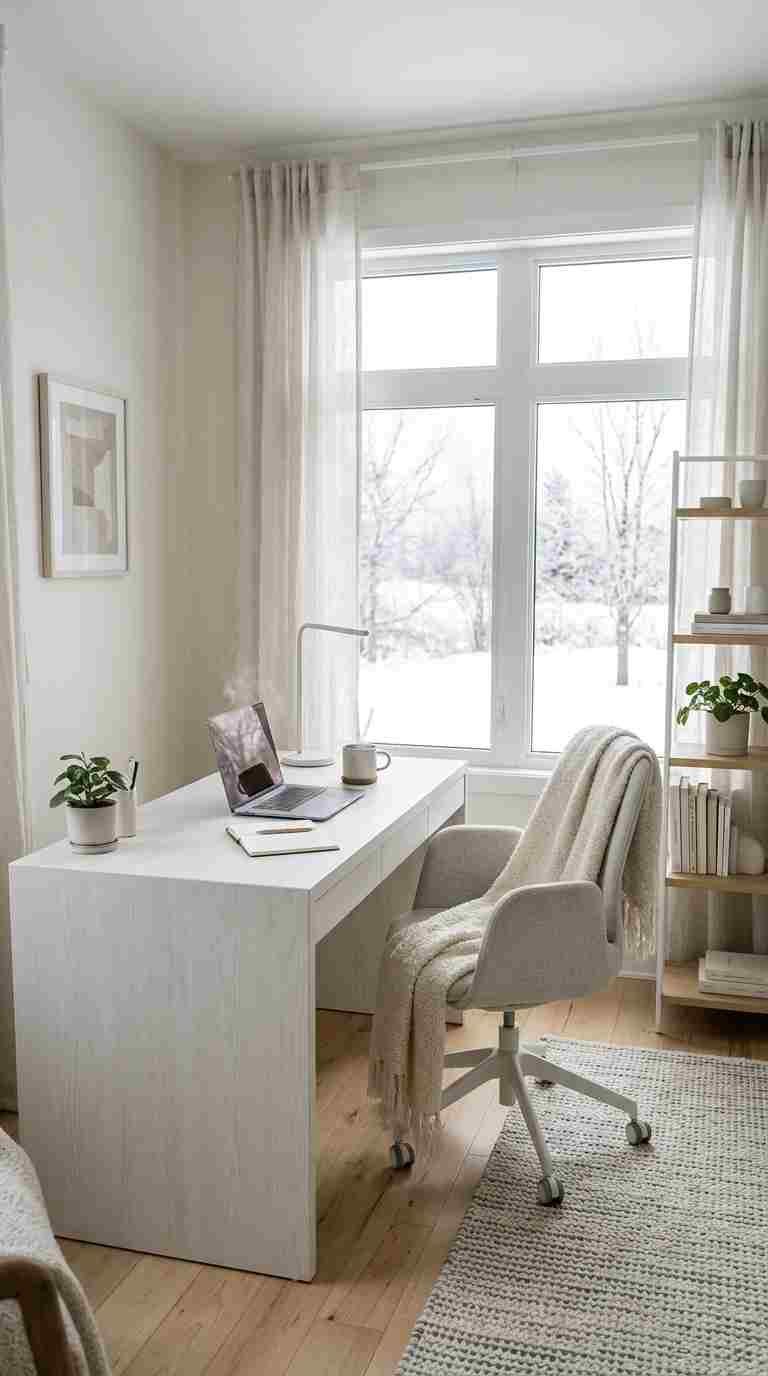
Daylight is the cheapest light a winter home office can have, so start by moving the desk to the brightest window in the room. Choose the window that gets the most light during your working hours, and place the desk at a right angle to it, with the window on your left if you write with your right hand, or on your right if you write with your left. This position lights the keyboard and your papers without shining straight into the screen or into your eyes. Leave about 60 centimetres between the back of the chair and the wall behind it so you can push the chair back freely, and keep the windowsill clear so light is not blocked by stacked books or storage boxes. Wash the inside of the glass and pull back heavy curtains during the day, then close them at dusk to hold the warmth in the room. For more ideas on winter light, see our winter home office lighting ideas.
Raise the Laptop on a Stack of Second-Hand Books

A laptop screen that sits too low can leave your neck stiff by the end of a winter afternoon, and a stack of second-hand books is a simple way to raise it. Choose three or four hardback books of a similar size, with flat covers and no loose pages, and stack them on the desk with the largest at the bottom and the smallest at the top. Set the laptop on the stack so the top of the screen is roughly level with your eyes when you sit upright, and check that the stack does not wobble when you type. Keep the books you use most often at the front of the stack so you can lift them out in the evening, and use a folded tea towel under the bottom book if the desk surface is smooth. This trick also frees the space under the laptop for a notebook or a charging cable. Ergonomics guidance explains why a screen at eye level and a relaxed posture matter for long working days, so take a few minutes to get the height right and adjust the stack until typing feels comfortable.
Keep a Thrifted Mug of Tea Beside the Keyboard

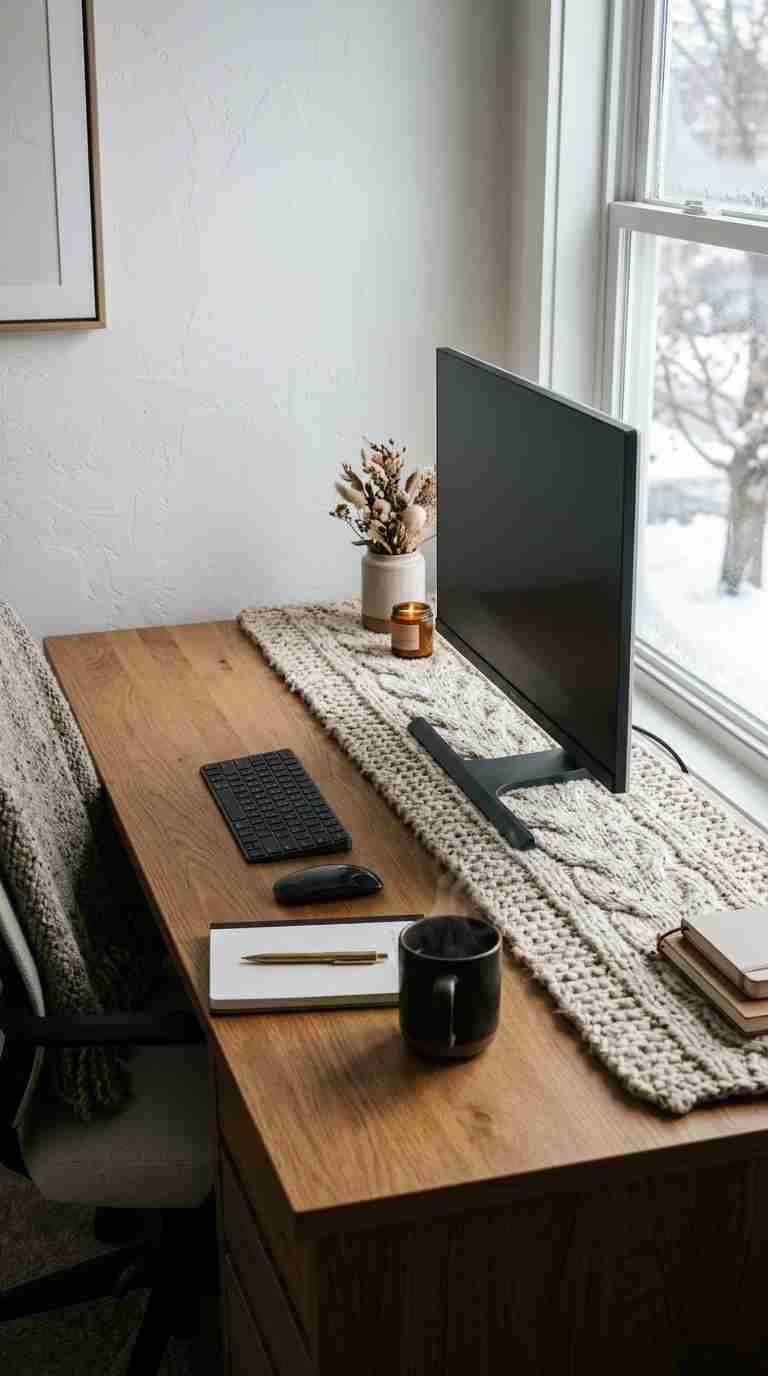
A warm drink is one of the simplest comforts in a winter home office, and a thrifted mug makes it feel special without adding anything new to the house. Pick a sturdy mug with a handle that fits your hand and a wide base that will not tip easily, then keep it on a coaster or a small plate on the same side of the desk as your non-writing hand. Fill it before you start a work block so you are not getting up every few minutes, and keep a teaspoon and a small cloth nearby for drips. Choose a mug in a colour you like, and keep it for work only, so it becomes part of your winter routine. Rinse it at lunchtime and refill it for the afternoon, and put it in the kitchen at the end of the day so the desk stays clear overnight. A single mug, a coaster and a kettle are all you need, and the short pause while the tea brews is a good moment to stretch and look out of the window.
Fill a Flask Before Work So Hot Drinks Stay Close

If your desk is far from the kitchen, a flask filled at the start of the day keeps hot drinks close at hand and saves repeated trips down a cold hallway. Fill the flask with hot water or tea before you sit down, screw the lid on tightly, and set it upright on a tray or a folded cloth at the back of the desk, away from the keyboard and any papers. Pour a small cup at a time so the drink stays hot in the flask for longer, and refill the flask at lunchtime when you take your break. Choose a flask with a wide mouth so it is easy to wash and dry, and leave it open overnight so it dries fully and does not hold a stale smell. Keep a small cup beside it rather than drinking from the flask itself, so you can see how much you have had and avoid spills on the desk. This one habit keeps your hands warm and your work flowing through a cold morning.
Write Three Tasks on a Paper To-Do List Each Morning

A paper to-do list is a low-cost way to keep a winter working day focused, and it works without a screen, an app or a charger. Each morning, take a sheet of paper or a page in a notebook and write down just three tasks for the day, starting with the one that matters most. Keep the list beside the keyboard where you can see it, and cross each task off with a pen as you finish it, rather than rubbing it out. If a new task appears during the day, write it at the bottom of the page and decide whether it belongs today or tomorrow, instead of letting it push the first three aside. At the end of the day, look at what is crossed off, move anything unfinished to the next day’s list, and put the paper away so the desk is clear. A short list like this also suits a calm, uncluttered desk, and you can read more about that approach in our minimalist winter home office ideas.
Sort Pens and Pencils Into a Repurposed Glass

Pens and pencils scattered across a desk are easy to lose and hard to find in winter light, so give them a home in a clean glass or jar you already own. Wash a jam jar or a drinking glass in warm soapy water, dry it fully, and stand it at the back corner of the desk, where it will not be knocked over by your elbow. Sort the contents into groups, with pens in one glass and pencils in another if you have two, and throw away any that no longer write. Keep only the pens you use every day, and store the rest in a drawer or a box out of sight. A short, wide glass works better than a tall narrow one, because it is less likely to tip and the pens are easier to reach. Label the glass with a strip of masking tape if more than one person uses the desk, and wipe the outside once a week so it stays clear and clean.
File Loose Papers in Labelled Cardboard Boxes

Loose papers pile up quickly in winter, when bills, school letters and work notes all land on the same desk, so sort them into cardboard boxes you already have. Cut the top flaps off a sturdy box, or fold them inside, and use one box for papers to action, one for papers to file, and one for papers to recycle. Write the label on a strip of masking tape on the front of each box, in large clear letters, and keep the boxes on the desk or on a shelf within arm’s reach. Go through the action box each evening, deal with what you can, and move finished papers to the file box or the recycling box. Use smaller boxes for receipts and larger ones for folders, and stack the boxes neatly so they do not slide. When a box is full, sort it again before you start a new one, so the system stays small and the desk stays clear.
Roll an Old Towel Into a Draught Stopper for the Door

A cold draught under the office door can chill a whole room, and an old towel rolled into a draught stopper is a simple fix that uses nothing new. Take a bath towel or a hand towel you no longer use for bathing, fold it in half lengthways, and roll it tightly from one short end to the other until it forms a firm sausage shape. Tie a length of string or ribbon around each end, about five centimetres from the tips, to stop it unrolling, and lay it flat across the bottom of the door on the side where the cold air comes in. Check that the door still opens and closes over it, and trim the roll if it is too long. At night, lift it away and hang it on a hook, and put it back in the morning. This small roll also suits rooms with natural textures and warm colours, and you can see more of that style in our rustic winter home office ideas.
Layer a Knitted Sweater Over Your Work Clothes

Winter working from home is much more comfortable in layers, and a knitted sweater over your usual work clothes is warmer than turning up the heat for one room. Choose a sweater that is loose enough to move your arms freely at the keyboard, with sleeves that reach your wrists and a neckline that does not press on your throat. Put it on before you sit down, and take it off for a short while if you feel too warm, rather than sitting in a draught with the window open. Keep a second sweater on the back of the chair for the coldest part of the afternoon, and hang both up at the end of the day so they keep their shape. Wash the sweater inside out in cool water and dry it flat on a towel, so it stays soft and does not stretch. A warm layer like this lets you work comfortably at a lower room temperature all winter.
Warm Your Feet in Thick Socks by the Fire

Cold feet are one of the most common winter complaints at a desk, because feet sit still for hours on a cold floor. Keep a pair of thick socks at the desk, put them on when you start work, and wear them over a thinner pair if the floor is very cold. During a break, lift your feet onto a low footrest or a stack of books, wiggle your toes, and let the blood move again before you sit back down. If the house has a fireplace, take your short break beside it with your feet up, and return to the desk warm and refreshed. Keep a spare pair of socks in the desk drawer so you are never caught out by a damp pair, and wash them in cool water so they keep their thickness. Warm feet make a long winter afternoon at the keyboard feel much shorter, and they cost nothing more than a drawer and a habit.
Leave the Frosted Window Bare and Let the Ice Patterns Show

On a frosty morning, the ice patterns on a window are a free decoration that no shop can copy, so leave that window bare and let them show. Pull back the curtain or blind from the window that frosts first, and do not wipe the patterns away until the sun has had a chance to melt them. The crystals form in ferns, stars and feathers, and they catch the morning light in a way that makes the whole room feel brighter. Keep the desk or a chair near that window so you can enjoy the view while you work, and take a photograph of the best patterns before they fade. When the frost has gone, the window is simply a clear window again, so there is nothing to store and nothing to clean up. This idea works best on a window that does not face a busy road, where you can leave it uncovered without losing privacy.
Fill a Thrifted Frame With a Free Printed Winter Saying

A bare wall above a desk can feel cold in winter, and a thrifted frame with a printed winter saying is a low-cost way to warm it up. Look for a simple wooden or black frame at a charity shop or in a cupboard at home, clean the glass, and measure the inside of the frame before you print. Choose a short saying about winter, rest or home, print it on plain white or cream paper, and trim it to fit with a ruler and scissors. Hang the frame at eye level above the desk, using a picture hook or a nail, and step back to check that it is straight. Change the saying each month, or keep the same one all winter if you like it. This small touch adds a personal note to the room, and you can find more gentle winter ideas in our cozy winter home office ideas.
Stretch at the Desk Every Hour

Sitting still for hours in winter makes shoulders, necks and wrists stiff, so build a short stretch into every hour at the desk. Set a timer or watch the clock, and when the hour turns, stand up, roll your shoulders back five times, and reach both arms above your head for a slow count of ten. Turn your head gently to the left and to the right, roll your wrists in circles, and shake your hands out before you sit down again. Keep your feet flat on the floor when you sit, and pull the chair close enough that your elbows rest comfortably at your sides. A stretch like this takes less than two minutes and does not need any equipment, a mat or extra space. Do it at the same time each hour, and it soon becomes part of the working day rather than a chore you have to remember.
Time Focus Blocks With a Small Hourglass

A small hourglass is a simple, silent way to time a work block without another screen or a buzzing alarm. Place it on the desk where you can see the sand falling, turn it over when you start a task, and work on that task alone until the sand has run through. When the last grains fall, stand up, stretch, take a drink of water, and then turn the hourglass over for the next block. Use one hourglass for work and another for breaks if you have two, or use the same one for both and take a shorter break between blocks. Keep the hourglass on a flat, steady surface away from the edge of the desk, and dust it with a dry cloth so the glass stays clear. This quiet timer suits a winter afternoon when the house is still, and it helps the day feel calm and measured rather than rushed.
Knit a Small Wrist Rest From Leftover Yarn

If you have leftover yarn from another project, knit a small wrist rest for the desk instead of buying one. Cast on enough stitches to make a strip about 30 centimetres long and 8 centimetres wide, knit in plain rows until it measures about 15 centimetres, and then fold it in half lengthways and stitch the long edge closed. Stuff the tube loosely with yarn scraps or clean fabric offcuts, stitch the ends closed, and lay it in front of the keyboard where your wrists rest while you type. Make a second, shorter rest for the mouse if you have enough yarn, and wash both in cool water when they need cleaning. A handmade rest like this is soft, warm and easy to adjust, and it uses up yarn that might otherwise sit in a drawer all winter. Choose a smooth yarn that does not shed, so loose fibres do not catch on the keys.
Tidy Loose Cables With Binder Clips on the Desk Edge

Loose charging cables slide off the desk and tangle on the floor, so hold them with binder clips clipped to the desk edge. Take a large binder clip, squeeze the handles to open it, and clip it onto the edge of the desk with the metal handles pointing up. Thread the charging cable through the folded handles so the plug stays on the desk, and use one clip for each cable you use every day. Label each clip with a strip of masking tape so you know which cable is which, and unclip the cable when you need to take it with you. Keep spare clips in the desk drawer for new cables, and check once a week that the clips are still tight on the edge. This trick keeps the desk tidy, stops cables from falling behind the desk, and makes it easy to find the right charger in the dark winter mornings.
Set a Wooden Tray for a Mid-Morning Tea Break

A mid-morning tea break feels more restful when everything is on one tray, so set a wooden tray for it the night before. Place a cup, a teaspoon and a small plate on the tray, and keep the tray on a shelf or a side table until break time. When the break comes, make the tea, carry the tray to the desk, and sit back for ten minutes with the cup, a notebook and nothing else on the tray. Use the break to look out of the window, write down one thought for the afternoon, and let your eyes rest from the screen. At the end of the break, carry the tray back to the kitchen, wash the cup, and put the tray away so the desk is clear for the next work block. A tray like this keeps crumbs and drips off the desk, and it turns a short pause into a small winter ritual.
Winter does not have to mean a cold, dark or cluttered home office, and none of these ideas needs a large budget or a new room. Start with the change that will help you most, whether that is more daylight, a warmer seat, a tidier desk or a calmer routine, and give it a few days before you add the next one. Many of the ideas use things you already own, and the rest can be made, borrowed or picked up second-hand over time. Keep the desk clear, keep your feet warm, and keep the winter light coming in, and the room will feel more comfortable with each small step. Try one idea this week, notice how the room feels, and build your winter workspace slowly, one low-cost change at a time.