

18 Fall Staircase Decor Ideas 2026 to Try This Season
The staircase is often an overlooked architectural feature that offers a unique vertical canvas for seasonal expression. As autumn arrives, this transitional space invites you to layer warmth and texture from the ground floor upward. You do not need elaborate installations to make an impact; simple touches can transform the climb into a visual journey. Focus on natural elements, ambient lighting, and earthy tones that guide the eye while celebrating the harvest spirit. These eighteen ideas will help you curate a stairway that feels both stylish and deeply comforting for fall 2026. Before you start, walk the staircase and note the spots that catch the eye first, such as the newel post, the landing, and the wall that runs alongside the steps. Plan around those focal points, keep walkways clear, and choose pieces that are easy to take down when the season ends. Let us explore how to turn your steps into a welcoming pathway through the beauty of the season.
1. Dried Eucalyptus Garland
Drape a long garland of dried eucalyptus along the handrail or banister for a fresh, organic touch. The muted sage-green leaves provide a subtle color contrast to neutral walls while releasing a calming scent. This easy decoration will last through the season and requires little maintenance. Choose a garland that is long enough to run the full length of the banister with a gentle swag between attachment points, so it looks full rather than stretched thin. Dried eucalyptus works well because the leaves hold their shape and color for months, and the silvery green tone pairs naturally with cream walls, warm wood, and black metal railings.
Fasten the garland with clear zip ties, twine, or small removable hooks every two to three feet, and tuck the ties behind the leaves so they stay hidden. Let the ends trail slightly over the newel post for a relaxed, finished look, and add a few sprigs of dried wheat or a small cluster of pinecones at the base of the stairs to tie the landing into the same palette. If your staircase is narrow, keep the garland slim and close to the rail so it never narrows the walking path. Mist it lightly only if it looks dusty, and keep it away from open flames, since dried leaves are flammable.

2. Amber Glass Lanterns on Steps
Place battery-operated amber glass lanterns on every third step to create a warm, guiding glow. They cast a soft golden light that makes the staircase feel cozy and safe at night. Choose lanterns of varying sizes to create a dynamic display that draws the eye upward. Amber glass is especially flattering in fall because it deepens the light to a honeyed tone that echoes turning leaves, and it looks just as good unlit during the day, when the glass catches daylight on the stair treads. Set the lanterns against the wall side of each step, never in the center, so the walking path stays clear.
Use LED candles or fairy lights inside the lanterns instead of real flames, and set them on a timer so they switch on at dusk and off at bedtime without daily effort. Mix one tall lantern with two smaller ones on the landing for a grouped look, and add a few dried leaves or a small pumpkin beside the largest lantern to anchor the display. On open-riser stairs, place lanterns only on the landing and the bottom step, where they cannot be knocked over. Check that the lantern bases are stable and level before you leave them in place, and keep spare batteries on hand so the glow never fades mid-season.

3. Woven Jute Runner
Lay down a textured jute runner up the center of the stairs to add warmth underfoot and define the staircase. The natural fibers complement autumn colors beautifully, bringing an earthy, grounded feel to the space. Secure it with non-slip pads to ensure safety. A jute runner softens hard wood or painted stairs, muffles footsteps, and gives the whole staircase a finished, layered look. Measure the length of the flight before you buy, and choose a runner that leaves a few inches of bare tread visible on each side, which frames the texture and keeps the stairs looking balanced rather than covered over.
Look for a runner with a tight, flat weave, which is easier to vacuum and less likely to snag than a loose looped weave. Pair it with a thin non-slip underlay cut to the same size, and fix the top and bottom edges with stair rods or double-sided carpet tape made for stairs. A runner in natural tan works with almost any fall palette, while a runner with a subtle brown or rust border can pick up the colors of nearby pumpkins, garlands, or wall art. Shake it out weekly and spot clean spills quickly, since jute absorbs moisture, and lift it at the end of the season so the treads underneath stay even in color.

4. Mini Pumpkin Clusters
Arrange small clusters of matte ceramic pumpkins in cream, rust, and sage on wider landing areas. Their soft matte finish adds a refined touch to classic fall decor without overwhelming the space. Mix in small sprigs of faux eucalyptus for an added layer of texture. The landing is the natural place for this idea because it offers a flat, stable surface away from foot traffic, and a cluster reads as one intentional display instead of scattered pieces. Group pumpkins in odd numbers, such as three or five, and vary the heights by placing one on a small stack of books or a low wooden tray.
Stick to a tight color palette of two or three shades so the cluster looks curated, and repeat one of those colors elsewhere on the staircase, for example in a ribbon or a garland, to pull the look together. Ceramic pumpkins are a practical choice here because they are heavier than foam ones and less likely to be knocked off a landing ledge. If children or pets use the stairs often, set the cluster against the wall and keep the smallest pumpkins at the back. At the end of the season, wrap each pumpkin in tissue and store them in a single box so they are ready to group again next fall.

5. Framed Botanical Prints
Hang a gallery wall of framed botanical prints featuring autumn ferns and leaves along the staircase wall. The earthy colors and delicate details add sophistication and a touch of nature to the space. Choose matching frames for a cohesive look or mix styles for eclectic charm. A staircase wall is ideal for a gallery because you see it from several angles as you climb, and the upward line of the stairs gives the arrangement a natural direction. Space the frames evenly and follow the slope of the handrail, keeping the center of each frame roughly at eye level as you stand on the nearest step.
Before you hang anything, lay the frames on the floor in the same stepped arrangement and measure the gaps, aiming for two to three inches between frames for a calm, even rhythm. Prints of pressed ferns, oak leaves, and seed heads in rust, olive, and ochre work best, and thin wood or matte black frames keep the focus on the artwork. Use picture-hanging strips or small hooks rated for the frame weight, and check that no frame hangs over a step edge where it could be brushed by a shoulder. If your staircase is dark, the prints will read better with a small picture light or a nearby lantern to warm the wall.

6. Wooden Bead Garland
String large wooden beads along the banister for a rustic, tactile accent that feels handmade. The natural wood tone warms up the space and adds a subtle textural contrast to smooth railings. This simple decoration is lightweight and easy to remove when the season changes. Large beads, around one to two inches across, read clearly from the bottom of the stairs and give the garland a chunky, crafted look. Drape it in a loose swag along the handrail, letting it dip between balusters, and finish each end with a tassel or a small bundle of dried leaves for a soft endpoint.
Natural, unstained wood suits most fall palettes, but you can also use beads in a warm walnut stain to match dark railings or a whitewashed finish for pale, Scandinavian-style stairs. Thread the beads on jute twine or a sturdy cotton cord, and tie the garland to the newel posts and a few balusters with short loops of the same twine so it cannot slide. Keep the garland on the outer face of the banister, away from the hand grip, so it never interferes with holding the rail. When the season ends, coil it loosely and store it in a cloth bag to keep the beads from scratching each other.

7. Scented Soy Candles in Niches
If your staircase has built-in niches or shelves, place scented soy candles in glass jars within them. Choose scents like cinnamon, apple, or cedarwood to enhance the autumn atmosphere. Keep candles away from flammable materials and never leave them unattended. A niche is a perfect spot for a candle because it is set back from the walkway, so the flame is protected from drafts and passing sleeves, and the glow can wash the back wall of the niche with warm light. Place each jar on a small tray or a heat-safe coaster to protect the shelf surface from wax and heat marks.
Pick one scent for the whole staircase rather than mixing several, so the fragrance stays pleasant instead of competing as you climb. Cinnamon and clove suit a classic fall look, apple and cedar suit a fresher palette, and pumpkin spice works well in a single candle on the landing. Soy wax is a good choice because it burns cleanly and holds scent well, and a jar with a lid keeps dust out between uses. Trim the wick to about a quarter inch before each burn, keep the candle at least a foot from garlands, dried leaves, and curtains, and blow it out whenever you leave the house or go to bed.

8. Dried Wheat Sheaf Bundles
Tie small bundles of dried wheat stalks with twine and attach them to the balusters at intervals. The golden hues of the wheat evoke harvest season and add a rustic charm to the staircase. This decoration is simple to make and easy to replace as needed. A bundle of ten to fifteen stalks, tied at the middle and fanned slightly at the top, gives a full sheaf shape without looking bulky. Attach one bundle to every third or fourth baluster so the gold repeats evenly up the flight, and angle the heads upward so the wheat follows the line of the stairs.
Use natural jute twine for the tie and add a second wrap of thin rust-colored ribbon if you want a small color accent. Wheat pairs well with eucalyptus garlands, wooden beads, and plain linen, because its pale gold tone sits comfortably between green and brown. Keep the bundles away from open flames and out of direct damp, which can make the stalks droop, and shake them gently outdoors before you hang them to remove loose seeds. If a bundle starts to shed, replace just that one rather than the whole set, and store the spares flat in a long box so the stalks stay straight for next year.

9. Velvet Ribbon Accents
Tie bows of deep velvet ribbon in burgundy or forest green around the base of each baluster. The rich texture and color of the velvet add a luxurious touch to the staircase. This is an easy and affordable way to add fall elegance to the space. Velvet catches the light in a way that flat fabric does not, so even a simple bow looks rich, and the deep jewel tones stand out against white spindles and pale walls. Cut the ribbon into equal lengths, around eighteen inches, so every bow matches, and tie each one at the same height for a neat, repeated rhythm up the stairs.
Burgundy works best with warm wood and brass, while forest green suits black railings and sage-toned walls; a rust velvet is a good middle choice if your palette leans toward orange and gold. Tie the bows on the room side of the balusters, not on the handrail side, so hands never catch on them, and leave the tails long enough to fall gracefully but short enough to clear the tread. If you want a fuller look, layer a thin gold ribbon over the velvet before you tie the bow. At the end of the season, untie the bows, roll the ribbon around a cardboard tube, and store it flat so it does not crease.

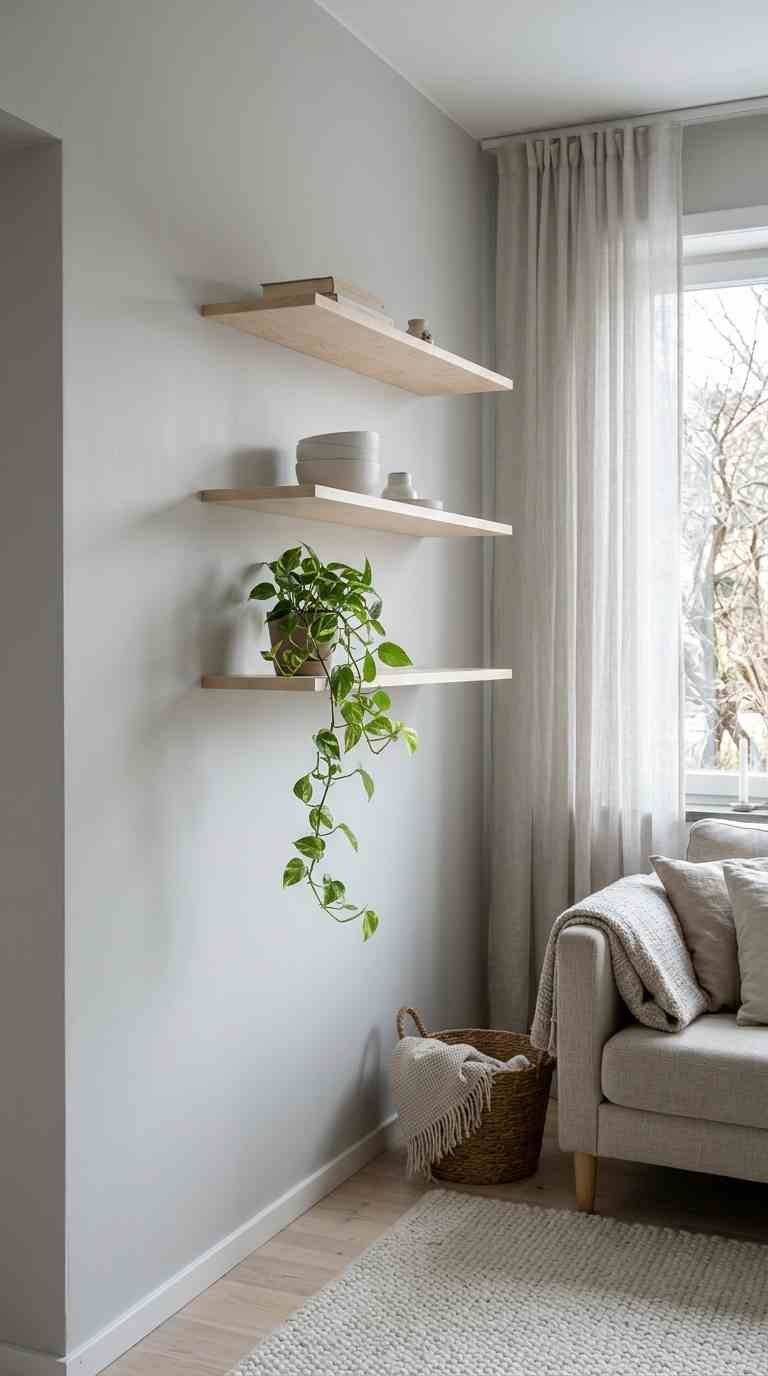
10. Floating Shelf Display
Install small floating shelves on the staircase wall to display miniature autumn decor items. Style them with tiny pumpkins, fall leaves, and candles for a curated look. Keep the arrangement balanced and avoid overcrowding the shelves. Two or three short shelves, staggered to follow the rise of the stairs, work better than one long shelf, because they echo the stepped shape of the staircase. Give each shelf a simple theme, such as one shelf for pumpkins, one for candles, and one for a small framed print, so the display reads as a set of small scenes rather than a cluttered row.
Fix the shelves into wall studs or use fixings rated for the weight of the items, and keep the shelves shallow, around six inches deep, so they never jut into the walking space. Style with the largest item at the back and smaller pieces in front, and leave some empty space on every shelf so the eye can rest. A tiny pumpkin beside a battery candle in a glass holder is a good pairing, and a sprig of dried leaves laid flat can fill a gap without adding height. Dust the shelves weekly, since staircase walls collect dust quickly, and swap one or two pieces at Halloween if you want a small seasonal shift without restyling the whole wall.

11. Copper Wire Lights
Wrap thin copper wire fairy lights around the handrail for a delicate, sparkling effect. The warm glow of the lights adds a magical touch to the staircase, especially in the evening. Use battery-operated lights for easy placement without visible cords. Copper wire is almost invisible in daylight, so the lights seem to float along the rail, and the warm white bulbs give a softer glow than cool white ones. Start at the top newel post and wind the strand down the handrail in loose, even loops, keeping the spacing relaxed so the light is dotted along the rail rather than bunched in one place.
Choose a strand length that matches your banister, usually around ten to twenty feet for a single flight, and hide the battery pack behind the newel post or inside a small basket at the base of the stairs. A timer function is worth having, since it switches the lights on at dusk and off after a few hours without you remembering each night. Copper wire lights also work well woven through a eucalyptus or leaf garland, where they pick out the foliage after dark. Keep the wire clear of the hand grip where possible, check the batteries weekly, and remove the strand gently at the end of the season so the fine wire does not tangle.

12. Stone Bookends on Landing
Use rough-hewn stone bookends on a landing table to hold a stack of coffee table books. The heavy, natural texture of stone provides a grounding contrast to softer fall textiles. This creates a functional and decorative display on the staircase landing. A landing table is often the first flat surface you pass on the way upstairs, so it deserves a display that looks considered from both directions. Choose bookends in a warm gray or sandstone tone, and pair them with books whose covers pick up rust, olive, or cream from the rest of your fall decor.
Stack two or three books horizontally between the bookends, then top the stack with a small pumpkin, a candle, or a sprig of dried leaves to finish the vignette. Stone bookends are heavy enough to hold books securely, but check that the table is stable and that the bookends sit flat, with felt pads underneath to protect the tabletop. If your landing has no table, the same idea works on a wide windowsill or a built-in ledge. Keep the display low and compact so it never blocks the view down the stairs, and avoid placing anything fragile at the edge where a passing bag could knock it off.

13. Dried Orange Slice Garland
String dried orange slices with cinnamon sticks and hang them parallel to the banister. The translucent orange slices catch the light beautifully, adding a warm glow to the space. This decoration adds a natural, citrusy scent to the staircase area. To make the garland, dry thin orange slices in a low oven until they are firm and slightly curled at the edges, then thread them on twine with a cinnamon stick between every second or third slice. The warm amber color of the oranges glows when daylight passes through them, which makes this garland especially pretty on a staircase near a window.
Hang the garland a few inches below the handrail so it runs parallel without touching the rail, and secure it at the newel posts and every few balusters with small loops of twine. Keep the slices evenly spaced, about two inches apart, so the garland looks light and airy rather than crowded. The scent is gentle and fades over a few weeks, so refresh the display with a few new slices if you make the garland early in the season. Keep it away from damp and direct steam, store any spare slices in a paper bag, and compost the garland at the end of fall, since the materials are fully natural.

14. Ceramic Vase with Branches
Place a tall ceramic vase filled with bare twisted branches on the bottom step or landing. The sculptural form of the branches adds height and visual interest to the staircase. Choose a vase in a warm, earthy tone to complement the autumn palette. The bottom step is a natural anchor point for a tall arrangement because it frames the start of the climb, while a landing gives the vase more room and keeps it clear of foot traffic. Pick branches with interesting twists and forks, such as curly willow or manzanita, and trim them so the tallest stems rise about twice the height of the vase for a balanced silhouette.
A matte ceramic vase in terracotta, warm cream, or deep olive will sit comfortably with fall colors, and a slightly textured or speckled glaze adds interest without competing with the branches. Fill the vase with a few stones or sand at the base to keep it stable, especially if it stands on a step where it could be brushed by a foot. Add a few dried leaves, small pinecones, or a single velvet ribbon tied at the neck of the vase for a seasonal accent, but keep the branches bare enough to keep their sculptural shape. Dust the branches occasionally, and move the vase to the landing if it ever narrows the walking path.

15. Plaid Stair Tread Covers
If you have carpeted stairs, consider adding plaid stair tread covers in classic tartan patterns. They add a cozy, traditional feel to the staircase while protecting the carpet underneath. Choose colors that coordinate with your existing decor for a harmonious look. Tread covers are individual pads that sit on each step, so they are easier to fit and clean than a full runner, and they add grip underfoot. A classic red and black buffalo check makes a bold fall statement, while a muted green and navy tartan feels quieter and works well with wood and brass fittings.
Measure one tread carefully before you order, and choose covers that leave a small border of the original carpet visible around each pad for a neat, tailored finish. Look for covers with a non-slip rubber backing and a low pile that will not catch on shoes, and vacuum them with an upholstery attachment rather than a beater bar. Plaid pairs naturally with other fall textures such as wool throws, wooden beads, and woven baskets, so repeat the pattern in a small way, for example with a plaid cushion on a landing chair, to tie the staircase into the room. Lift and wash the covers as needed, and store them flat at the end of the season.

16. Hanging Macramé Planters
Suspend small macramé planters with trailing pothos from the ceiling above the staircase landing. The greenery adds life and freshness to the space, while the macramé adds a bohemian touch. Make sure the planters are securely hung and do not obstruct the walkway. A landing is the safest place for hanging planters because the ceiling above it is clear of the stair slope, and the trailing vines can soften the hard lines of the balusters and newel post. Choose small pots, around four to six inches across, so the planters stay light, and pick pothos or a similar trailing plant that tolerates the lower light of a stairwell.
Hang the planters from a ceiling hook screwed into a joist, and keep the bottom of the pot at least seven feet above the landing floor so nobody walks into it. Cream or natural cotton macramé suits a fall palette, and the knotted texture echoes the woven jute and wood used elsewhere on the stairs. Water the plants over a tray or take them down to the sink, since drips on a landing floor are a slip risk, and trim the vines when they reach the handrail. If your stairwell gets very little light, rotate the planters to a brighter room every few weeks, or use high-quality faux trailing plants that need no care at all.

17. Mirrored Wall Panels
Install narrow mirrored panels on the staircase wall to reflect light and create an illusion of width. The mirrors can make a narrow staircase feel more open and airy. Choose panels with a simple frame to keep the look clean and modern. Stairwells are often the darkest part of a home, so a mirror that bounces daylight from a nearby window or landing light can brighten the whole flight. Hang the panels in a vertical line following the slope of the stairs, with the lowest panel near the bottom step and each one stepping up, so the mirrors guide the eye upward in the same way the handrail does.
Choose panels around eight to twelve inches wide and two to three feet tall, with thin frames in matte black, brushed brass, or pale wood, depending on your railings. Fix them with mirror adhesive and mechanical clips, or use heavy-duty hanging strips rated for the weight, and check that each panel is level before the adhesive sets. Avoid placing a mirror directly opposite a cluttered area, since it will double the visual mess; instead, angle the panels so they reflect a window, a garland, or a plain wall. Wipe the glass weekly, because fingerprints and dust show quickly on a staircase, and keep the frames consistent for a calm, intentional look.

18. Leather Strap Hooks
Install leather strap hooks on the wall near the top of the stairs for hanging coats or scarves. The rich leather adds warmth and a touch of sophistication to the space. This is a practical and stylish addition to any staircase. The top of the stairs is a natural drop zone for the coat or scarf you take off as you come home, so a row of hooks there keeps the landing tidy and the items easy to grab on the way out. Space three or four hooks about eight inches apart at shoulder height, and choose straps in a warm tan or deep brown that will age gracefully and develop a richer color over time.
Fix each hook into a stud or use wall anchors rated for the weight of a heavy coat, and leave enough clearance below the hooks for long scarves to hang without brushing the steps. Leather hooks pair well with a small wooden bench or a woven basket on the landing for shoes, creating a compact entry point at the top of the stairs. Keep one hook free for guests, and avoid overloading the row, since a crowded row of coats hides the leather and makes the wall look cluttered. Wipe the straps with a dry cloth occasionally, and condition the leather once a year to keep it supple.

Creating a Welcoming Ascent
Decorating your staircase for fall 2026 is about turning a functional space into a visual journey. Whether you prefer the rustic charm of natural materials or the elegance of warm lighting, there is an idea here for every style. Embrace the season by adding touches that make your staircase a welcoming ascent. Start with one or two ideas that suit your staircase best, such as a garland on the banister and a cluster of pumpkins on the landing, and add more only if the space still feels bare. Keep the walking path clear, use battery lights and flameless candles where safety matters, and choose a consistent palette of two or three fall colors so every layer feels connected. When the season ends, take the display down in the reverse order you put it up, store the pieces carefully, and your staircase will be ready to welcome the next autumn with the same warmth.
Keep exploring more fall decorating ideas across the house:




6 Comments