

23 Fall Kitchen Countertop Decor Ideas 2026 for a Cozy Autumn Look
The kitchen countertop is the stage where daily life unfolds, offering a perfect canvas for seasonal warmth and style. As autumn arrives, this space invites you to layer earthy tones and natural textures that celebrate the harvest season. You do not need a complete overhaul to capture the cozy vibe; small, thoughtful vignettes make all the difference. Focus on functional beauty by mixing practical items with decorative accents that evoke the comfort of fall. These twenty-three ideas will help you transform your workspace into an inviting hub of autumnal charm in 2026. Before you start, clear the counters completely, keep only the items you use every day, and plan one small vignette per stretch of counter so the surfaces stay useful. Let us explore how to bring the rich colors and comforting spirit of the season to your kitchen surfaces.
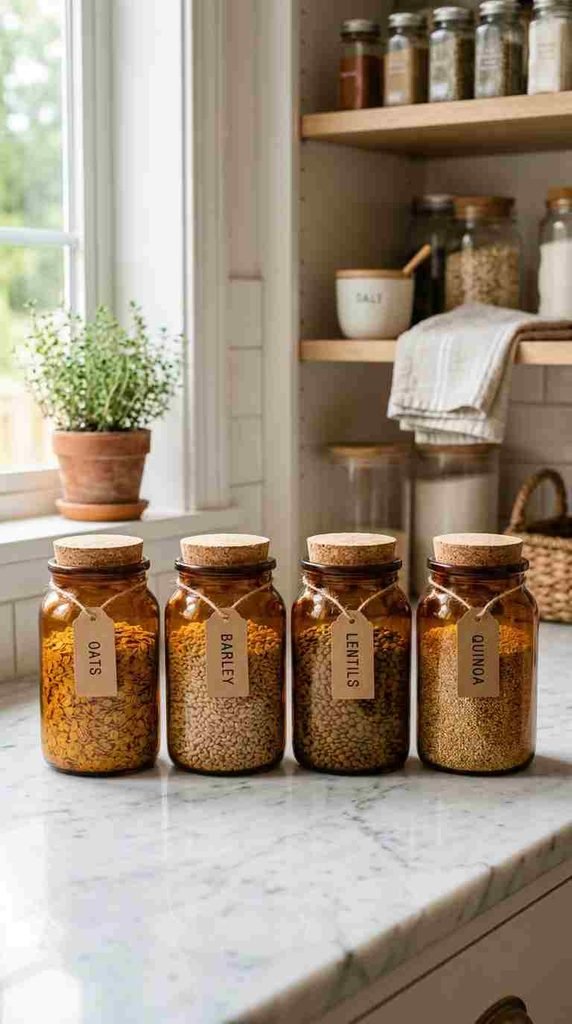
1. Amber Glass Canister Set
Store dry goods like pasta, rice, or oats in amber glass canisters with cork or wooden lids. The warm tinted glass filters light and adds a vintage, apothecary charm to the counter. Uniform sizes create a streamlined look while the color enhances the autumnal palette without clutter. Fill each canister about three quarters full so the contents show through the glass, and label the lids if the jars look alike. Place the set near the stove or the prep area, where the dry goods are easy to reach while you cook.
Choose canisters with wide mouths and tight-fitting lids so the contents stay fresh and are easy to scoop. Group three canisters of the same height in a row along the backsplash, or use two tall and one short jar for a stepped look. Keep the canisters away from the sink, since splashes leave spots on amber glass, and wipe them with a dry cloth once a week. If you prefer a lighter look, mix one amber canister with clear glass jars so the warm tone appears as an accent rather than a block of color.
2. Wooden Cutting Board Lean
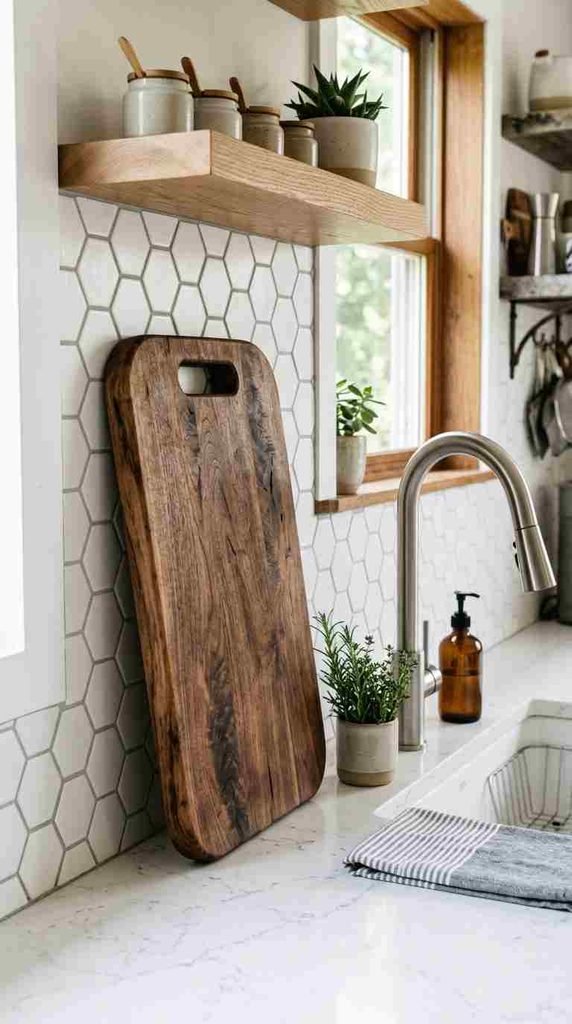
Lean a large, well-used wooden cutting board against the backsplash behind the stove or sink. The rich wood grain adds instant warmth and breaks up the monotony of tiled walls. It serves as both a functional tool and a rustic decorative accent that feels grounded and authentic. Pick a board that is tall enough to show above the counter items, usually eighteen to twenty-four inches, and lean it at a slight angle so it rests securely. A walnut or acacia board gives the deepest color, while maple suits a lighter kitchen.
Layer a smaller board in front of the large one for depth, and tuck a sprig of dried herbs or a small linen towel over the front edge for a soft touch. Keep the boards away from direct water from the tap, and oil the wood once a month with a food-safe oil so it does not dry out or crack. If the board starts to wobble, use a small non-slip pad behind the bottom edge. At the end of the season, the boards stay in place as everyday tools, so this is one fall idea that needs no storage at all.
3. Ceramic Pumpkin Trio
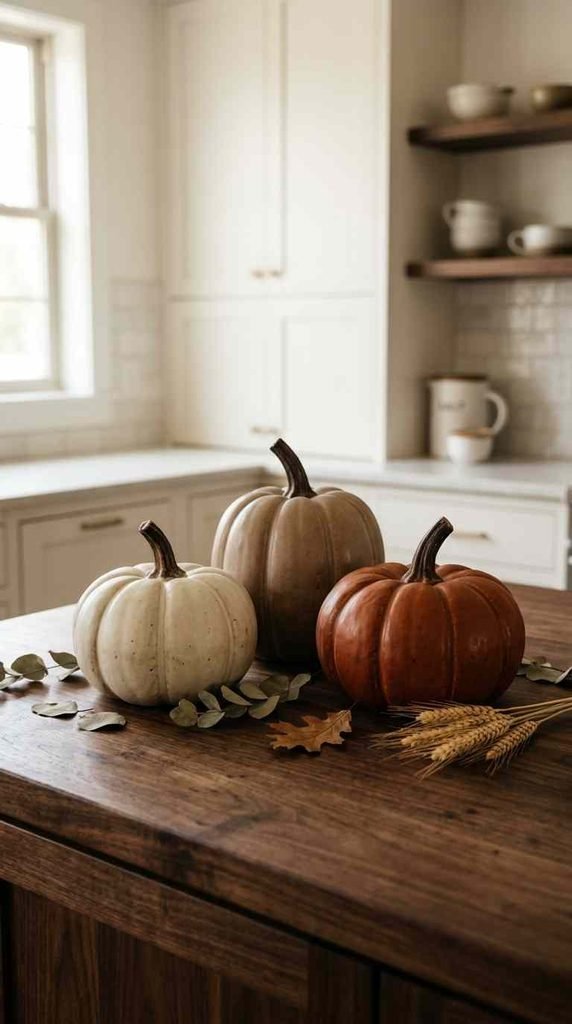
Arrange a trio of matte ceramic pumpkins in cream, taupe, and rust on the kitchen island or counter edge. These durable decorations last all season and offer a sophisticated, modern take on fall decor. Their smooth surfaces catch the light softly, adding elegance to the casual setting. Place the largest pumpkin at the back and the two smaller ones in front, slightly overlapping, so the group reads as one cluster. Keep the trio on the island or a side counter, away from the main prep area, so it never gets in the way of cooking.
Stick to the three muted colors and avoid adding a fourth shade, since the restraint is what makes the display look refined. Set the pumpkins on a low wooden tray or a folded linen runner to define the vignette and protect the counter from scratches. Ceramic pumpkins are heavier than foam ones, so they stay put if the counter is bumped. If you have a small kitchen, use just one medium pumpkin beside a candle instead of a trio, and store the set wrapped in tissue in a single box when the season ends.
4. Dried Eucalyptus in Slim Vase
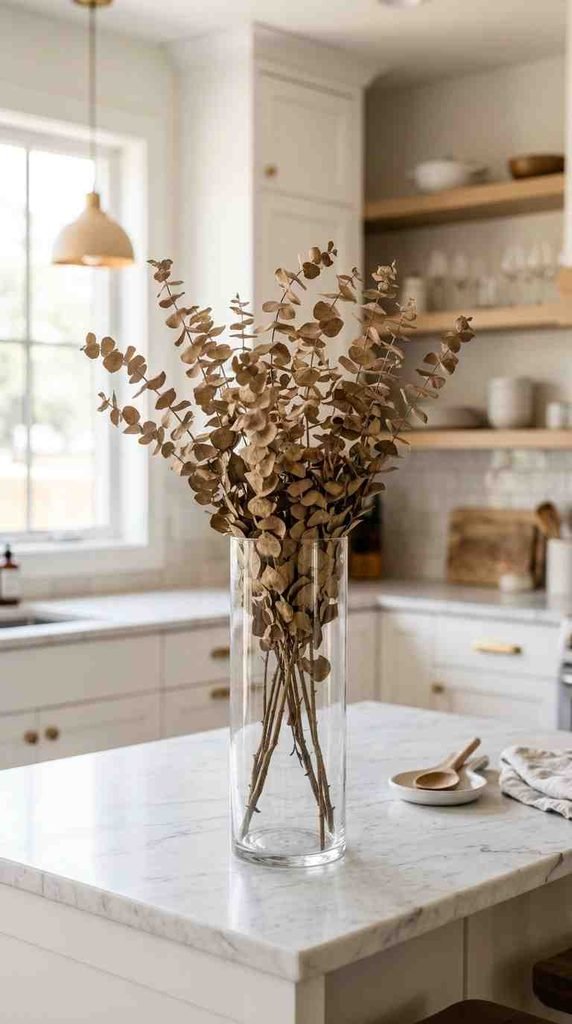
Place a tall, slender vase with dried eucalyptus branches on the corner of the counter. The muted green-gray leaves provide vertical interest and a subtle natural scent. This low-maintenance arrangement adds height and sophistication to flat surfaces without taking up much footprint. Choose a vase that is narrow at the base so it fits in a corner, and trim the stems so the tallest branch rises about twice the height of the vase. A clear glass vase shows the stems, while a matte ceramic vase in cream or sage suits a softer palette.
Use three to five stems and let them lean slightly in different directions so the arrangement looks natural. Dried eucalyptus needs no water and keeps its color for months, which makes it ideal for a busy kitchen. Keep the vase away from the stove, since heat and steam can make the leaves brittle, and dust the branches gently with a dry cloth. If the scent fades, replace a few stems with fresh dried ones, and compost the old stems at the end of the season.
5. Woven Basket Fruit Bowl
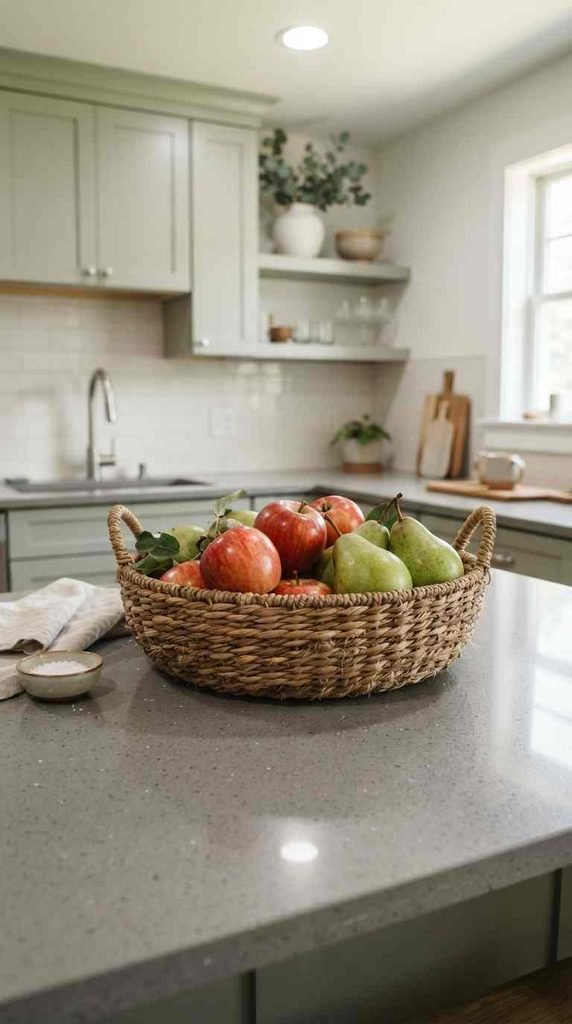
Replace wire bowls with a shallow woven seagrass or rattan basket for displaying fruit. The natural fibers add texture and warmth to cold stone or quartz surfaces. Fill it with apples, pears, or pomegranates for a colorful and edible centerpiece that feels organic. Choose a wide, shallow basket, about twelve to fourteen inches across, so the fruit sits in a single layer and is easy to see and reach. Line the basket with a clean linen cloth to protect the fibers and catch any juice from ripe fruit.
Mix two or three types of fruit for color, such as red apples, green pears, and a pomegranate or two, and keep the total to a single layer so nothing bruises underneath. Place the basket in the center of the island or near the entrance to the kitchen, where it invites people to help themselves. Refill it every few days and remove any soft fruit promptly. At the end of the season, the basket works just as well for bread, napkins, or kitchen towels, so it earns its place on the counter all year.
6. Brass Candle Holders
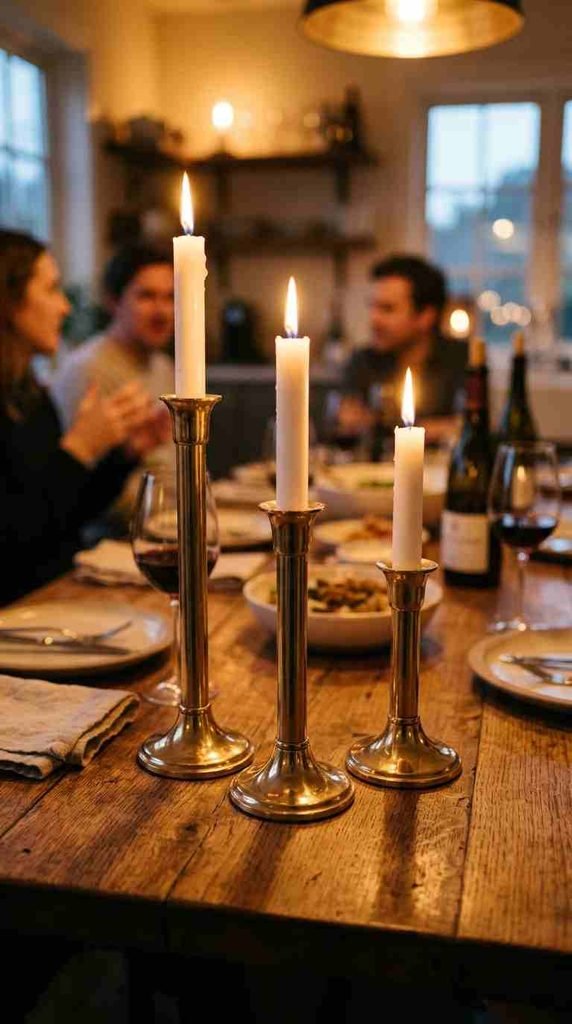
Group three brass candle holders of varying heights on the dining table extension or counter nook. The warm metallic shine reflects light and adds a touch of luxury to the everyday space. Use unscented pillar candles to maintain a clean, food-friendly environment while adding glow. Place the tallest holder at the back and the shortest at the front, keeping the group tight so it reads as one display. Cream or ivory candles look best with brass, since they keep the glow soft and warm.
Set the holders on a small wooden tray or a round marble board to catch any drips and to define the group. Keep the candles away from curtains, paper towels, and other flammable items, and never leave them burning when you leave the kitchen. Brass tarnishes over time, so polish the holders lightly with a dry cloth once a week, or let the patina develop for a more vintage look. At the end of the season, swap the pillar candles for plain white ones and the holders will work through winter too.
7. Stone Mortar and Pestle
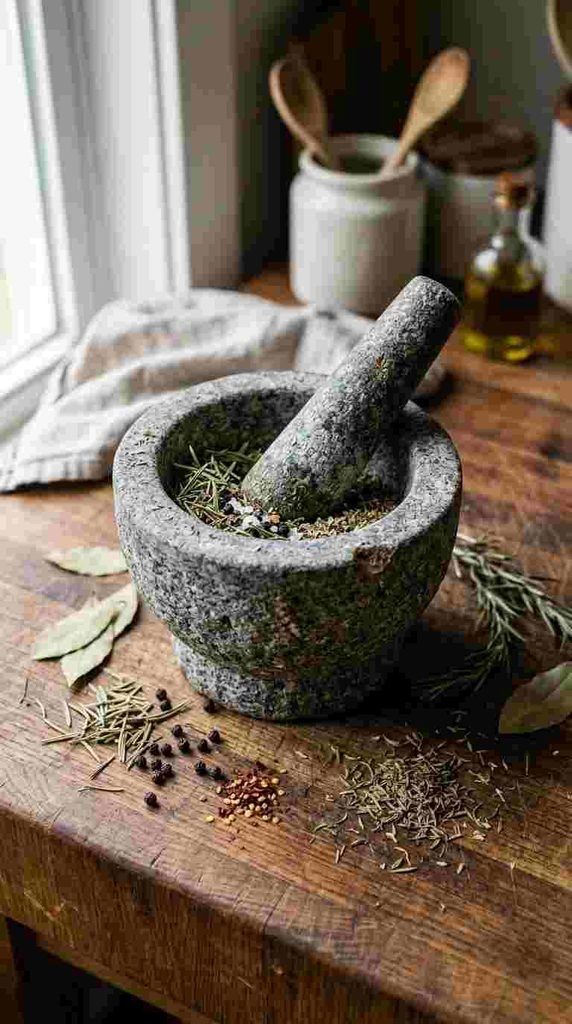
Display a stone mortar and pestle on the counter as a functional sculpture. The heavy, cool material grounds the space and adds an elemental quality. It suggests a love of cooking from scratch and brings a timeless, artisanal feel to the kitchen decor. Place it near the stove or the prep area, where it is easy to reach when you grind spices, and keep the pestle resting inside the bowl so the pair reads as one object. Granite or marble both work, and a rough, unpolished exterior adds more texture than a glossy finish.
Use the mortar for whole spices, garlic, and herb pastes, and rinse it with warm water and a brush rather than soap, which can soak into the stone. Keep it on a small wooden board or a folded linen cloth to protect the counter and to make it easy to move. If you rarely grind spices, the mortar still earns its place as a sculptural object, especially beside a vase or a stack of cookbooks. Choose a size that fits your counter, usually five to seven inches across, so it feels substantial without dominating the space.
8. Linen Tea Towels
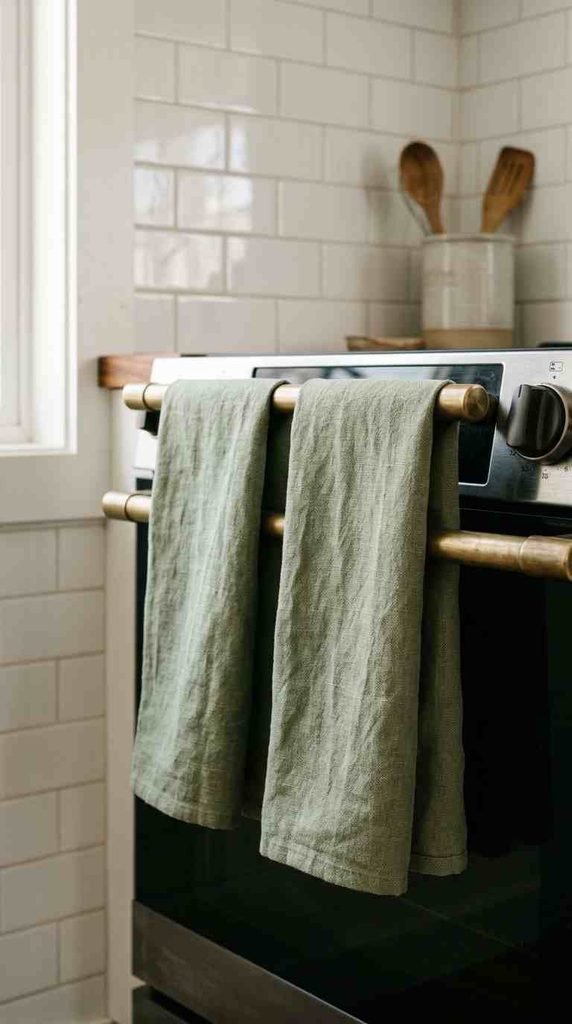
Hang linen tea towels in muted sage green or olive on a countertop rack or oven handle. The soft fabric adds a layer of comfort and color that is understated yet effective. Sage pairs well with neutral kitchens, bringing a touch of nature indoors through textile texture. Fold the towels in thirds and drape them evenly over the oven handle, or hang one from a small hook beside the sink. Choose towels with a simple stripe or a plain weave so the color stays the focus.
Linen dries quickly and softens with use, which makes it practical as well as decorative. Keep two or three towels in rotation so there is always a fresh one on display, and wash them in cool water without fabric softener, which can reduce absorbency. Sage green works with white, gray, and wood kitchens alike, while olive suits a warmer, cream-based palette. If you want a stronger fall accent, add a second towel in rust or mustard beside the sage one, and keep the rest of the counter textiles plain.
9. Wooden Tray Corral
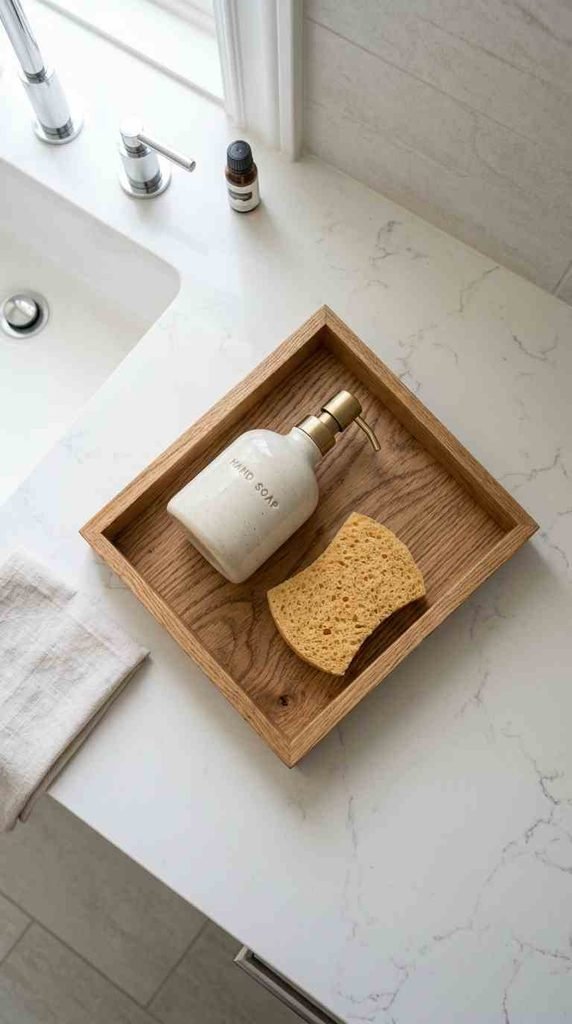
Use a rectangular wooden tray to corral soap, sponges, and hand cream near the sink. The wood adds warmth and structure, preventing small items from looking cluttered. It creates a designated zone that feels intentional, tidy, and visually pleasing. Choose a tray that fits the space beside the sink with a little room to spare, usually twelve to sixteen inches long, and keep it low-sided so the items are easy to grab. A tray with small handles is easier to lift and wipe underneath.
Place the soap dispenser at the back, a small sponge holder in the middle, and a hand cream bottle at the front, so the tallest item is against the wall. Wipe the tray dry after splashes, since standing water can stain wood, and oil it occasionally with a food-safe oil if it is used near food. The same tray works on the island for salt, pepper, and oil bottles, or on a side counter for a candle and a small plant. When the season changes, swap the fall candle for a plain one and the tray stays useful all year.
10. Dried Wheat Stalks in Vase
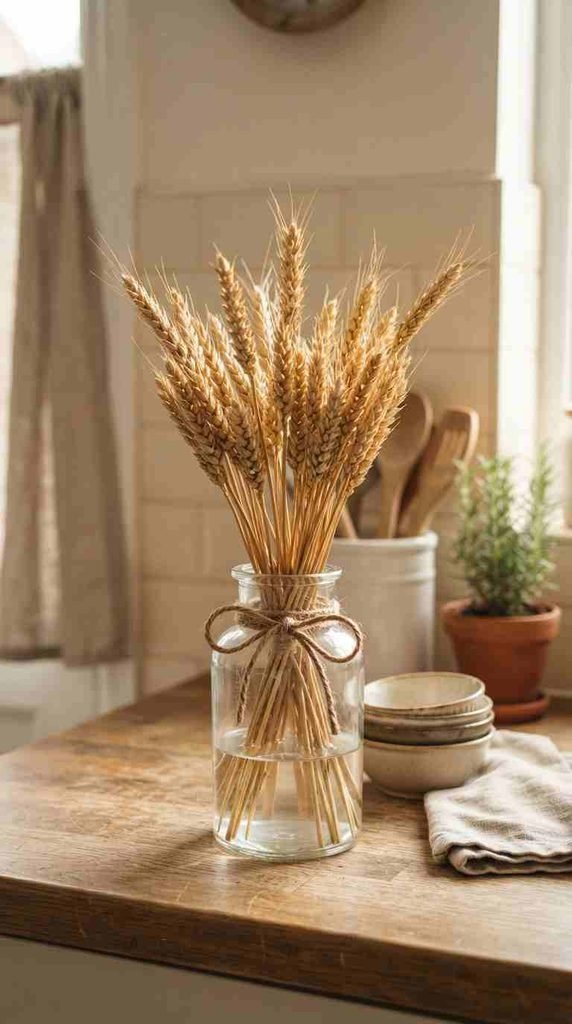
Tie a small bundle of dried wheat stalks with twine and place it in a slim vase. The golden hue adds a warm, harvest-inspired touch that fits perfectly within a neutral palette. It is a simple, inexpensive way to bring seasonal character and vertical lines indoors. Use ten to fifteen stalks, tied at the middle with natural twine, and fan the heads slightly so the bundle looks full. A slim, tall vase keeps the bundle upright and takes up very little counter space.
Place the vase at the end of the counter or beside the fruit basket, where the gold can pick up the colors of nearby pumpkins or brass. Keep the wheat away from the stove and the sink, since heat and moisture make the stalks droop, and shake the bundle gently outdoors before you bring it inside to remove loose seeds. If a stalk breaks, replace just that one from a spare bundle. At the end of the season, compost the wheat and keep the vase for a fresh bunch of eucalyptus or dried flowers.
11. Matte Black Faucet Accent
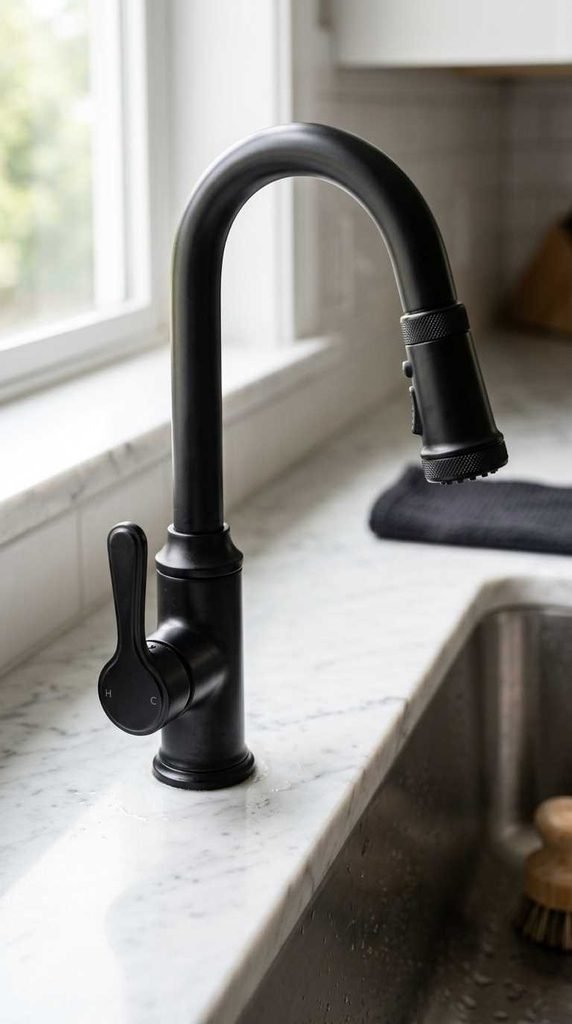
If renovating, choose a matte black faucet for a striking contrast against light countertops. The dark finish grounds the space and adds a modern, sophisticated edge. It pairs beautifully with warm wood tones and earthy decor elements for a balanced look. A matte black faucet works best with white, cream, or light gray counters, where the dark line of the faucet becomes a clear focal point. Choose a simple, arched shape so the faucet reads as a design feature rather than a purely functional fitting.
Match the faucet with other black accents, such as cabinet handles, a paper towel holder, or a kettle, so the dark finish repeats around the room. Clean it with a soft cloth and mild soap, since abrasive cleaners can dull the matte coating, and dry it after use to prevent water spots. If a full faucet replacement is not in your plans, a matte black soap dispenser or a black dish rack can give a similar contrast on a smaller scale. The dark finish also hides fingerprints better than polished chrome in a busy kitchen.
12. Ceramic Cookie Jar Display
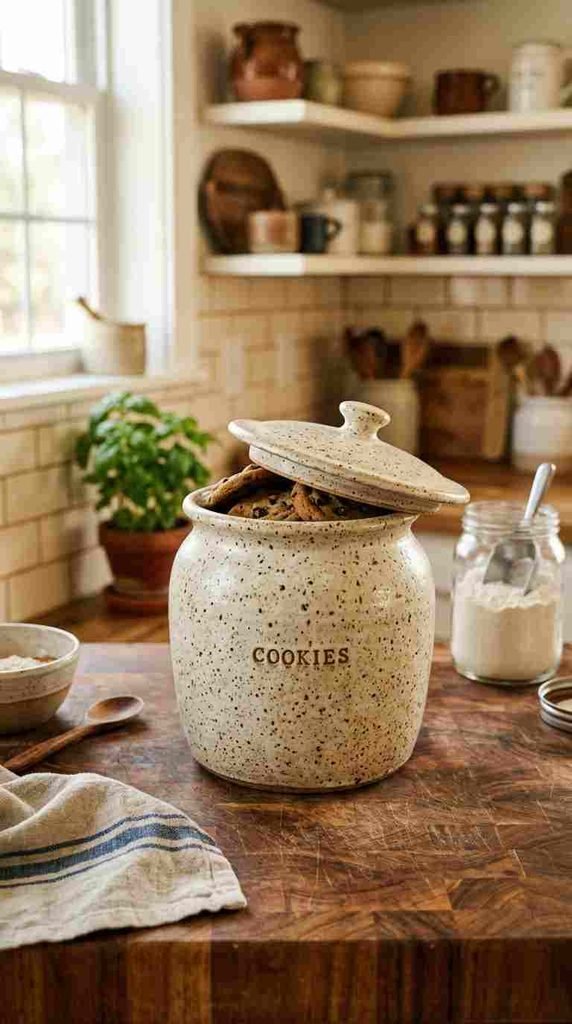
Display a large ceramic cookie jar in a neutral tone like cream or speckled stoneware. It adds a nostalgic, homey feel and invites guests to indulge. Keep it stocked with homemade treats to enhance the welcoming and hospitable atmosphere of the kitchen. Place the jar on the island or a side counter, where guests can see it when they walk in, and choose a jar with a lid that seals well so the contents stay fresh. A jar with a simple shape and a speckled glaze suits most fall palettes.
Fill the jar with cookies, biscotti, or wrapped candies, and refill it weekly so it always looks generous. Keep a small stack of napkins beside the jar for serving, and place the jar on a folded linen cloth to protect the counter and to define its spot. If you do not bake often, fill the jar with dried pasta, coffee beans, or wrapped tea bags instead, so it still looks full and useful. Wash the jar and lid by hand, since the lid seal can wear in a dishwasher, and store it with the lid slightly ajar when empty.
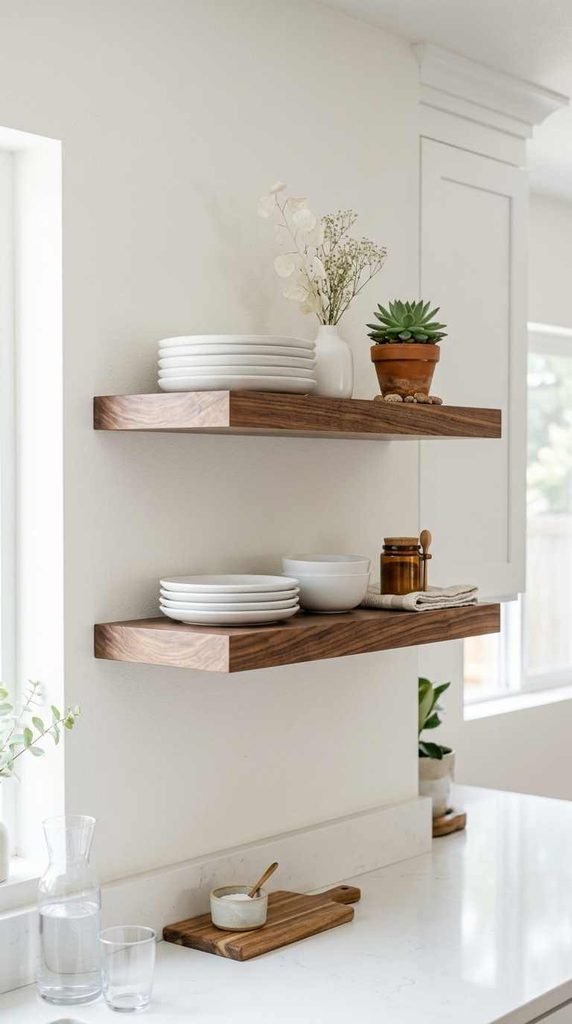
13. Floating Wood Shelves Above
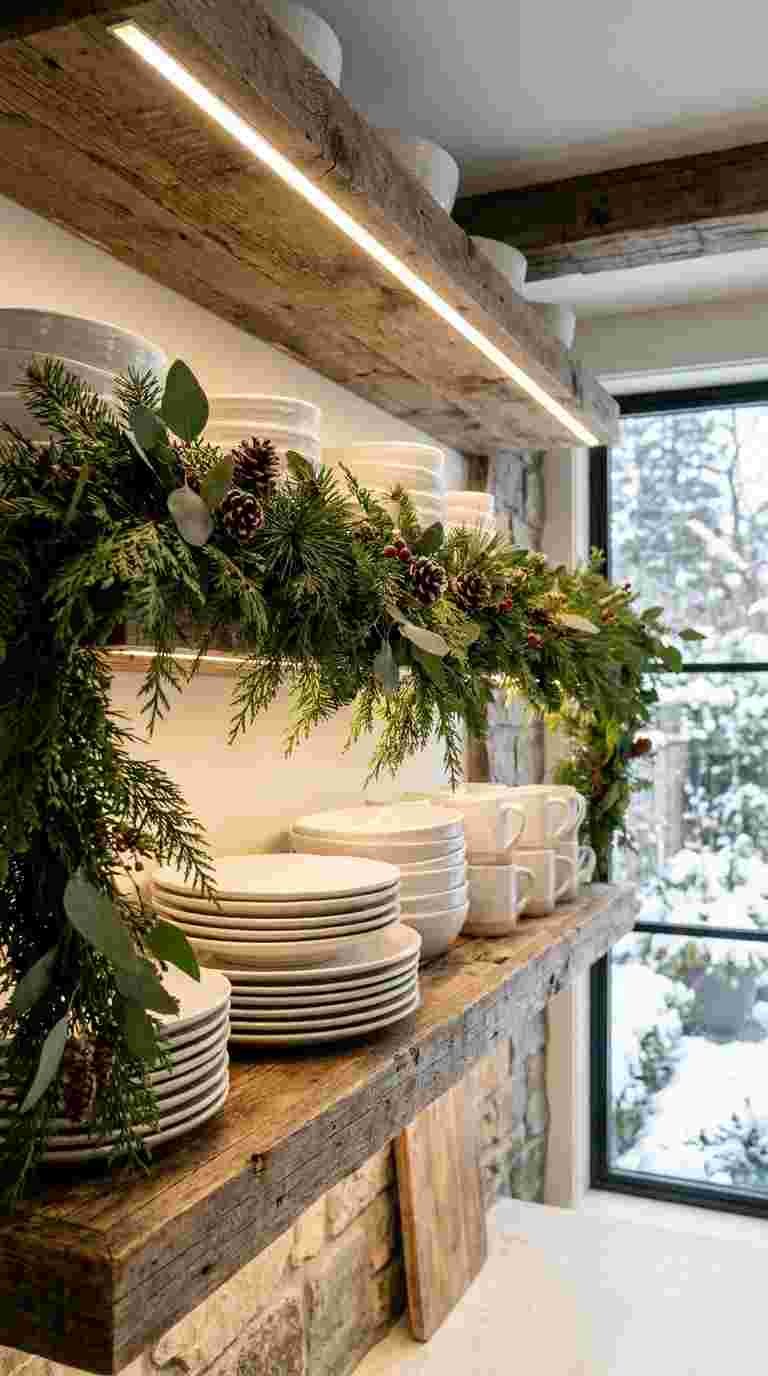
Install floating wood shelves above the counter to display dishes and small plants. The open design keeps the space feeling airy while providing surface area for decor. Use brackets in matte black or brass to complement the wood tone and add structural interest. Keep the shelves shallow, about eight to ten inches deep, so they hold plates and plants without jutting into the workspace. Fix them into wall studs so they can safely carry the weight of dishes and jars.
Style the shelves with a mix of useful and decorative items, such as a stack of everyday plates, a small potted herb, and a ceramic pumpkin. Leave some empty space on every shelf so the display looks calm rather than crowded, and keep the heaviest items on the lowest shelf. Dust the shelves weekly, since open shelves collect grease and dust in a kitchen, and swap one or two pieces with the seasons. If you rent, use sturdy floating shelves with removable fixings rated for the load, or lean into a small countertop shelf instead.
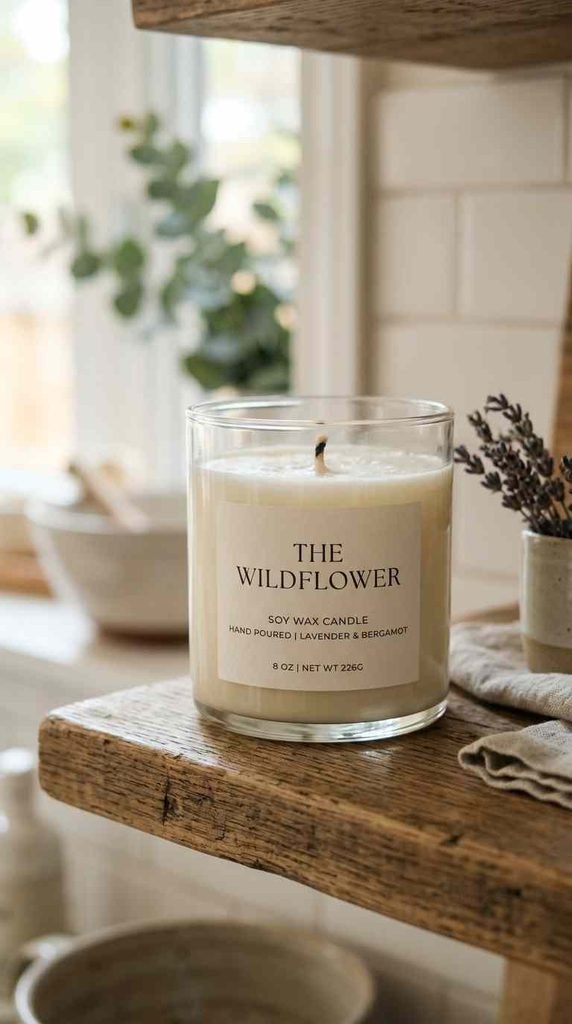
14. Scented Soy Candle in Glass
Place a soy candle in a clear glass jar with a label featuring autumn scents like pumpkin or spice. The transparency keeps the look light, while the scent engages the senses. Group it with other small items for a curated vignette that smells as good as it looks. Set the candle on a small wooden coaster or a stone tile to protect the counter from heat, and place it beside a vase or a small pumpkin so it becomes part of a group rather than a lone object. Choose a scent that suits the kitchen, such as cinnamon, apple, or cedarwood.
Trim the wick to about a quarter inch before each burn so the candle burns evenly and does not smoke. Keep the candle at least a foot from curtains, paper towels, and dried flowers, and never leave it burning when you leave the room. Soy wax burns cleanly and holds scent well, and a jar with a lid keeps dust out between uses. If you prefer no flame in the kitchen, use a flameless LED candle in a glass jar for the same glow, and keep the scented jar as an unlit decoration on the shelf.
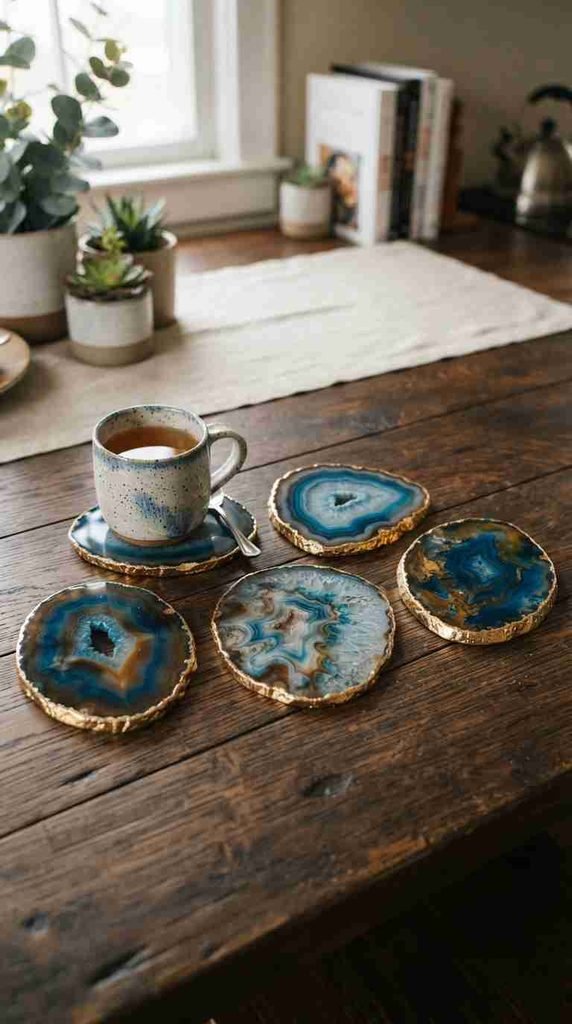
15. Natural Stone Coasters
Set out natural stone coasters on the island for drinks or hot pots. The unique veining of each stone adds artistic flair to the surface. They protect the countertop while serving as small, elegant decorative objects that ground the space with earthy weight. Choose coasters in agate, marble, or slate, and keep a stack of four near the coffee station and another near the seating area of the island. The natural variation in the stone means no two coasters look alike, which adds quiet interest to a plain counter.
Seal porous stone coasters once a year so they do not stain from coffee or tea, and wipe them with a damp cloth after use. Agate coasters with warm amber or brown tones suit a fall palette best, while gray marble suits a cooler kitchen. Keep the coasters in a small holder or stacked neatly when not in use, so they look intentional rather than scattered. If you use hot pots, choose thicker stone coasters or trivets that can take the heat without cracking, and keep cork pads underneath to protect the counter.
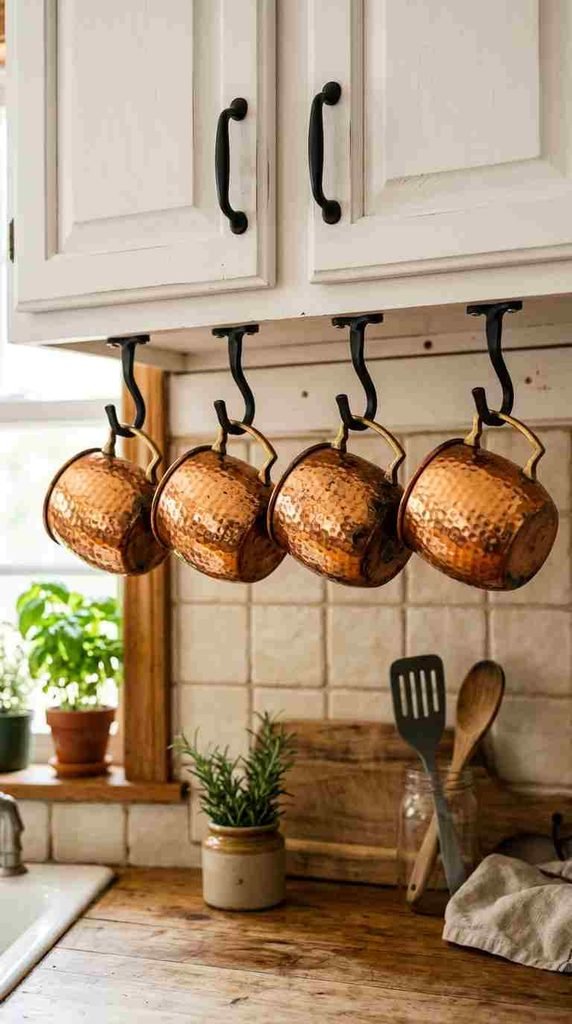
16. Copper Mug Display
Hang copper mugs from hooks under upper cabinets or on a wall rack near the counter. The warm rose-gold tone adds a pop of metallic color that complements fall hues. They are easily accessible for hot drinks and serve as charming, functional decorative elements. Hang the mugs by their handles in a neat row, with even spacing, so they look organized rather than crowded. Keep the row to four or six mugs, and store the rest in a cabinet, so the display stays light.
Use hooks rated for the weight of a filled mug, and fix the rail or hooks into studs so they cannot pull loose. Copper tarnishes over time, so polish the mugs lightly with a dry cloth once a week, or let the patina develop for a more vintage look. Pair the copper with brass or warm wood nearby, such as a wooden cutting board or a brass candle holder, so the metal tones harmonize. If you do not drink from copper mugs, hang them as decoration only and keep everyday mugs in the cabinet, so the display always looks its best.
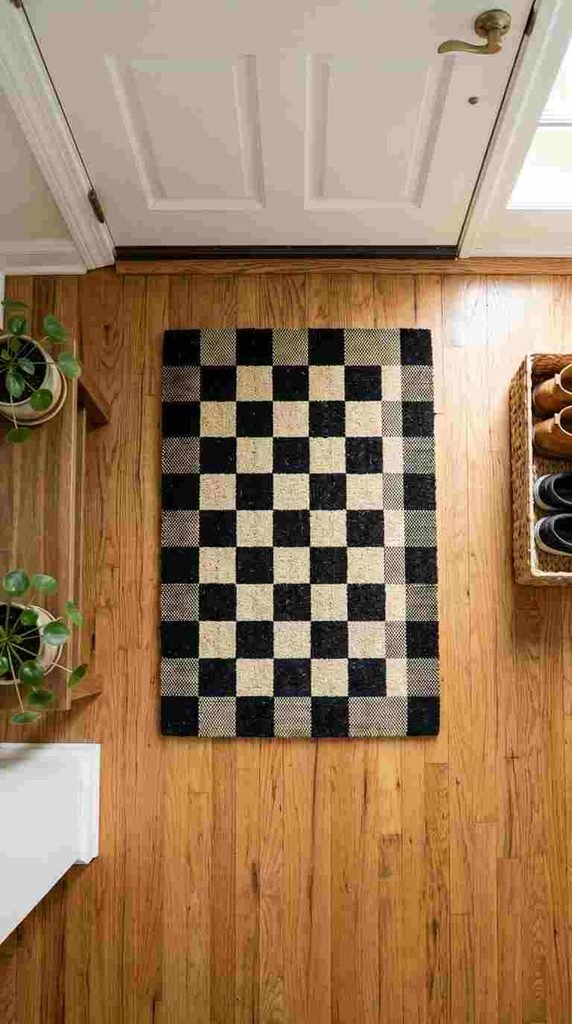
17. Checkered Doormat Inside
Place a small checkered doormat in black and cream just inside the kitchen entrance. This classic pattern adds a graphic element and defines the transition zone. It traps dirt effectively while contributing to a cozy, farmhouse-inspired aesthetic at the threshold. Choose a mat that fits the doorway with a few inches to spare on each side, and keep it flat against the floor so the door swings freely above it. A low-profile mat with a rubber backing stays in place and is easy to shake out.
Black and cream checks suit almost any kitchen, and the pattern hides dust and footprints better than a plain mat. Shake the mat outside weekly and vacuum it with an upholstery attachment, since kitchen mats collect crumbs quickly. If the entrance is also the main route to the garden, choose a washable mat so you can rinse off mud and leaves. Pair the mat with a small basket for shoes or a hook for an apron nearby, so the entrance feels organized and the pattern becomes part of a welcoming first impression.
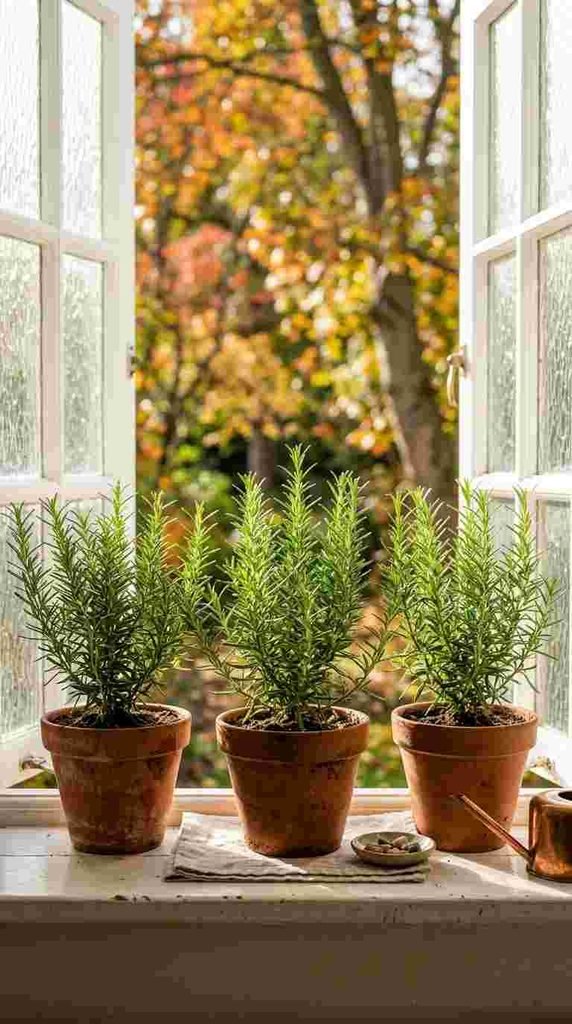
18. Terracotta Planter Herbs
Place small terracotta pots filled with fresh rosemary or thyme on the windowsill above the sink. The unglazed clay adds an earthy, organic element that contrasts beautifully with modern fixtures. These living herbs provide both visual greenery and practical ingredients for cooking. Choose pots that fit the windowsill depth with room for the window to open, and set them on a tray or saucers so water does not mark the sill. Rosemary and thyme both tolerate the bright light of a kitchen window and need little care.
Water the herbs when the top inch of soil feels dry, and trim them regularly so they stay compact and bushy. Snip rosemary for roasts and thyme for soups, and the plants will keep producing through the season. Terracotta dries out faster than plastic pots, so check the soil more often in a warm kitchen, and rotate the pots weekly so all sides get light. If the windowsill is narrow, use a small wooden riser to lift the pots above the tap, and keep the labels simple, such as a small wooden plant marker in each pot.
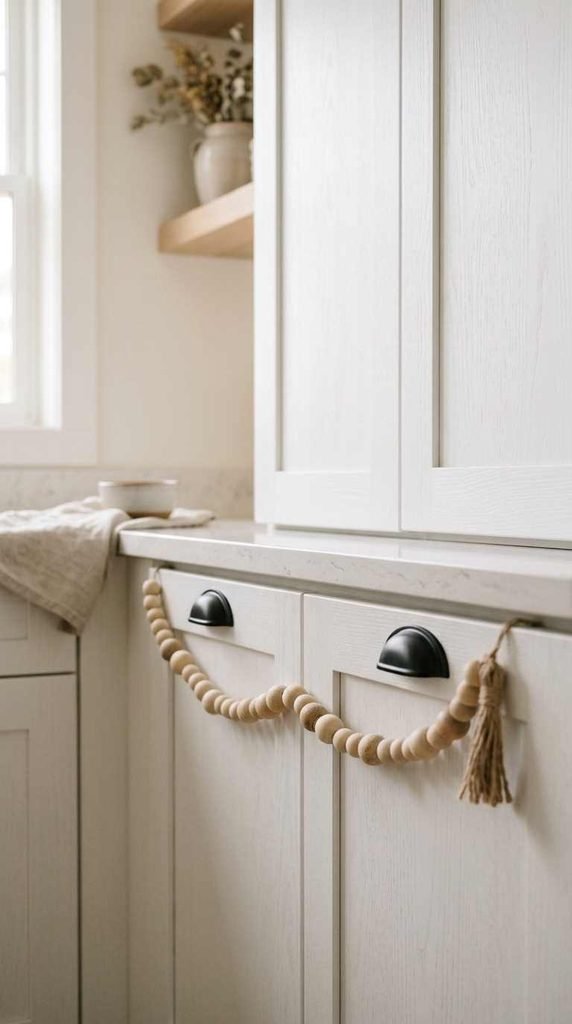
19. Wooden Bead Garland
Drape a simple wooden bead garland across the front of upper cabinets or along a shelf edge. The natural wood tones complement both white and painted cabinetry, adding texture without overwhelming the space. This lightweight decoration is easy to install for seasonal transitions. Choose a garland with large beads, about one inch across, so it reads clearly from across the kitchen, and drape it in a loose swag with a gentle dip between the attachment points. Tie the ends to small removable hooks or cabinet knobs so it stays in place.
Natural, unstained wood suits most kitchens, while a whitewashed finish works well with pale cabinets. Keep the garland on the front face of the cabinets, away from the stove, so it never hangs near heat or steam. If you want a fuller look, layer the bead garland over a thin eucalyptus garland, or add a small tassel at each end. At the end of the season, coil the garland loosely and store it in a cloth bag so the beads do not scratch each other, and it will be ready to hang again next fall.
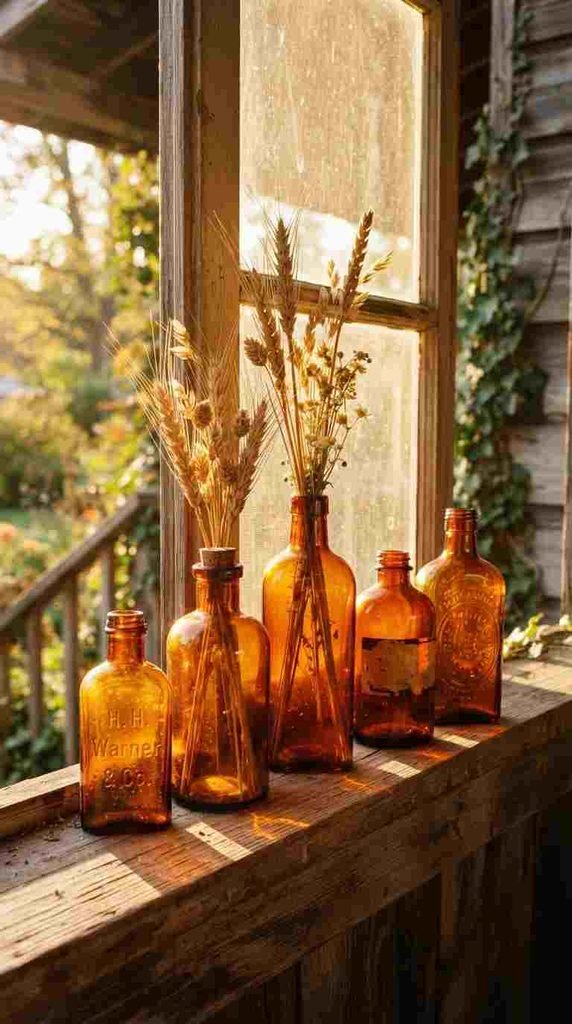
20. Amber Glass Bottles
Line up amber glass bottles of different shapes along a windowsill or ledge for a glowing effect. The tinted glass filters sunlight into a warm honey tone during the day and enhances candlelight at night. Fill them with dried wheat stems or leave them empty for versatile styling. Group three to five bottles in a row, varying the heights so the line steps up and down, and keep them close together so they read as one display. Amber glass looks best where light passes through it, so a windowsill is ideal.
Use bottles with different neck shapes, such as a tall slim bottle beside a short round one, for a collected, vintage feel. If you fill them, keep the stems short so they do not block the window light, and use dried wheat, eucalyptus, or bare branches that need no water. Wipe the glass with a dry cloth once a week, since dust shows on amber glass in sunlight. Keep the bottles away from the edge of the sill where they could be knocked over, and move them to a shelf if the windowsill gets very hot in direct sun.
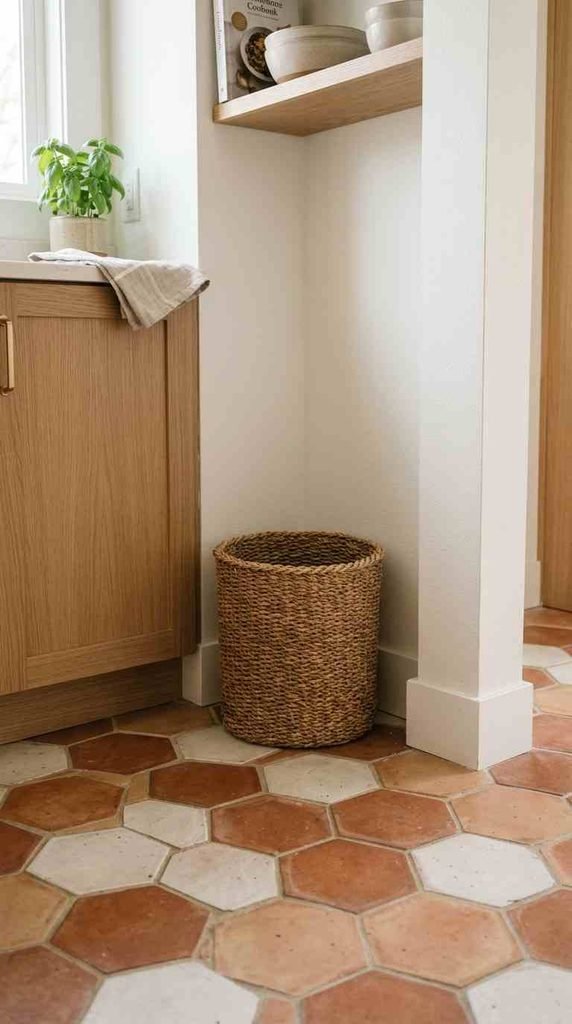
21. Seagrass Trash Bin
Swap out a plastic trash bin for a small woven seagrass or rattan basket with a liner. The natural fibers add texture and visual interest to the floor corner, making a utilitarian object feel decorative. It blends seamlessly with other natural elements in the room. Choose a basket that is tall enough to hold a standard bin liner, and fit a removable liner inside so the basket itself stays clean. Place it in the corner beside the counter or under a small shelf, where it is easy to reach but out of the main walkway.
Seagrass and rattan suit a farmhouse or coastal kitchen, and the woven texture echoes the baskets and trays used elsewhere in the room. Empty the liner regularly and wipe the basket with a dry cloth, since moisture can stain natural fibers. If the basket is used for recycling, add a simple label or a second basket in a different weave so the two are easy to tell apart. At the end of the season, the basket works just as well for storing kitchen towels or produce, so it remains useful long after fall.
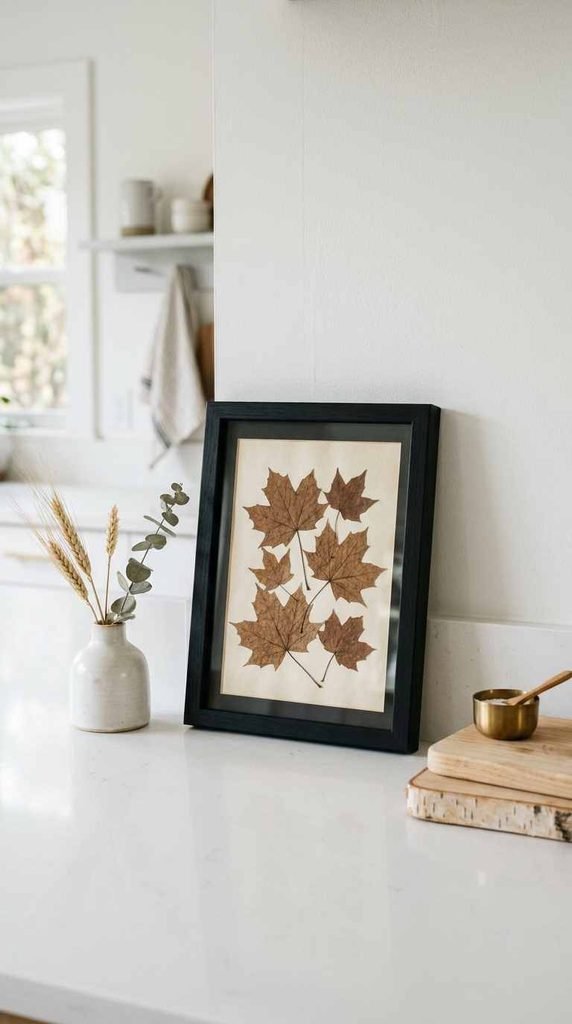
22. Framed Autumn Leaf Print
Lean a small framed print of autumn leaves or ferns against the backsplash or on a shelf. Choose a simple frame in black or wood to keep the look streamlined. This artwork adds vertical interest and a splash of seasonal color to blank wall spaces. Pick a print that is small enough to lean safely, usually eight by ten inches, and set it where it will not be splashed by the sink or the stove. A print of a single maple leaf or a fern frond in rust or olive works well against a plain backsplash.
Lean the frame at a slight angle against the wall, and place a small object in front of the bottom edge, such as a candle or a small plant, so it cannot slip forward. Black frames suit a modern kitchen, while thin wood frames suit a warmer, rustic room. If the print is near the stove, keep it a safe distance from heat and steam, and wipe the glass weekly so cooking grease does not dull it. Swap the print with the seasons, keeping the same frame, so the kitchen wall always has a fresh, finished look.
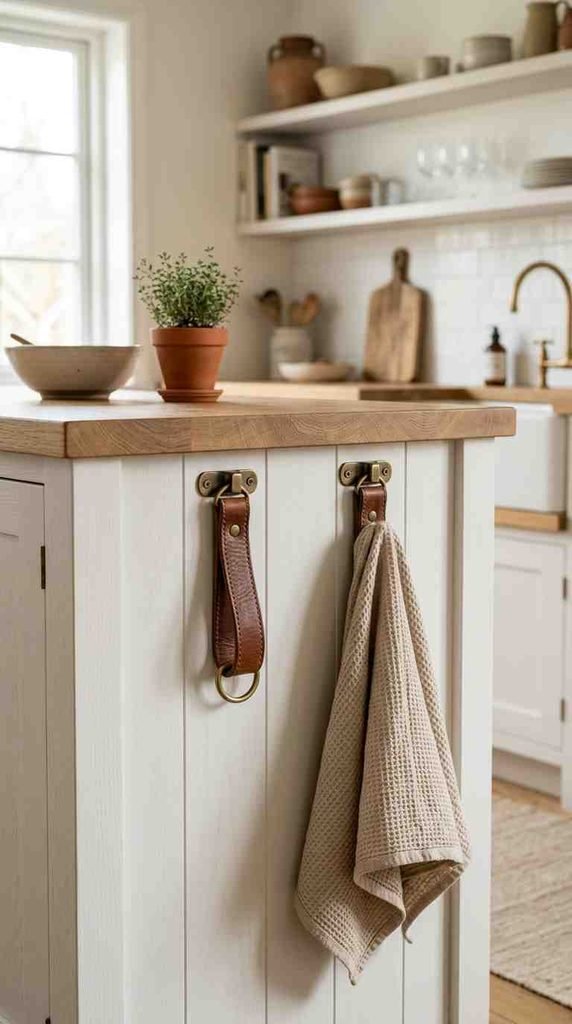
23. Leather Strap Hooks
Install leather strap hooks on the side of the island or cabinet for hanging towels. The rich brown leather adds warmth and texture, contrasting with smooth painted surfaces. It is a stylish and practical storage solution for frequently used items that adds rustic charm. Space two or three hooks about eight inches apart at a height that keeps towels clear of the floor, and choose straps in a warm tan or deep brown that will darken gracefully over time. Fix each hook into the cabinet side or a stud so it can hold a damp towel without pulling loose.
Hang one towel per hook so the leather stays visible and the towels dry properly, and keep a spare hook free for an apron. Leather hooks pair well with a wooden cutting board, a woven basket, and brass fittings, since the warm materials tie the kitchen together. Wipe the straps with a dry cloth occasionally, and condition the leather once a year to keep it supple. If you prefer a softer look, use the hooks for a linen tea towel in sage or cream, which adds a gentle color accent beside the rich brown leather.
Embracing the Heart of the Home
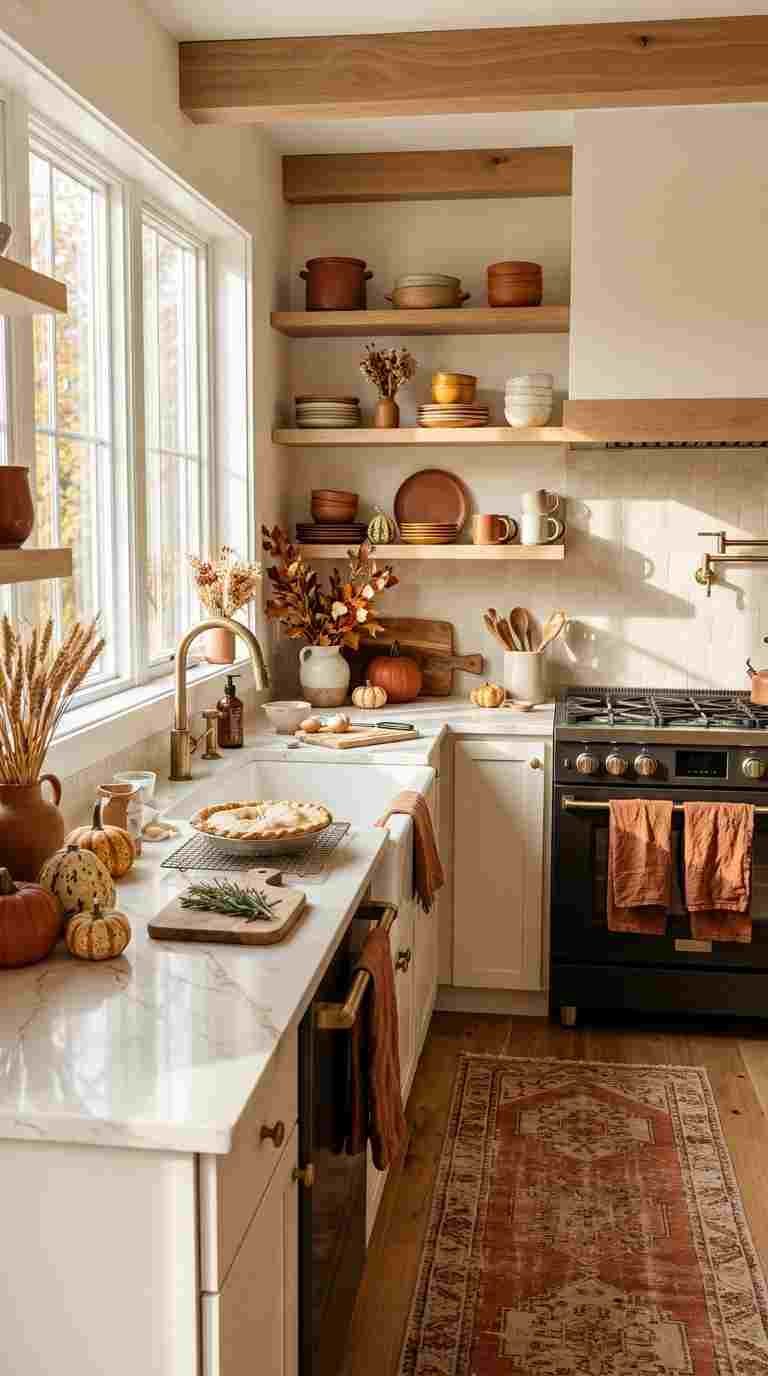
Transforming your kitchen counters for fall 2026 is about creating a space that feels warm, welcoming, and ready for gathering. By incorporating natural materials, earthy tones, and thoughtful details, you turn everyday routines into seasonal rituals. These twenty-three ideas offer simple ways to refresh your surfaces without overwhelming the space. Remember that the best decor is that which enhances your daily life and brings joy to your cooking and dining experiences. Let your kitchen become a true reflection of the cozy, abundant spirit of autumn. Start with one vignette, such as a tray by the sink or a cluster of pumpkins on the island, and add more only where the counter still feels bare. Keep the prep areas clear, use flameless candles near food, and choose a consistent palette of two or three fall colors so every layer feels connected.
Keep exploring more fall decorating ideas across the house:




3 Comments