

20 Cozy Autumn Bedroom Ideas 2026 to Transform Your Space
Autumn asks your bedroom to do more than look pretty. It has to feel like a warm place to land after a cold day, a room that smells faintly of cinnamon, glows low and golden in the evening, and holds enough soft layers that getting into bed feels like a small reward. This guide gathers twenty practical ideas for turning an ordinary bedroom into a cozy autumn retreat, from earthy layered bedding and low warm light to scent stations, a reading corner and a simple evening ritual that helps you switch off. If you love a softer, paler take on the season, our neutral fall bedroom ideas offer a calmer palette, and our fall home decor ideas show how the same warmth carries through the rest of the house. Every idea below includes measurements, materials and placement, so you can start with one small change tonight and build from there.
1. Layered Linens in Earthy Tones
Start at the bed, because it fills most of the room and sets the whole mood. Swap lightweight summer sheets for flannel or brushed cotton in terracotta, olive, mustard or rust, and build the bed in visible layers: a fitted sheet, a flat sheet turned back about 30 centimetres at the top, a duvet in a warm solid colour, and a lighter coverlet or quilt folded across the lower third. Finish with a chunky knit throw draped across the foot of the bed, so the layers read as a deliberate stack rather than a single heavy blanket. The trick is contrast in texture, not just colour: pair smooth cotton with a nubby knit and a soft velvet cushion, and keep the palette to three earthy tones plus white or cream so the bed feels rich without looking busy. Wash new flannel once before first use to soften it, and choose a duvet that is about 20 centimetres wider than the mattress on each side so it hangs evenly instead of pulling tight.

2. Warm Ambient Lighting
Overhead lighting is the fastest way to ruin a cozy bedroom, so replace it with two or three low, warm light sources instead. Choose bulbs around 2700K, which read as candlelight rather than office white, and put the main light on a dimmer if you can. A bedside lamp with a fabric shade, about 58 to 71 centimetres tall including the shade, gives a pool of light that is right for reading without flooding the room. Add a second layer: a short string of warm fairy lights along the headboard, a small lantern on the dresser, or a salt lamp on a low shelf. Keep the brightest source behind you rather than in front of you, so the room glows instead of glaring, and set lamps on opposite sides of the room so no corner stays dark. When the evening light fades, switch the overhead light off entirely and let the low lamps do the work; the room will feel smaller, warmer and much more restful.

3. Natural Wood Accents
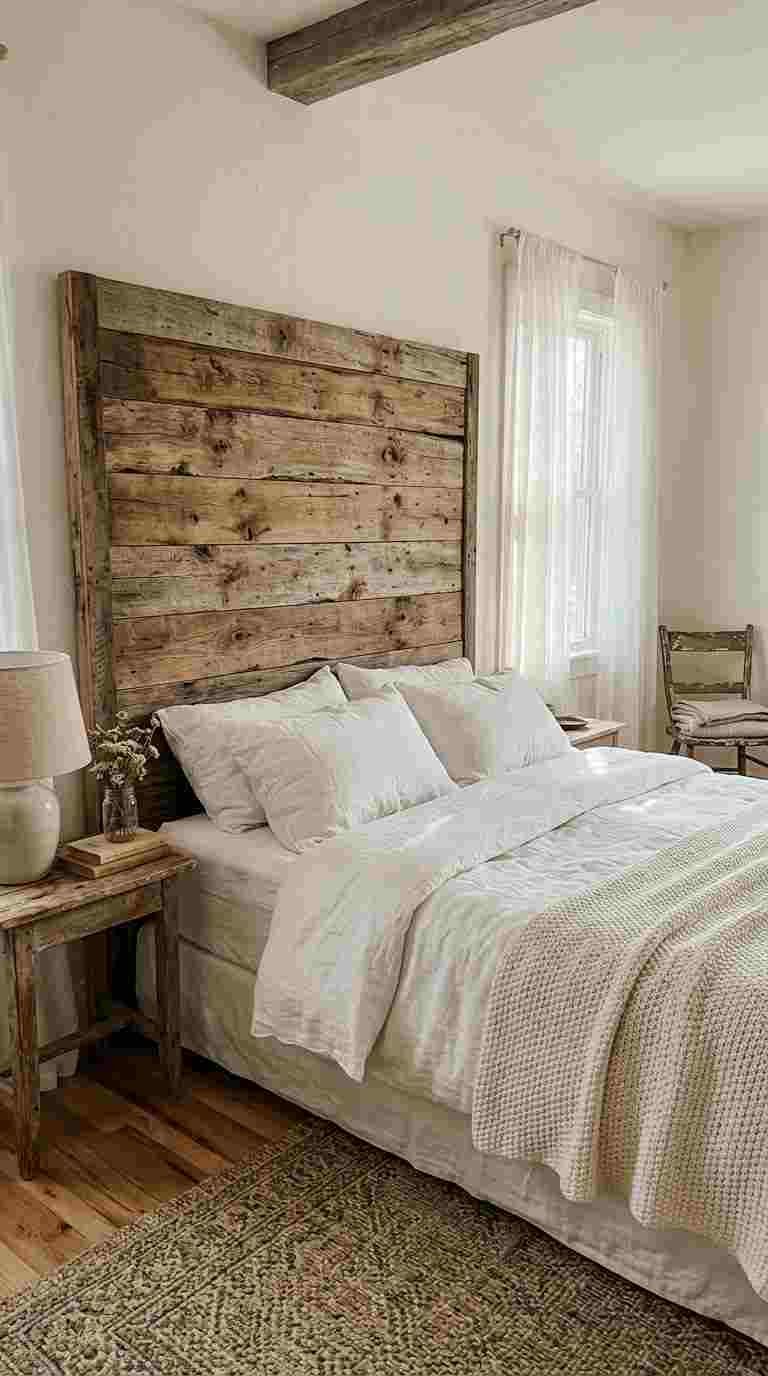
Wood is what keeps an autumn bedroom from feeling like a fabric shop, so bring in at least one solid wood element with visible grain. A wooden headboard or a wood-plank feature wall behind the bed anchors the room, and smaller pieces carry the same warmth through the space: a walnut or oak nightstand, a wooden tray on the dresser, a simple bench at the foot of the bed. Limit yourself to two or three wood finishes so the room feels collected rather than mismatched, and let one darker piece, such as a walnut tray or a stained frame, contrast with lighter oak or pine. Sand any rough edges, oil unfinished wood once a season to keep it from drying out, and keep wooden pieces at least a few centimetres from radiators and damp walls. If a full headboard is too much of a commitment, a single wide wooden shelf above the bed, about 120 centimetres long and 20 centimetres deep, gives the same grounded feeling for much less effort.

4. Seasonal Scent Stations
Smell is the quickest route to an autumn mood, so set up one or two small scent stations rather than scattering candles everywhere. A nightstand station works well: a tray about 30 by 40 centimetres holding one candle in a lidded jar, a small dish of dried orange slices or cinnamon sticks, and a reed diffuser for the hours when the candle is unlit. A second station on the dresser can hold a wax warmer or a bowl of potpourri made from dried leaves, cloves and star anise. Choose one scent family per room, such as apple and cinnamon or cedar and amber, so the stations reinforce each other instead of competing. Keep any lit candle at least 30 centimetres from curtains, bedding and the dried materials themselves, never leave a flame unattended, and trim the wick to about 6 millimetres before each lighting so it burns cleanly and lasts longer.

5. Textured Wall Hangings
A bare wall above the bed makes the whole room feel unfinished, and a woven wall hanging fills it with texture that paint alone cannot give. Choose a macrame piece or a woven tapestry about two thirds as wide as the bed, and hang it so its bottom edge sits 10 to 15 centimetres above the headboard, which keeps the proportions calm and the hanging clear of pillows. A wooden dowel or a slim branch, about 60 to 90 centimetres long, works as the hanging rod and echoes the natural wood elsewhere in the room. Layer the hanging with a pair of small wall lamps or sconces on either side if the wall is wide enough, leaving at least 20 centimetres between the textile and each light so nothing overheats. Dust the piece monthly with a soft brush or a low-suction vacuum, and take it down for a gentle hand wash once a year, since woven cotton picks up dust faster than a framed print.

6. Plush Area Rugs
Your feet notice the floor before anything else on a cold autumn morning, so give the bedside a soft landing. A rug that runs alongside the bed should extend at least 60 centimetres beyond each side and about 90 centimetres past the foot, which usually means a 160 by 230 centimetre rug for a queen bed or 120 by 180 centimetres for a smaller room. A deep, plush pile feels wonderful under bare feet, but a flat-weave patterned rug is a smart alternative if the room runs warm or you prefer something easier to vacuum, and it still softens the floor and ties the bedding colours together. Place a non-slip pad underneath so the rug never creeps, and leave a gap of 10 to 15 centimetres between the rug edge and the skirting board so the floor still frames it. Shake the rug outside weekly and vacuum it twice a week during autumn, when leaves and dust come in on shoes and settle fast.

7. Dried Floral Arrangements
Fresh flowers fade fast in a heated bedroom, so dried stems are the practical autumn choice. A glass or ceramic vase about 20 to 30 centimetres tall, holding bunny tails, dried eucalyptus, pampas or wheat, brings the season indoors without watering or wilting. Keep the arrangement to one vase per surface and one or two stems in a smaller bud vase, because a single generous bunch reads as intentional while several small ones look cluttered. Place the vase on a nightstand or dresser at least 30 centimetres from the bed so the stems do not shed into the sheets, and keep it out of direct sunlight, which bleaches dried grasses to straw in a few weeks. Trim the stems to staggered heights, with the tallest about one and a half times the vase height, and replace the bunch once a year, when the stems turn brittle and start to drop.

8. Reading Nook Integration
A bedroom reading nook does not need a whole corner, just a chair, a light and a place for a book. Tuck a comfortable armchair, about 70 to 80 centimetres wide, into the brightest corner or beside the window, and pair it with a side table 40 to 45 centimetres high that holds a lamp, a mug and the book you are reading. A small basket on the floor keeps two or three books within reach without stacking them on the nightstand, and a folded throw over the chair arm means the seat is ready on a cold evening. Keep the chair at least 10 centimetres from the wall so the fabric breathes, and angle it slightly toward the room rather than flat against the wall, which makes the nook feel like a destination instead of spare furniture. If the room is small, a single armless slipper chair and a wall-mounted reading light give you the same ritual in about a square metre.

9. Seasonal Pillow Mix
Pillows are the cheapest way to change the season, so treat them as a small collection you rotate rather than a fixed set. Start with two sleeping pillows in white or cream cases, then add three decorative ones in front: two 50 by 50 centimetre squares in velvet or knit, and one lumbar cushion about 30 by 50 centimetres in a contrasting texture, such as linen or boucle. Keep the colours to one warm family, for example rust, mustard and dusty rose, with one deep neutral such as chocolate brown to ground the group, and follow a rough 60-30-10 split between the main colour, the second colour and the accent. Fluff the inserts daily and store the out-of-season covers in a labelled cotton bag, not a plastic one, so they stay fresh. If the bed looks crowded, remove one pillow rather than squeezing them in, because a pillow that slides off the bed every night is decoration nobody enjoys.

10. Window Treatment Upgrade
Autumn light is low and golden, and the right curtains frame it instead of blocking it. Swap thin summer sheers for heavier drapes in velvet, wool-blend or lined cotton, and hang the rod 10 to 15 centimetres above the window frame and 15 to 20 centimetres wider on each side, so the open panels sit against the wall and the full window shows. Choose a drop that just kisses the floor, with no more than 2 to 3 centimetres of pooling, which looks tailored and stays out of the way of radiators. Layer a sheer panel behind the heavy drape if you want privacy in the morning without losing daylight, and add a thermal lining if the window is single-glazed or faces north, since lined curtains cut draughts noticeably on cold nights. Close the drapes at dusk to hold the day’s warmth, and open them fully each morning so the low autumn sun reaches the bed.

11. Personal Memory Displays
A bedroom should feel like yours, and nothing does that better than the people and places you love on the wall. Build a small gallery of five to seven framed photos above the bed or on the wall opposite it, mixing one or two larger prints, about 30 by 40 centimetres, with smaller 13 by 18 centimetre frames. Keep the spacing even, about 5 to 7 centimetres between frames, and hang the centre of the group at eye level, roughly 145 to 150 centimetres from the floor. Use matching frames in one finish, such as black wood or light oak, so the photos themselves provide the variety, and add one non-photo keepsake, such as a pressed leaf in a small frame or a ticket stub under glass, to make the display feel personal rather than generic. Avoid hanging the gallery where the morning sun hits it directly, since sunlight fades prints within a season or two.

12. Bed Canopy or Draping
A canopy turns a plain bed into a room within a room, and sheer fabric keeps it light instead of heavy. If you have a four-poster bed, drape two panels of voile or gauze from the top rails, letting them fall to the floor at the head end and gather at the foot. Without a poster bed, mount a slim ceiling track or a curved rod above the headboard and hang two panels that fall either side of the bed, leaving the front open so the bed stays easy to make. Choose a washable fabric, since canopy panels collect dust, and keep the drop no longer than floor length so the fabric does not trail where you walk. For an autumn version, layer a slightly warmer sheer, such as a soft cream or pale rust voile, over a plain white one, which gives the glow of the season without blocking light. Our fall bedroom ideas include more ways to dress the bed for the season.

13. Nature-Inspired Color Palette
Autumn gives you a ready-made palette, so borrow it directly from the season outside. Build the room around three nature colours: a warm base such as cream or warm white for about 60 percent of the room, a mid-tone such as burnt orange, moss green or ochre for about 30 percent, and a deep accent such as walnut brown or charcoal for the final 10 percent. Apply the mid-tone through bedding, cushions and a throw, and the deep accent through small items such as a tray, a frame or a lamp base, so the strong colours never overwhelm the calm base. Test the combination with fabric swatches held against the wall in both morning and evening light before committing, because autumn daylight changes colour dramatically through the day. Autumn itself is defined by this shift, as leaves turn from green to gold, rust and brown, and a bedroom that echoes those tones feels settled rather than decorated for a theme.

14. Functional Storage Baskets
Autumn brings extra layers into the bedroom, and baskets keep them from ending up on the floor. Place one tall basket, about 40 to 60 centimetres high, beside the bed or the reading chair for throws and extra cushions, and a second, shallower one near the wardrobe for scarves, hats and gloves. Choose natural materials such as seagrass, rattan or cotton rope, which suit the season and breathe better than plastic, and look for baskets with handles so you can lift them out to vacuum underneath. Give each basket one job and label it if you share the room, because a basket that holds everything quickly holds nothing you can find. Keep the basket about 5 centimetres from the wall so air circulates, and empty it completely once a month to stop the bottom layer from becoming a forgotten pile.

15. Reflective Surfaces with Warmth
Mirrors and brass are the quiet way to make a dark autumn bedroom feel brighter without adding another lamp. Hang a round mirror, 60 to 80 centimetres across, above the dresser or opposite the window so it catches the low autumn sun and throws it back into the room. Pair it with a warm metal accent, such as a brass lamp base, a gold-framed print or a copper tray, and keep the metal to two or three pieces so the shine stays intentional. Avoid placing a large mirror directly opposite the bed if reflected light bothers your sleep, and angle it slightly downward instead so it reflects the room rather than the ceiling. Wipe the glass weekly with a damp microfibre cloth, since dust shows up fast on a mirror in low light, and polish brass with a soft cloth rather than harsh cleaner so the finish stays warm instead of turning brassy.

16. Seasonal Bedding Rotation System
Guessing at bedding every time the weather turns is how you end up too hot one night and too cold the next, so build a simple rotation instead. Keep two complete sets: a light summer set in cotton percale and a warm autumn set in flannel or brushed cotton, each with its own duvet weight, light for summer and medium, around 10.5 tog, for autumn. Store the out-of-season set in a labelled cotton bag or a lidded box on a high shelf, washed and fully dry before it goes away, and swap the sets when night temperatures regularly drop below about 15 degrees. Keep the autumn duvet on the bed and the lighter coverlet folded at the foot, so you can add or remove a layer without remaking the bed. Wash the in-use set weekly, since autumn bedding collects more body heat and moisture than summer linen, and air the duvet outside on a dry day once a month.

17. Botanical Prints and Art
Botanical prints are the autumn bedroom’s answer to a poster wall: calm, natural and easy to change with the season. Choose a series of three prints in matching frames, about 30 by 40 centimetres each, showing leaves, ferns, mushrooms or seed heads in warm inks on cream paper, and hang them in a row above a dresser or in a grid on the wall beside the bed. Keep the frames identical and the gaps even, about 5 centimetres apart, so the series reads as one artwork rather than three separate pictures. If you would rather not buy prints, press a few autumn leaves between heavy books for a week and frame them under glass, which costs almost nothing and looks genuinely seasonal. Browse free stock photography on Pexels for reference images of pressed leaves and botanical art before you start, and swap the prints for a lighter set in spring so the wall keeps pace with the year.

18. Temperature Regulation Tools
Autumn nights swing between warm evenings and cold early hours, so give yourself tools to adjust the temperature without getting out of bed. A weighted blanket, about 7 to 10 percent of your body weight, adds gentle pressure that many people find calming, and it works best as a top layer you can fold back when you get warm. A heated mattress pad or a hot water bottle covers the cold first hour of the night, while a small quiet fan on the lowest setting keeps air moving so the room never feels stuffy under heavier covers. Layer the bed so you can shed one layer at a time: sheet, light duvet, then the weighted blanket or an extra throw on top, and keep a spare blanket folded within arm’s reach on a chair or in a basket. For more ideas on keeping the whole home warm and comfortable, see our fall living room ideas.

19. Floor Cushions and Poufs
A pouf or a floor cushion turns the space at the foot of the bed into somewhere you actually sit, which matters on autumn evenings when the bedroom becomes a living space too. Choose a pouf about 45 to 60 centimetres across and 30 to 40 centimetres high, filled with foam beads or shredded foam, and a matching floor cushion about 60 by 60 centimetres for lounging or for a child to sit on while you read. Leather or faux-leather poufs wipe clean and suit the season, while woven cotton or wool covers feel softer under bare feet. Place the pouf at the foot of the bed or beside the reading chair, leaving at least 60 centimetres of clear floor around it so it never blocks the path to the door. Fluff a bead-filled pouf weekly by shaking it, and keep it out of direct sun so the colour stays even through the season.

20. Evening Ritual Station
The last idea is not a decoration at all, but the habit that makes all the others work. Set up a small evening ritual station on the nightstand: a tray about 30 by 40 centimetres holding a journal, a pen, a mug for tea and one candle, and nothing else. Keep the phone out of the tray and out of reach, so the station stays a calm zone rather than another charging point. Each evening, spend about twenty minutes there: make tea, write three lines in the journal, light the candle, and read a few pages before turning the lamp low. The tray keeps the ritual tidy and portable, so you can clear it in seconds in the morning, and after a week the routine itself becomes the cozy part of the room. Start tonight with just the tray and the tea, and add the journal and candle once the habit sticks.

A cozy autumn bedroom is not built in one shopping trip. It grows from a few warm layers, low light, a scent you love and one small ritual you actually keep. Pick the idea that feels easiest, whether that is a new throw, a heavier curtain or a tray for your evening tea, and let the room change one step at a time. By the time the first frost arrives, the bedroom will be the warmest room in the house, and the one you look forward to coming back to.




4 Comments