

23 Fall Bedroom Ideas 2026 That Make Your Room Feel Extra Cozy
There is a particular kind of coziness that only a fall bedroom can give: the room is warm, the light is low and golden, and the bed is so inviting that you start looking forward to it by mid-afternoon. This guide gathers twenty-three practical ideas for making your room feel extra cozy this autumn, from the weight of your duvet and the colour of your walls to fairy lights, a reading seat in the window and a tray that keeps your evening tea within reach. If you prefer a softer, paler room, our neutral fall bedroom ideas take the same season in a calmer direction, and our cozy autumn bedroom ideas focus on warm, earthy layers. Every idea below comes with measurements and steps you can follow tonight, so pick the one that feels easiest and start there.
1. Layered Bedding
A cozy fall bed is built in layers, and the weight of each layer matters as much as its colour. Start with a mattress topper if the bed feels hard, then add a fitted sheet, a flat sheet turned back about 30 centimetres, and a duvet in a medium weight, around 10.5 tog, which suits most autumn nights. Fold a lighter quilt or coverlet across the lower third of the bed and finish with a throw at the foot, so you can add or remove a layer without remaking the whole bed. Make the bed with hospital corners on the flat sheet, which keeps the layers from sliding, and choose a duvet about 20 centimetres wider than the mattress on each side so it drapes evenly. When the nights turn colder, swap the medium duvet for a heavier one rather than piling on extra blankets, because one even layer traps warmth better than three uneven ones.

2. Warm Earthy Color Palette
Before you buy anything, decide on the room’s colours, because every later choice gets easier once the palette is set. Autumn’s own palette is the safest starting point: warm cream or soft white for the walls, terracotta, rust or ochre for the bedding and cushions, and a deep walnut brown or moss green for small accents. If you are painting, try one accent wall behind the bed in a warm clay or muted sage, and keep the other three walls pale so the room never feels dark. Test paint with a large swatch, at least an A4 sheet, held against the wall in both morning and evening light, because autumn daylight changes colour dramatically through the day. Autumn is defined by exactly this shift, as green leaves turn to gold, rust and brown, and a bedroom that borrows those tones feels settled rather than themed. Once the wall colour is fixed, match the bedding and throws to the swatch, not to each other, so the whole room stays in one family.

3. Ambient Fairy Lights
Fairy lights are the smallest change with the biggest effect on a fall evening, and they work best when they are woven into something rather than hung in a straight line. Drape a warm-white string, about 3 to 5 metres long, along the top of the headboard, weaving it between the slats or clipping it with small clear hooks every 30 centimetres so it stays put. Battery-powered sets are easiest for a headboard, since there is no cable to hide, while plug-in sets with a timer are better for a longer run along a shelf or window, because you can set them to switch on at dusk and off at bedtime. Keep the bulbs warm white, around 2700K, and avoid coloured or flashing modes, which turn a cozy room into a party. Check the wire for frays before you hang it, keep it clear of the bedding, and never run it under a pillow or blanket, where heat can build up.

4. Seasonal Scented Candles
Candles work best in a group, because a single candle on a bare nightstand looks lost while three at different heights look deliberate. Build a cluster on the dresser or a low shelf: one tall pillar candle about 20 centimetres high, one medium jar candle and one small tea light, all in the same scent family, such as apple and cinnamon or cedar and amber. Set them on a tray or a heatproof plate at least 30 centimetres from curtains, bedding and anything paper, and keep the tallest candle at the back so the flames stay visible. Trim each wick to about 6 millimetres before lighting, burn the candles for one to two hours at a time so the wax melts evenly, and never leave a flame unattended or burning overnight. When the season ends, store the candles in a cool cupboard with their lids on, which keeps the scent from fading before next autumn.

5. Velvet Accent Pillows
Velvet earns its place in a fall bedroom because the pile catches the light and makes a flat bed look deep and soft. Choose two or three accent pillows in velvet, about 45 to 50 centimetres square, in rust, mustard, forest green or dusty rose, and mix them with one linen or knit pillow so the textures contrast. Run your hand across the pile in one direction before you buy, because velvet changes shade with the nap, and a pillow that looks rich one way can look washed out the other. Keep velvet pillows off the floor and away from damp windows, brush them weekly with a soft clothes brush to lift dust, and spot-clean spills immediately with a damp cloth, since velvet marks easily if liquid is left to dry. If a pillow loses its shape, remove the insert, plump it, and turn the cover inside out to air it for an hour before putting it back.

6. Faux Fur Throw Blankets
A faux fur throw is the fastest way to make a bed look like a place you want to climb into, and it is also the easiest to move around the room. Choose a throw about 130 by 170 centimetres with a medium pile, long enough to look luxurious but short enough that it does not shed everywhere, and drape it across the foot of the bed with one corner folded back so the layers underneath still show. The same throw works over a reading chair in the evening and on your lap on the sofa, so keep it in the bedroom rather than storing it away. Shake it outside weekly, brush it gently with a wide-tooth comb when the pile clumps, and wash it on a cold, gentle cycle in a laundry bag, then air-dry it flat, because tumble drying ruins the pile. Avoid placing a fur throw directly on a radiator or in strong sun, which dries out the fibres and fades the colour.

7. Wooden Textures and Accents
One wood finish can feel flat, but three different wood textures make a bedroom feel warm and collected. Mix a rough, reclaimed plank wall or a raw timber shelf with a smooth, finished nightstand and a mid-tone wooden tray, so the eye moves between rough grain, smooth varnish and worn edges. Keep the tones in one family, such as warm honey and mid-brown, and let one darker piece, such as a walnut frame, anchor the group. A single wide shelf above the bed, about 120 centimetres long and 20 centimetres deep, gives the same grounded feeling as a full wood wall for much less effort. Oil unfinished wood once a season to keep it from drying out, keep wooden pieces a few centimetres from radiators and damp walls, and sand any rough edges that could catch bedding or clothing.

8. Dried Floral Arrangements
Dried flowers last the whole season, and a tall arrangement makes a bigger statement than a small posy ever could. Fill a tall floor vase, about 50 to 70 centimetres high, with pampas, dried eucalyptus and wheat stems cut to staggered heights, with the tallest about one and a half times the vase height, and set it in a corner where it cannot be knocked over. For a smaller version, dry your own bundles: tie five or six stems of lavender, rosemary or eucalyptus with twine, hang them upside down in a dark, dry place for two weeks, then stand them in a vase about 20 to 30 centimetres tall on the nightstand. Keep dried stems out of direct sunlight, which bleaches them to straw, and away from the bed so they do not shed into the sheets. Replace the bunch once a year, when the stems turn brittle and start to drop.

9. Plush Area Rugs
Layering two rugs is the trick that makes a bedroom floor feel as considered as the bed. Start with a large, flat base rug in a neutral jute or wool, about 160 by 230 centimetres for a queen bed, placed so it extends at least 60 centimetres beyond each side of the bed and 90 centimetres past the foot. Then layer a smaller, plush rug, about 120 by 180 centimetres, on top at a slight angle, so the soft pile is where your feet land in the morning and the edges of the base rug still show. Put a non-slip pad under the base rug and a second pad between the two layers so nothing creeps, and leave a gap of 10 to 15 centimetres between the rug edge and the skirting board. Vacuum both layers twice a week during autumn, when leaves and dust come in on shoes, and shake the top rug outside weekly.

10. Warm-Toned Table Lamps
Choosing the right table lamp is mostly about scale and shade, so measure before you buy. The lamp should be about 58 to 71 centimetres tall including the shade, and the shade should be about as wide as the nightstand is deep, so it never overhangs the edge. A fabric shade in cream, linen or warm beige softens the light, while a metal or glass base in brass, wood or ceramic adds the autumn warmth. Fit a warm-white bulb around 2700K and, if the lamp allows it, a dimmer, so the same lamp works for reading and for winding down. Place matching lamps on both nightstands for symmetry, or use one lamp and one small lantern if the room is small. Keep the lamp at least 15 centimetres from the bed’s edge so it cannot be knocked over in the night, and dust the shade weekly with a lint roller.

11. Autumn-Themed Wall Art
Wall art is where the season can be literal without feeling like a costume, so choose autumn landscapes and leaf studies rather than generic prints. A single large piece, about 60 by 80 centimetres, above the bed anchors the wall, or a row of three smaller prints, each about 30 by 40 centimetres, works above a dresser. Hang the centre of the artwork at eye level, roughly 145 to 150 centimetres from the floor, and keep the frames in one finish, such as black wood or light oak, so the images provide the variety. Look for paintings or photographs of autumn forests, golden fields or fallen leaves in warm inks on cream paper, and swap them for a lighter set in spring so the wall keeps pace with the year. Browse free stock photography on Pexels for reference images of autumn landscapes before you buy, so you know which tones suit your room.

12. Cozy Reading Nook
A window seat is the best reading nook a bedroom can have, because the light is free and the view changes with the season. If your room has a bay or a wide sill, build the seat with a cushion about 10 centimetres thick in a washable, warm fabric, plus two or three pillows in different sizes, and add a basket underneath for books and a folded throw. If there is no bay window, push a low bench or a wide ottoman against the window wall and treat it the same way. Keep a small clip-on reading light on the sill or a wall lamp above the seat, so you can read after dark without lighting the whole room. Our fall home decor ideas include more cozy corners for the rest of the house. Leave at least 60 centimetres of clear floor in front of the seat so it never blocks the path to the bed.

13. Heavy Drapery Curtains
Heavy curtains do more than look warm: they hold the day’s heat in the room and keep draughts out, which matters most on the coldest autumn nights. Choose lined curtains in velvet, wool-blend or heavy cotton, and hang the rod 10 to 15 centimetres above the frame and 15 to 20 centimetres wider on each side, so the open panels sit against the wall and the full window shows. For the drop, decide between tailored, with the hem just kissing the floor, and puddled, with 5 to 10 centimetres of fabric pooling on the floor for a softer, more romantic look; puddling suits a bedroom where the curtains are rarely moved, while a tailored hem is better if you open them daily. Close the drapes at dusk to hold the warmth, open them fully each morning so the low autumn sun reaches the bed, and vacuum the hems monthly, since they collect dust from the floor.

14. Woven Baskets for Storage
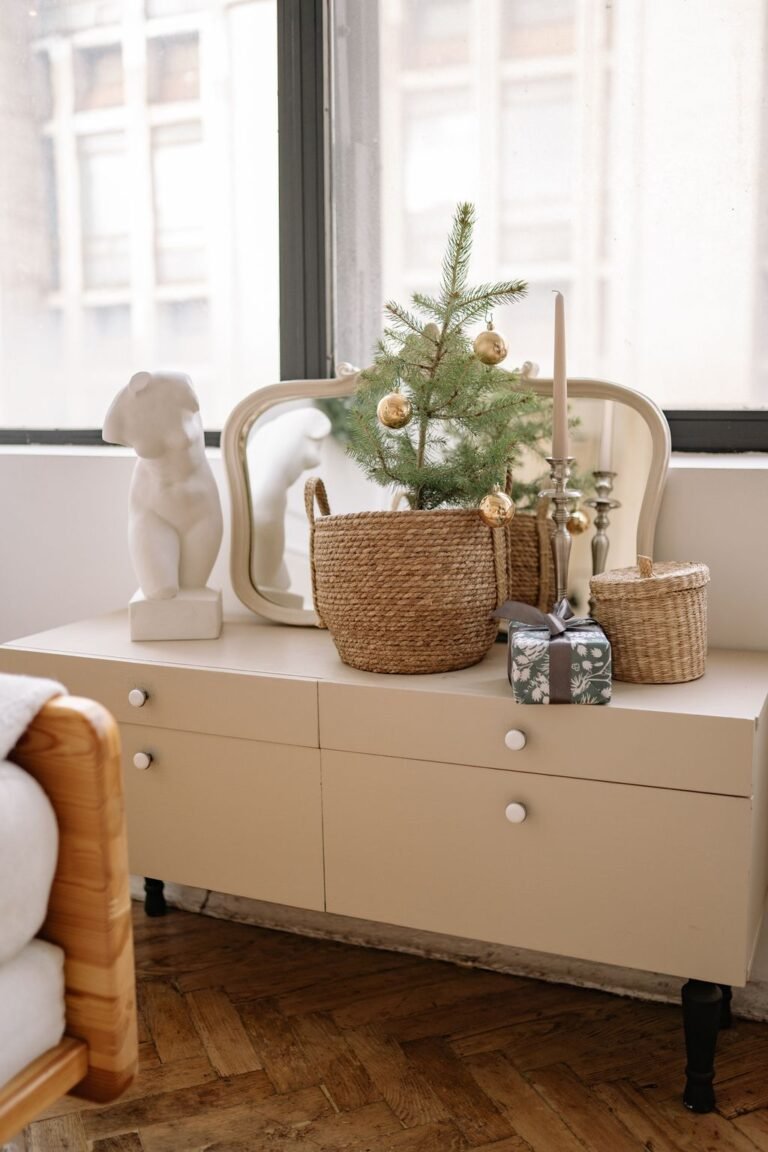
Baskets stop being clutter the moment they get a system, so give each one a label and a job. Group three baskets of different sizes in one corner: a tall one, about 40 to 60 centimetres high, for throws and extra cushions; a medium one for scarves, hats and gloves; and a shallow one on a shelf for chargers and small items. Choose natural materials such as seagrass, rattan or cotton rope, which suit the season and breathe better than plastic, and look for baskets with handles so you can lift them out to vacuum underneath. Label them with small wooden tags or a chalk label, especially if you share the room, because a basket that holds everything quickly holds nothing you can find. Keep each basket about 5 centimetres from the wall so air circulates, and empty them completely once a month to stop the bottom layer from becoming a forgotten pile.

15. Copper and Brass Hardware
Swapping the hardware on a dresser or nightstand is the cheapest way to make old furniture look new, and autumn is the season for warm metals. Measure the distance between the screw holes on each drawer, usually 64 or 96 millimetres, and buy knobs or pulls to match, mixing copper pulls on the dresser with brass knobs on the nightstands for a collected look rather than a matched set. Remove one old knob at a time, fit the new one with the screw supplied, and tighten it by hand so you do not crack the drawer front. Keep the metal to two or three pieces per room so the shine stays intentional, and wipe the hardware monthly with a soft, dry cloth, since fingerprints show fast on polished metal. If a screw is too long, add a small washer behind the knob instead of forcing it, which can split the wood.

16. Pinecone and Acorn Decor
Pinecones and acorns are free, they last for years, and they are the most honest autumn decoration a bedroom can have. Gather them on a dry day, bake them at a low oven temperature for about 20 minutes to kill any insects, then let them cool completely before you display them. Fill a shallow wooden bowl or a glass hurricane vase with a mix of pinecones, acorns and a few dried leaves, and set it on the dresser or nightstand where it can be seen but not knocked over. Scatter a few single pinecones along a shelf or a windowsill, or tie three together with twine and hang them from a hook beside the bed. Keep them out of reach of the bed itself, since the scales can scratch bedding, and refresh the display each autumn by swapping in a few new cones you gathered that year.

17. Canopy Bed Draping
A canopy feels different in autumn than in summer, because the fabric itself can change with the season. Swap light summer voile for a slightly heavier sheer in a warm tone, such as soft cream or pale rust, which glows in the evening light without blocking it. If you have a four-poster bed, drape the panels from the top rails and tie them back at the head end with a simple fabric tie, leaving the front open so the bed stays easy to make. Without a poster bed, mount a slim ceiling track above the headboard and hang two panels that fall either side of the bed. Choose a washable fabric, since canopy panels collect dust, and keep the drop at floor length so the fabric does not trail where you walk. Wash the panels at the start of the season and again when you swap them back in spring.

18. A Tray for Hot Beverages
The tray itself is the idea here, because a good tray turns a mug into a ritual instead of a spill waiting to happen. Choose a wooden or metal tray about 30 by 40 centimetres with raised edges and handles, large enough for a teapot and a cup or two mugs, and small enough to sit on the nightstand without crowding the lamp. Keep it in one permanent home, either on the nightstand or on a small stool beside the bed, and restock it each evening: a clean cup, a tea bag or two, and a small spoon. Line the tray with a folded linen napkin, which stops cups from sliding and catches drips, and wipe the tray down each morning so tea rings never set. A tray with handles is worth the extra cost, because you can carry the whole setup to the kitchen in one trip instead of juggling a hot mug and a book.

19. Upholstered Headboard
An upholstered headboard softens the whole room and gives you something comfortable to lean against on long autumn evenings, but the details decide whether it works. Choose a headboard that is 120 to 140 centimetres tall for a queen bed, so it reads as a feature rather than a cushion, and pick a durable fabric in a warm neutral, such as beige, oatmeal or soft grey, with a tight weave that resists stains. Tufted or channelled designs add texture and hide wear, while a plain panel is easier to vacuum. Mount it to the bed frame or the wall with the brackets supplied, checking that it is level and that the screws bite into a stud or a solid anchor, not just plasterboard. Vacuum the fabric weekly with an upholstery attachment, and treat spills immediately with a damp cloth, since fabric headboards mark easily if liquid is left to dry.

20. Dimmable Smart Lighting
Smart lighting lets you change the whole mood of the bedroom without getting out of bed, which is exactly what autumn evenings call for. Fit dimmable smart bulbs in the bedside lamps and the ceiling light, and set up two or three scenes: a bright one for making the bed in the morning, a warm one at about 30 percent brightness for reading, and a very low one for winding down. A timer that fades the lights over 30 minutes before bedtime helps the room feel like it is settling with you. Keep the colour temperature warm, around 2200 to 2700K, for every evening scene, and avoid cool white after dark, which feels like an office. For more ideas on keeping the whole home warm and comfortable, see our fall living room ideas. If a full smart system feels like too much, a single plug-in dimmer on the main lamp gives you most of the benefit for a fraction of the effort.

21. Plaid or Tartan Accents
Plaid is the pattern that says autumn more clearly than any other, and a little of it goes a long way. Use one plaid element as the statement, such as a throw folded across the foot of the bed or a single cushion, and keep the rest of the bedding plain so the pattern has room to breathe. Choose a classic tartan in red, green or brown on a cream ground, and avoid mixing two different plaids in the same room, because the patterns compete. A plaid throw about 130 by 170 centimetres works on the bed and doubles as a lap blanket in the reading nook, while plaid curtains or a plaid cushion cover are smaller commitments. Wash plaid wool-blend throws on a cold, gentle cycle and air-dry them flat, since heat shrinks wool and blurs the pattern, and fold the throw neatly when it is not in use so the lines of the check stay crisp.

22. Floating Wood Shelves
Floating shelves give you a place for the small autumn things that make a bedroom feel personal, and installing them well is half the job. Mount two shelves, each about 60 to 90 centimetres long and 20 centimetres deep, on the wall beside the bed, fixing the brackets into studs or solid wall anchors so each shelf can hold 5 to 10 kilograms safely. Style them with a clear rule: one tall object, such as a vase of dried stems, one stack of two or three books, and one small object, such as a candle or a mini pumpkin, per shelf, leaving at least a third of the shelf empty so the display breathes. Keep the heaviest items nearest the wall and the lightest at the front, dust the shelves weekly, and take everything down once a season to wipe the surface and rethink the arrangement. A shelf that holds only what you love is decoration; a shelf that holds everything is a cupboard without a door.

23. A Foot-of-the-Bed Bench
A bench at the foot of the bed is the piece that finishes the room, and it earns its place by doing three jobs at once. Choose a bench about 100 to 120 centimetres long and 40 to 45 centimetres high, roughly two thirds the width of the bed, so it looks proportional and leaves a clear path around it. A bench with a lift-up lid or drawers hides extra throws and out-of-season bedding, while an open bench with a cushion is better for sitting while you put on shoes. Style it simply: a folded throw across one end and a small tray holding a candle or a book, and nothing else. Place it about 15 centimetres from the foot of the bed so the bedding does not catch on it, and check that it is stable on the rug, since a bench that rocks on a thick pile is a hazard in the dark.

A fall bedroom does not need to be finished all at once. It needs a warm bed, low light, a scent you love and one corner that feels like yours, whether that is a window seat, a tray of tea or a bench at the foot of the bed. Start with the idea that costs the least and takes the least time, such as a throw, a candle cluster or a swatch of paint, and let the room grow from there. By the time the first frost arrives, the bedroom will be the warmest room in the house, and the one you look forward to coming back to.





One Comment