
20 Fall Dining Room Ideas 2026 That Make Your Home Feel Cozy
As the golden light of autumn softens our days, the dining room becomes a cherished haven for warmth and meaningful connection. This space invites us to slow down and gather, transforming everyday meals into rituals of comfort against the cooling air outside. Creating a cozy atmosphere relies on layering sensory details like rich textures, warm lighting, and natural elements that ground the spirit. From plush textiles to earthy ceramics and ambient glows, simple updates can make your table feel like the heart of seasonal hospitality. These twenty ideas blend fresh 2026 trends with timeless comfort, ensuring your dining area feels both current and deeply welcoming for all. For a smaller, more intimate take on the same room, see our cozy fall dining room ideas, and for the room next door, our cozy fall kitchen decor ideas. Let these inspirations guide you toward a room where every shared meal celebrates the quiet beauty and abundance of the fall season.
1. Textured Boucle Chair Upholstery
Reupholster dining chairs in nubby boucle fabric in shades of oatmeal, rust, or charcoal to add immediate tactile warmth. The three-dimensional weave softens hard furniture lines and muffles sound for quieter conversations. This luxurious yet durable textile invites guests to linger longer over dessert and stories. Choose a bouclé with a tight, nubby pile — it hides crumbs better than a smooth fabric — and pick a colour that suits your table: oatmeal for a dark wood table, rust for a pale one, charcoal for a room that needs grounding. Reupholstering four to six chairs is a weekend project for a confident DIYer, or a fair price from a local upholsterer.

Protect bouclé from stains by spraying it with a fabric protector before first use, and vacuum the chairs monthly with an upholstery attachment to keep the pile fluffy. Blot spills immediately with a damp cloth — never rub, since rubbing pushes the stain into the loops. If a loop snags, tuck it back with a crochet hook rather than cutting it. A bouclé chair that is used daily earns its place at the table.
2. Layered Natural Fiber Rugs
Place a jute or sisal rug beneath the dining table topped with a smaller vintage-inspired wool rug for layered texture. The natural fiber base adds warmth underfoot, while the smaller wool rug on top defines the table zone and adds colour. Choose a jute rug about 8 by 10 feet for a six-seat table — it should extend at least 24 inches beyond the table on all sides so chairs stay on the rug when pulled out — then layer a 5 by 7 foot wool rug on top, centred under the table. A flat-weave jute rug is easier to clean than a thick pile, and the wool top layer can be lifted off for washing.

Use a rug pad under the jute rug so it does not slip on hard floors, and vacuum both rugs weekly — the jute sheds at first, so expect a few weeks of loose fibres. Blot spills on the wool rug immediately, and shake the jute rug outside once a month. If the rug is too large for the room, trim the jute layer rather than the wool one, since jute frays less. A layered rug also muffles sound, which makes dinner conversation easier.
3. Amber Glass Pendant Lights
Install pendant lights with amber-tinted glass shades above the table to cast a honeyed glow during evening meals. Amber glass turns ordinary light into a warm, golden wash that flatters food and faces alike. Hang two pendants over a 6-foot table or three over an 8-foot table, spaced 24 to 30 inches apart and 30 to 36 inches above the tabletop. Choose bulbs around 2700K for a warm glow, and put the pendants on a dimmer so you can lower the light for dinner and raise it for homework. For more shelf styling ideas that pair with warm lighting, see our fall kitchen shelf decor ideas.

Match the pendant finish to your other metals — brass shades with brass hardware, black cords with matte-black pulls — so the room feels pulled together. Clean amber glass shades with a microfiber cloth and a little vinegar water so they stay clear and the light stays warm. Replace bulbs in pairs so the colour stays consistent across the room. If you are renting, a plug-in pendant with a fabric cord can hang from a ceiling hook and still give the same warm look.
4. Hand-Thrown Ceramic Vases
Display stoneware vases in matte glazes of moss green, clay red, or speckled cream as centerpieces or sideboard accents. Hand-thrown vases have small irregularities — a slightly uneven rim, a thumbprint in the glaze — that make a table feel personal and handmade. Choose vases 8 to 12 inches tall for the table and 12 to 16 inches for the sideboard, and group two or three together with different heights so the cluster has a rhythm. A matte glaze reads more refined than a glossy one, and the earthy colours suit a fall palette without shouting about it.

Use the vases for dried stems, fresh branches, or nothing at all — an empty vase is still a beautiful object. Hand-wash hand-thrown vases to protect the glaze, and dry them upside down so water does not pool inside. If a vase chips, use it for dried flowers rather than water, since the chip can leak. Buy vases one at a time from local makers rather than a matched set, and let the collection grow over the years.
5. Velvet Curtain Panels
Hang floor-length velvet curtains in deep emerald, burgundy, or navy to frame windows and insulate the room. Velvet has a depth of colour that no other fabric matches, and its heavy drape keeps the room warmer as the nights cool. Choose panels that are 1.5 to 2 times the width of the window so they gather in full folds, and hang them from a rod mounted 4 to 6 inches above the window frame so the panels reach the floor. A deep emerald curtain suits a room with brass and wood, while burgundy warms a pale room. Line the curtains with a thermal lining for extra insulation.

Vacuum velvet curtains monthly with an upholstery attachment to keep dust from settling in the pile, and brush the fabric in one direction with a soft clothes brush to restore the nap. If a curtain stains, blot it immediately and take it to a dry cleaner rather than washing it at home. Tie the panels back with a simple fabric tie or a brass holdback during the day so light still enters, and let them fall full at night for warmth and privacy.
6. Carved Wooden Serving Board Centerpiece
Fill a long olive wood or acacia serving board with seasonal gourds, pinecones, or citrus fruits as a centrepiece. A carved wooden board is the dining room’s anchor — it grounds the table and gives the eye somewhere to rest. Choose a board 18 to 24 inches long with carved handles or a carved edge, and fill it with a mix of textures: a few mini pumpkins, a cluster of pinecones, a sprig of eucalyptus, and a small candle. Set the board down the centre of the table, leaving 12 inches of clear space at each end for plates and glasses. A darker walnut board looks striking on a white tablecloth, while pale acacia brightens a dark table.

Oil the board once a month with food-grade mineral oil to keep the wood from drying out and cracking, and never soak it — wash it quickly, dry it upright, and it will last for years. If you fill the board with gourds, put a folded tea towel underneath so the gourds do not scratch the wood. Rotate the board’s contents through the season: gourds in October, pinecones and cinnamon sticks in November, and a few sprigs of greenery when the first frost arrives.
7. Brass Candle Sconces
Mount wall sconces with brushed brass arms and fabric shades to provide layered ambient lighting. Sconces are the dining room’s secret weapon — they light the walls, not just the table, so the whole room glows. Mount two sconces on the main wall, about 60 inches from the floor and 5 to 6 feet apart, flanking a mirror or a framed print. Choose shades in cream or linen so the light diffuses softly, and put the sconces on a dimmer so you can lower them for dinner. A brass sconce suits a room with brass candle holders and gold cutlery, so the metals echo each other.

Dust the sconces monthly with a feather duster, and clean the shades with a lint roller. If you are renting or do not want to rewire, a plug-in sconce with a fabric cord can hang from a wall hook and still give the same warm look. Never mount a sconce directly above a candle or a heat source, and keep the shades at least 12 inches from any curtain. Replace bulbs in pairs so the colour stays consistent across the room.
8. Woven Jute Placemats with Fringed Edges
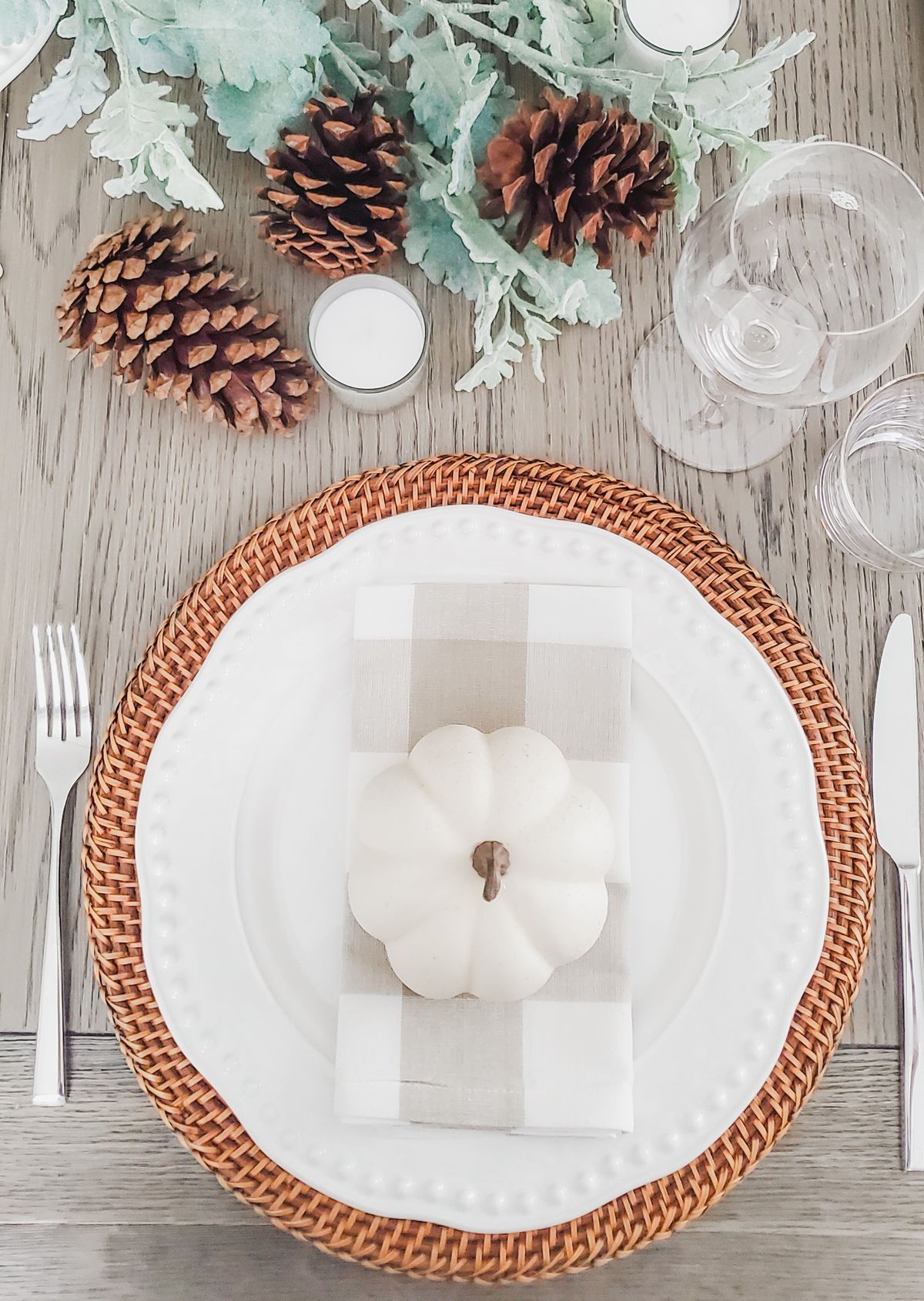
Set a round woven jute placemat with fringed edges under each plate for natural texture that protects the table. Jute is the dining room’s workhorse fibre — tough, cheap, and beautiful in its plainness — and a fringed edge adds a soft, handmade finish. Choose placemats about 15 inches across so they fit a dinner plate with 2 inches to spare, and set one at each place, centred on the chair. A natural jute colour suits any tablecloth, and the woven texture hides crumbs and drips. Layer the placemat over a tablecloth for extra texture, or use it on a bare wood table where it protects the surface.

Shake jute placemats outside after meals and spot-clean them with a damp cloth — never soak them, since jute swells and warps when wet. If a fringe frays, trim the loose threads with small scissors rather than pulling them. Store the placemats flat in a stack, and keep a spare set so you can swap them out while one set dries. A jute placemat also works as a trivet under a hot serving dish, so it earns its place even when the table is not set.
9. Vintage Enamelware Pitcher
Set a white enamelware pitcher with a coloured rim on the sideboard as a vase for dried flowers or a water jug for the table. Enamelware has a cheerful, old-fashioned feel, and a pitcher 1 to 2 quarts in size is large enough to hold a bunch of wheat or eucalyptus without tipping. A white pitcher with a rust or sage rim suits a fall table, and a small chip in the enamel only adds to its character. Use the pitcher for water at the table during the day, then move it back to the sideboard with dried stems in the evening — a piece that works twice earns its place.

Wash enamelware by hand with a soft sponge — a scouring pad scratches the surface and invites rust at the chips. Dry the pitcher immediately, and store it upside down so water does not pool inside. If a chip rusts, rub the spot with a paste of baking soda and water, then dry it well; the rust is cosmetic and the pitcher is still safe to use. Mix enamelware colours on the sideboard — a white pitcher beside a cream one looks collected, not mismatched.
10. Stone Cheese Board Display
Arrange a slate or marble cheese board with a selection of cheeses, crackers, and dried fruit as a pre-dinner display. A stone board is the dining room’s centrepiece before the meal even starts — it gives guests something to gather around while they wait. Choose a slate board about 12 by 16 inches, and arrange three cheeses in a triangle: a soft brie, a hard aged cheddar, and a blue cheese, with crackers, dried apricots, and a small bowl of olives filling the gaps. A dark slate board makes pale cheeses look striking, while a white marble board suits a darker table. Set the board in the centre of the table with a cheese knife for each cheese.

Take the cheeses out of the fridge an hour before serving so they reach room temperature and taste their best. Wash the stone board by hand with warm water and a mild soap — dishwashers can crack slate and dull marble — and dry it immediately to prevent water spots. Oil a slate board lightly with food-safe mineral oil once a season to keep it from drying out. A chipped slate board can still serve as a plant saucer or a candle base, so nothing goes to waste.
11. Vintage Landscape Prints in Wooden Frames
Hang vintage landscape prints in wooden frames on the wall behind the sideboard for a gallery feeling. Old landscape prints — rolling hills, autumn woods, a distant farmhouse — bring the outdoors in without a single leaf on the table. Choose frames 11 by 14 or 16 by 20 inches in a warm wood tone, and hang one large print on the main wall or a pair of smaller prints side by side, spaced 2 to 3 inches apart. Hang the centre of the print at eye level — about 57 to 60 inches from the floor — so it is seen from the table. A wooden frame suits a rustic room, while a gold frame adds formality.

Use a mat board inside the frame — a 1-inch cream mat makes even a simple print look considered — and clean the glass with a microfiber cloth so it stays clear. If you have real pressed leaves, frame them the same way: press leaves between the pages of a heavy book for a week, then mount them on cream paper. Rotate the prints with the seasons, and store the spares flat in a folder so they stay clean and unbent until their turn comes again.
12. Linen Napkin Rings
Slip a linen napkin through a wooden, brass, or woven napkin ring at each place setting for a polished finish. A napkin ring is a small detail that makes a table feel considered — it turns a folded napkin into a deliberate part of the setting. Choose rings about 2 inches across so they fit a rolled or folded napkin without crushing it, and match the ring material to your other metals: wooden rings with a wooden table, brass rings with brass candle holders, woven rings with a jute placemat. Roll the napkin loosely and slide the ring to the middle, then lay the napkin across the plate or beside the fork.

Wash linen napkins in cold water so the colours stay rich, and skip the fabric softener — it coats the fibres and makes linen less absorbent. Dry them on a low heat or hang them to dry, and press them lightly while they are still slightly damp for a crisp fold. If a napkin stains, soak it in cold water with a little white vinegar before washing. Keep a spare set of rings in the sideboard drawer so you can swap them out for different occasions.
13. Pewter Pitchers and Goblets
Set out pewter pitchers and goblets for a muted metallic accent that suits fall better than bright silver. Pewter has a soft, grey-silver glow that reads as old and honest, and a pitcher and a set of goblets on the sideboard add weight and history to the room. Choose a pitcher about 8 inches tall and four to six goblets, and set them on a wooden tray so they stay together. Pewter is an alloy of tin with small amounts of copper and antimony, and its soft lustre has made it a tableware metal for centuries. Use the pitcher for water at the table, and the goblets for wine or cider.

Hand-wash pewter with warm soapy water and dry it immediately — dishwashers dull the surface and can pit it. Polish pewter once a season with a soft cloth and a little pewter polish, or let it develop a soft patina if you prefer a more lived-in look. Never put pewter in the microwave, and do not store acidic foods in it for long periods. If a goblet dents, it still works fine — a dent in pewter is a sign of use, not damage.
14. Autumn Branch Arrangement with Bare Twigs
Stand bare branches with a few autumn leaves in a tall vase as a sculptural centrepiece. Bare twigs have a stark, graphic beauty that suits fall — they are the trees after the leaves fall, and they look honest on a table. Cut branches 18 to 24 inches long, strip the lower leaves, and stand five or six stems in a tall narrow vase about 10 inches high so they fan out without flopping. A clear glass vase shows the stems, while a ceramic vase keeps the focus on the branches. Tuck a few dried leaves or a sprig of berries between the twigs for colour.

Keep the arrangement where it will not block conversation — on a sideboard or at one end of the table, not in the centre where it blocks sightlines. If the branches are fresh, change the water every few days; if they are dried, they need no water at all. A light shake outside once a week removes dust. At the end of the season, compost the branches and keep the vase for next year. A branch arrangement also works in a hallway or an entryway, so it earns its place even after the season ends.
15. Handwritten Menu Cards for Each Place Setting
Write a small menu card for each place setting so guests know what is coming and feel cared for. A menu card is the dining room’s programme — it builds anticipation and shows that the meal was planned with love. Cut heavy card about 4 by 6 inches, write the menu in your best handwriting with a fine-tip pen, and lean the card against a glass or lay it across the plate. List three or four courses with their main ingredients, and add a small note at the bottom — a welcome, a toast, or the date. Make one card per guest, and write them the day before so the ink dries and you are not rushing before dinner.

Keep the cards simple — a menu is enough, no titles or decorations — and use the same pen and paper for every card so the set looks matched. If handwriting is not your strength, use a simple serif font and print the menus, then cut the cards by hand; the personal part is the menu, not the penmanship. Save the cards after dinner as keepsakes of the evening, or let guests take them home. For a children’s table, write the menu in large letters and add a small drawing.
16. Faux Fur Throw Over Dining Chairs
Drape a faux fur throw over the back of each dining chair for instant luxury and warmth. Faux fur is the dining room’s most indulgent texture — it looks expensive, feels soft, and adds a layer of comfort that makes guests settle in. Choose throws about 50 by 60 inches in cream, grey, or a warm brown, and fold each one in half lengthways before draping it over the chair back so it hangs evenly on both sides. A cream throw brightens a dark room, while a warm brown grounds a pale one. Keep one throw per chair, or drape them on the two host chairs only, so the room does not look cluttered.

Wash faux fur throws in cold water on a gentle cycle, or hand-wash them in the sink, and dry them flat so they keep their shape. Keep a spare throw in the linen closet so you can swap it out on wash day without leaving the chairs bare. If the fur starts to mat, brush it gently with a soft brush to restore the pile. Fold the throw neatly when guests arrive if you prefer a tidier look — a folded throw over one end of a bench still adds warmth without looking thrown-on.
17. Cinnamon and Clove Potpourri Bowls
Fill a shallow bowl with dried cinnamon sticks, whole cloves, dried orange slices, and star anise for a potpourri that scents the room without a flame. Potpourri is the dining room’s quiet fragrance — it works all day without a candle or a plug. Mix two cups of dried botanicals in a wooden or ceramic bowl about 8 inches across, and set the bowl in the centre of the sideboard or at one end of the table. Add a few drops of cinnamon or clove essential oil to refresh the scent, and stir the bowl weekly so the fragrance stays strong. The classic potpourri is a mix of dried flowers, spices, and essential oils, and its gentle scent suits a room where food is served.

Keep the potpourri bowl away from open flames, since dried botanicals catch fire easily, and dust it with a soft brush once a month. To refresh the scent, add a few drops of essential oil and stir the mix — the scent lasts for weeks. Replace the potpourri each season, since the fragrance fades over time. If you have allergies in the household, keep the bowl on a high shelf where it is seen but not handled, or use a lidded jar with holes in the top so the scent escapes slowly.
18. Stacked Cookbook and Candle Display on the Sideboard
Stack three to five cookbooks on the sideboard and top the stack with a candle or a small vase for a display that is both decorative and useful. A stack of cookbooks is the sideboard’s story — it shows what you cook and what you love. Choose books with warm-coloured spines — rust, mustard, deep green — and stack them largest at the bottom, smallest on top, so the stack is stable. Top the stack with a pillar candle in a glass hurricane or a small vase of dried stems, and keep the books you actually cook from on the lowest shelf where you can pull them down. A stack 8 to 10 inches tall fits under most shelf gaps.

Protect the books from steam and grease by keeping the stack away from the stove, and dust the top book weekly so the covers stay clean. If a spine is loose, a strip of bookbinding tape on the inside hinge holds it together without showing. Never leave a lit candle unattended on a stack of books — use a battery-operated candle if you want the glow without the risk. Rotate the stack through the season — a baking book on top in October, a soup book on top in November — and let the top book be the one you are actually cooking from that week.
19. Solid Rust Tablecloth with Tasseled Edges
Cover the table with a solid rust tablecloth with tasseled edges for a bold, warm foundation that needs little else. A solid rust cloth is the dining room’s warmest layer — it turns the whole table into a fall statement in one move. Choose a cloth that hangs 8 to 10 inches over each side — a 60 by 84 inch cloth fits most six-seat tables — and look for a woven edge with tassels about 2 inches long. A rust cloth suits cream or white plates and clear glassware, and the solid colour lets the centrepiece be the star. Pre-wash the cloth before first use so it softens and shrinks to its true size.

Keep the rust cloth from overwhelming the room by pairing it with plain dishes and simple glassware. White plates and clear glasses let the tablecloth be the star, and a small vase of dried grasses adds height without competing. Shake the cloth outside after meals and wash it in cold water so the colour stays rich. If the cloth is too long, fold the extra length under rather than cutting it — you can reuse it on a larger table later. A rust cloth also works as a throw over a sideboard, so it earns its place even after the season ends.
20. Dried Orange Slice Place Markers
Use a dried orange slice as a place marker at each setting, with the guest’s name written on a small tag tied to the slice. A dried orange slice is the dining room’s most charming place marker — it is beautiful, fragrant, and costs almost nothing. Slice oranges about 1/4 inch thick, dry them in a low oven at 200 degrees Fahrenheit for 2 to 3 hours until they are crisp, and let them cool completely. Thread twine through a small hole in the slice, tie on a kraft tag with the guest’s name, and lay one slice across each plate or lean it against a glass. Make one slice per guest, and dry a few spares in case one breaks.

Keep the dried slices in an airtight jar so they stay crisp, and make them no more than a week before the dinner so they are fresh. If a slice softens, dry it again in a low oven for 30 minutes. Guests can take the slice home as a keepsake, or hang it on a Christmas tree later in the year. For a children’s table, let the kids decorate their own slices with a cinnamon stick tied alongside. A dried orange slice also works as a gift tag on a wrapped present, so it earns its place even after the dinner ends.
Nurturing Connection Through Seasonal Warmth
Transforming your dining room for fall is a gentle process of layering textures, colours, and natural elements that resonate with the season’s essence. Start with one or two ideas that fit your table and your budget, live with them for a week, and add more only where the room still feels bare. A boucle chair, a cluster of amber pendants, and a bowl of potpourri can change the whole mood of a room without a renovation. Carry the same warmth into the living room with our fall living room decor ideas, where layered textiles and soft light make the season feel like a retreat.




One Comment