
17 Cozy Fall Kitchen Decor Ideas 2026 for a Warm Home
As the golden hues of autumn settle in, our kitchens naturally become the heart of seasonal gathering and comforting culinary traditions. This space transforms from a mere cooking area into a warm sanctuary where spices simmer and memories are baked into every dish. Embracing fall decor here means blending practical functionality with aesthetic warmth to create an inviting atmosphere for family and friends. From rich textures to earthy palettes and natural elements, small thoughtful updates can make your kitchen feel deeply connected to the season. The same cozy approach works throughout the home — see our fall bathroom decor ideas for a spa-like autumn refresh, and our fall living room decor ideas for the room where everyone gathers after dinner. These ideas focus on accessible changes that enhance comfort without sacrificing style or daily usability in this high-traffic area of your home. Let these inspirations guide you toward creating a kitchen that feels like a cozy embrace during the crisp days and cool evenings ahead.
1. Layered Linen Textiles
Drape linen tea towels and table runners in muted rust, sage, or oatmeal tones over countertops and dining surfaces. The natural fiber’s soft drape adds tactile warmth and absorbs spills gracefully while aging beautifully with use. Start with a runner that measures about 60 inches long for a standard six-seat table, letting 10 to 12 inches hang over each end. Layer a shorter, patterned runner across the width for a collected look, or fold a linen tea towel over the oven handle and another beside the sink. Mixing patterns like stripes and checks creates visual depth without overwhelming the space, especially when you keep the palette to two or three muted fall tones. Pre-wash linen before first use so it softens and shrinks to its true size, and choose a medium-weight weave that holds a fold instead of slipping off smooth counters.

Rotate your linens with the season rather than buying a whole new set each year. A rust runner in September can move to the sideboard in October, swapped for a deeper plum or charcoal weave. Keep a spare stack of folded napkins in a basket on the counter so guests can grab one without opening a drawer. When the fabric wrinkles, embrace it — linen’s soft creases are part of its charm — or press it lightly with a steam iron on a low setting for a crisper look.
2. Wooden Cutting Board Displays
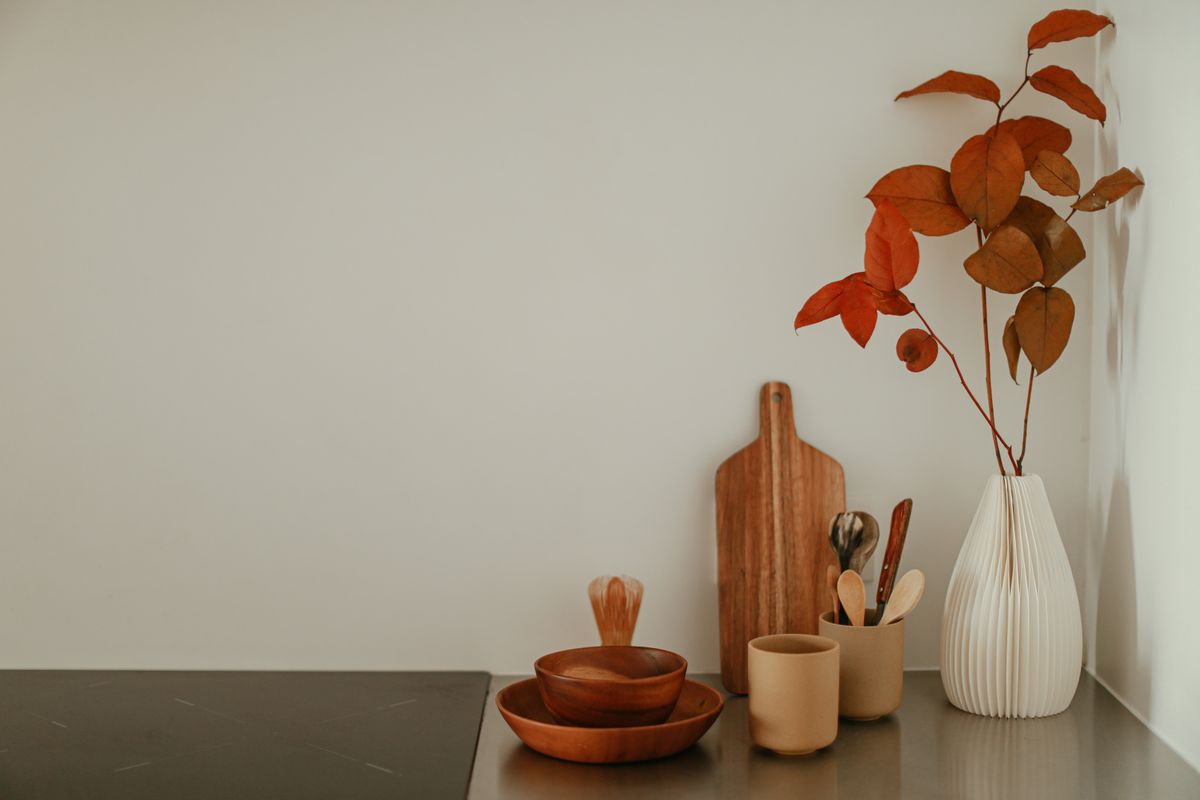
Lean oversized walnut or maple cutting boards against the backsplash as functional art. Their organic shapes and warm grain bring instant texture to a plain wall, and they stay within reach for everyday prep. Choose boards in three sizes — roughly 12 by 18 inches, 10 by 14 inches, and a small 8 by 10 inch board — and lean them in a row with the tallest at the back. A darker walnut board looks striking against white tile, while pale maple brightens a dark backsplash. Keep boards you actually cook with separate from purely decorative ones, and stand them on a folded tea towel so they do not slide on the counter.

Group boards with other wooden pieces for a collected shelf moment. A wooden spoon crock, a small olive-wood bowl, and a linen towel folded over the edge of the counter tie the display together without looking staged. Oil food-safe boards once a month with a food-grade mineral oil to keep the grain rich and prevent cracking. Never soak wooden boards — wash them quickly, dry them upright, and they will last for years while looking better with age.
3. Amber Glass Storage Jars
Store pantry staples like flour, sugar, or pasta in amber glass jars with cork or metal lids. The warm amber tone filters light, which helps keep dry goods fresher longer, and the uniform jars turn a cluttered pantry shelf into a tidy display. Use 32-ounce jars for flour and sugar, 16-ounce jars for oats and rice, and small 8-ounce jars for spices and dried herbs. Label each jar with a chalkboard tag or a simple paper label tied with twine so you can see at a glance what needs restocking. The classic Mason jar shape works well here, and amber glass versions give the same practical seal with a warmer fall look.

Place the jars where you actually cook. A row of amber jars on an open shelf beside the stove keeps flour and sugar within arm’s reach while you bake, and the amber glow reads as decor rather than clutter. Keep them out of direct sunlight and away from the heat of the oven to protect the contents. Wash jars in warm soapy water and dry them completely before refilling, and replace cork lids once a year if they start to crumble. A funnel makes refilling mess-free, and a small scoop inside each jar saves you from hunting for measuring cups.
4. Dried Botanical Centerpieces
Arrange wheat stalks, dried lavender, or preserved oak branches in a stoneware vase on the island or dining table. Dried botanicals bring the outdoors in without the upkeep of fresh flowers, and they last the whole season. Choose a vase 8 to 10 inches tall with a narrow neck so the stems stand upright without flopping. Trim wheat stalks to about 18 inches and fan five or six stems in different directions for a full, natural shape. Mix one main element — wheat or oak branches — with a smaller accent like lavender sprigs or dried grasses so the arrangement has layers instead of looking flat.

Place the arrangement where it will not block conversation or cooking. On a dining table, keep it under 14 inches tall so guests can see each other across it; on a kitchen island, push it to one end so the center stays clear for prep. Keep dried botanicals away from the stove and sink, since steam and heat make them brittle and can cause shedding. A light shake outside once a week removes dust, and a quick spritz of hairspray helps hold delicate seed heads in place.
5. Oil-Rubbed Bronze Cabinet Hardware
Swap cabinet knobs and drawer pulls for oil-rubbed bronze or matte-black finishes. Warm dark metals catch the light softly and make white or cream cabinets feel richer and more grounded for fall. Before you buy, measure the distance between the two screw holes on your existing pulls — most kitchens use a 3-inch or 3.75-inch center-to-center spacing — and match it so you do not need to drill new holes. Knobs work best on doors, while bar pulls suit wide drawers; a typical kitchen needs 20 to 30 pieces, so count every door and drawer before ordering. Keep one old knob in your pocket while shopping so you can compare the finish in person.

Install the new hardware with a simple screwdriver and a small level, working one cabinet at a time so you do not mix up screw lengths. Tighten screws until snug — over-tightening can crack a cabinet door or strip the hole. If a screw is too long, add a small washer behind the pull rather than forcing it. Wipe oil-rubbed bronze with a soft dry cloth; harsh cleaners can strip the dark finish and reveal bright brass underneath. Store the old hardware in a labeled bag in case you want to switch back in spring.
6. Scented Simmer Pots
Place a decorative enamel or cast iron pot on the stove filled with cinnamon sticks, orange slices, and cloves. As the water simmers, the scent fills the kitchen with a warm, spicy fragrance that no candle can quite match. Fill the pot with about 2 cups of water, add three or four cinnamon sticks, a sliced orange, a tablespoon of whole cloves, and a few star anise if you have them. Bring it to a gentle boil, then turn the heat to low so it barely simmers. Top up the water every hour so the pot never boils dry, and never leave a simmering pot unattended.

Set the pot on the back burner where it is out of the way of cooking, and keep the handle turned inward for safety. A small cast iron pot holds heat evenly and looks beautiful on the stove, while an enamel pot is lighter and easier to pour. When you are done, let the mixture cool, strain it, and store it in a jar in the fridge — you can reheat the same blend once or twice before the scent fades. For a quicker version, simmer the same ingredients in a slow cooker on low with the lid slightly ajar.
7. Woven Basket Organization
Use seagrass or rattan baskets to corral produce, snacks, or cleaning supplies under islands or on open shelves. Baskets hide visual clutter while adding natural texture, and they make it easy to pull out a whole category at once. Choose baskets about 12 by 8 inches for pantry shelves and larger 16 by 12 inch baskets for under-island storage. Keep produce in open-weave baskets so air circulates and onions and potatoes stay dry, and use lidded baskets for cleaning supplies you want out of sight. Label each basket with a small wooden tag so everyone in the household knows where things belong.

Place heavier baskets on lower shelves and lighter ones up high, and leave a few inches of space around each basket so you can lift it out without dragging. Line the bottom of produce baskets with a folded tea towel to catch crumbs and moisture. Wipe seagrass with a dry cloth — water can stain it — and air baskets out once a month to prevent musty smells. If a basket starts to fray, a dab of clear craft glue on the loose end stops it from unraveling further.
8. Plaid Tablecloths
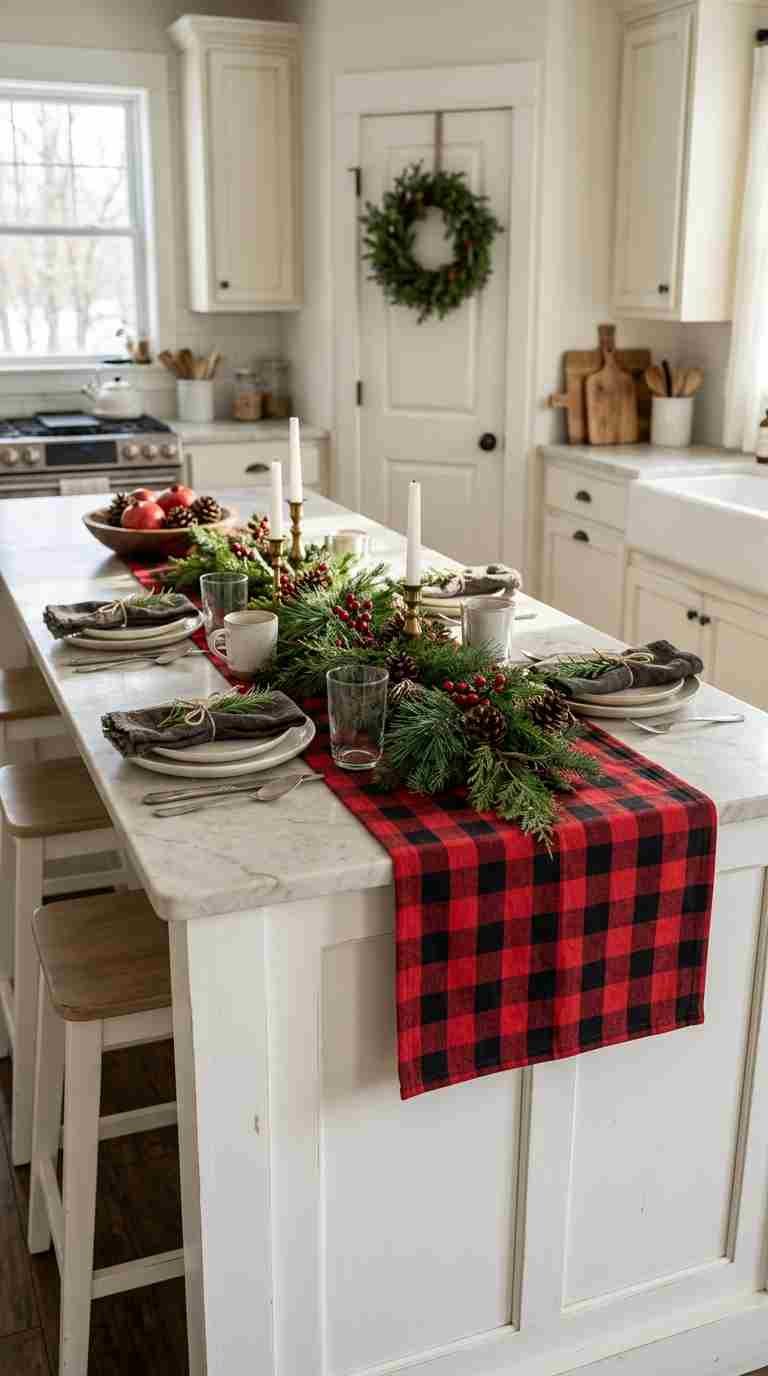
Cover the dining table with a cotton or flannel plaid tablecloth in red, brown, or green tones. The classic check instantly signals fall and protects the tabletop from hot dishes and spills. Measure your table first, then choose a cloth that hangs 8 to 10 inches over each side — a 60 by 84 inch cloth fits most six-seat tables. Cotton plaid is easy to wash and works for everyday meals, while flannel feels warmer and suits weekend dinners. Layer a solid runner down the center to break up the pattern, and add matching napkins in a solid color pulled from the plaid.

Keep the plaid from overwhelming the room by pairing it with plain dishes and simple glassware. White plates and clear glasses let the tablecloth be the star, and a small vase of dried grasses adds height without competing. Shake the cloth outside after meals and wash it in cold water so the colors stay bright. If the cloth is too long, fold the extra length under rather than cutting it — you can reuse it on a larger table later.
9. Ceramic Pumpkin Accents
Display hand-thrown ceramic pumpkins in matte glazes of terracotta, cream, or moss green on windowsills, open shelves, and the dining table. Their soft, rounded shapes and muted colors bring fall to the kitchen without the orange overload of plastic decor. Group them in odd numbers — three or five — and mix sizes from 3 inches to 8 inches tall so the cluster feels natural. Place the largest pumpkin at the back and smaller ones in front, leaving a few inches between pieces so each one is visible. A matte glaze reads more refined than a glossy one, and the handmade feel suits a kitchen that is actually used.

Move the pumpkins around as the season goes on. A trio on the windowsill in September can shift to the dining table centerpiece in October, paired with a linen runner and a few dried leaves. Keep ceramic pumpkins at least 6 inches from the stove and oven, since sudden heat can crack the glaze. Dust them with a soft brush rather than a damp cloth, and store them wrapped in tissue paper in a sturdy box when the season ends so they survive until next fall.
10. Vintage-Inspired Lighting
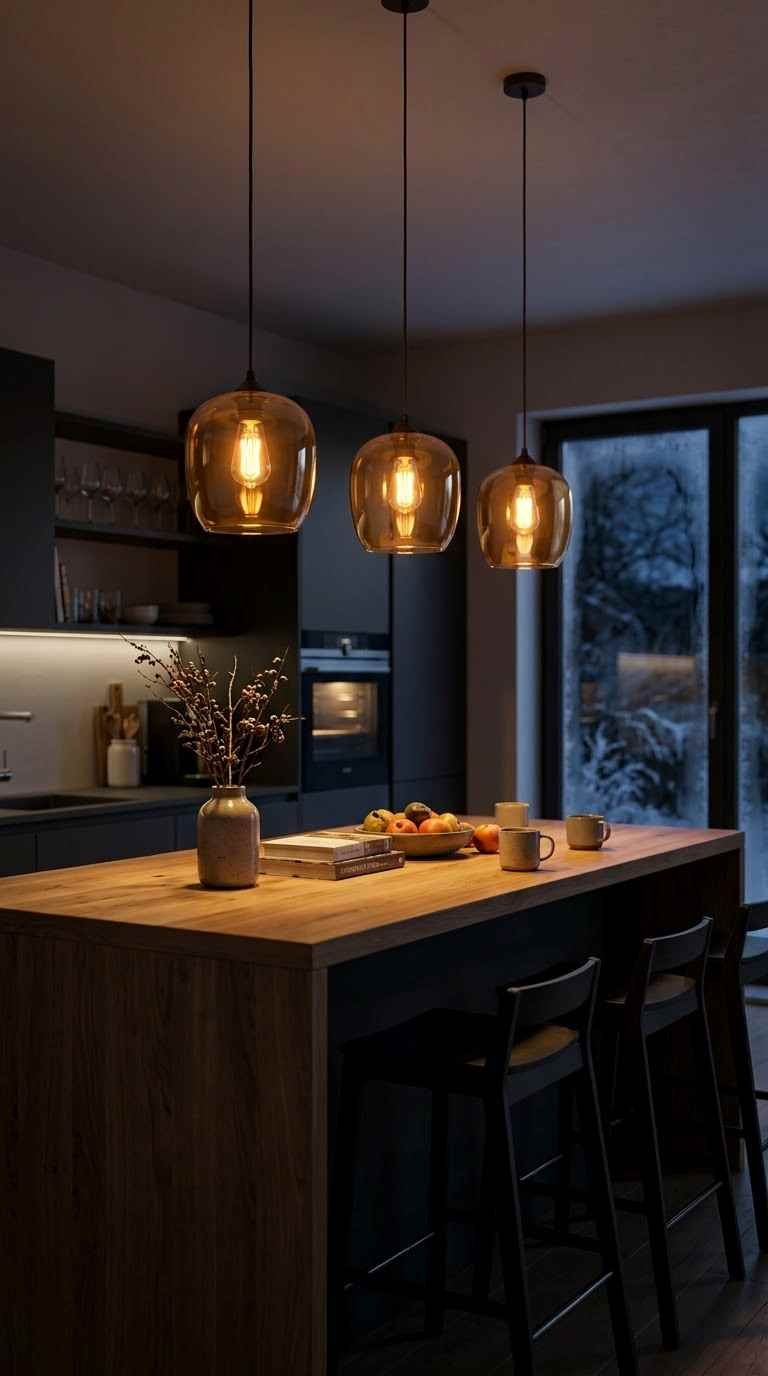
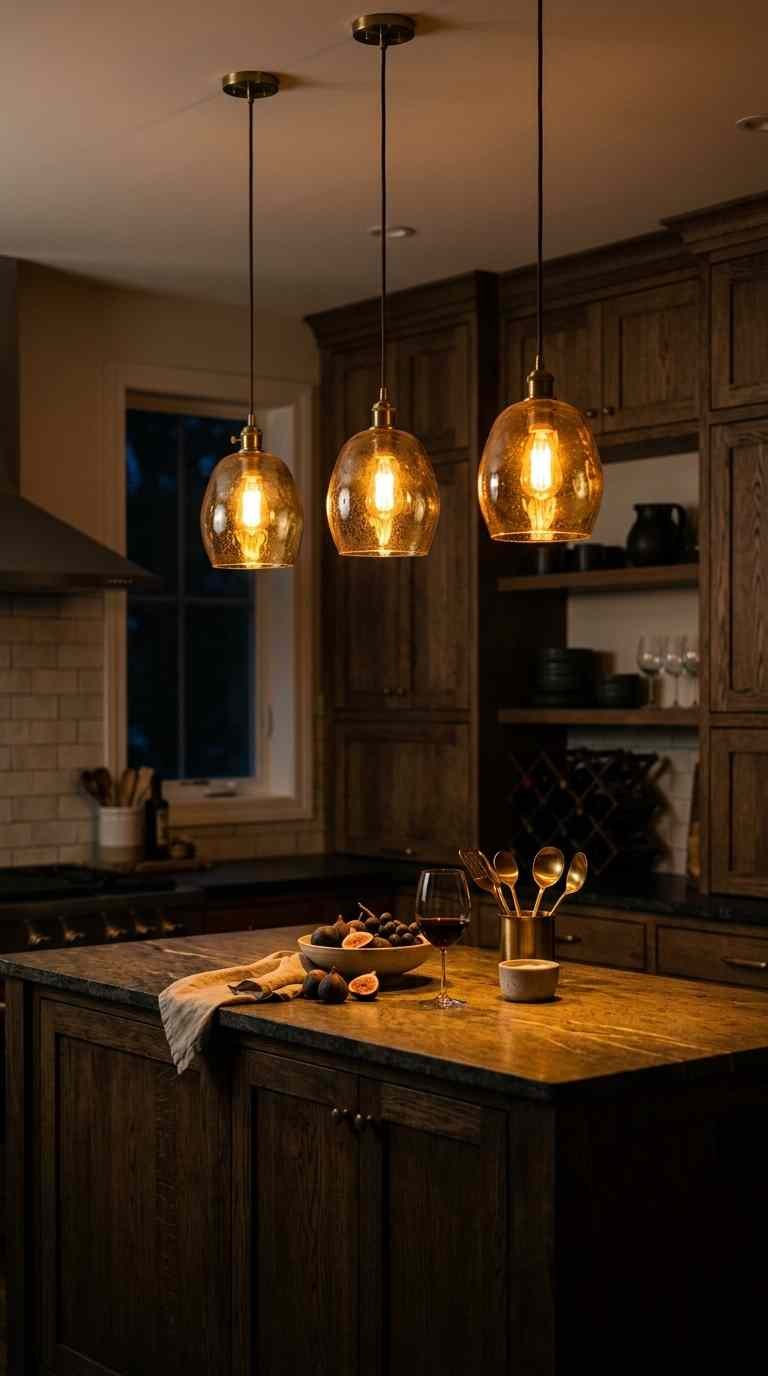
Install pendant lights with amber glass shades or fabric-covered cords over key work zones. Warm-toned lighting makes the whole kitchen feel cozier after dark and flatters wood and stone surfaces. Hang pendants 30 to 36 inches above the island or table so they light the work surface without blocking sightlines. Choose bulbs around 2700K for a warm glow, and put the pendants on a dimmer so you can lower the light for dinner and raise it for prep. Two pendants suit a 6-foot island; three work better on an 8-foot island, spaced about 24 to 30 inches apart.

Match the pendant finish to your other metals — brass shades with brass hardware, black cords with matte-black pulls — so the room feels pulled together. If you are renting or do not want to rewire, a plug-in pendant with a fabric cord can hang from a ceiling hook and still give the same warm look. Clean amber glass shades with a microfiber cloth and a little vinegar water so they stay clear and the light stays warm. Replace bulbs in pairs so the color stays consistent across the room.
11. Stone Serving Ware
Incorporate slate cheese boards, marble rolling pins, or granite mortar and pestles into daily use as both tools and decor. Stone has a cool, substantial feel that balances the warmth of wood and textiles in a fall kitchen. A slate board about 12 by 16 inches works for cheese and charcuterie, and it doubles as a trivet for hot pots. Keep a marble rolling pin on the counter in a wooden holder, and set a granite mortar and pestle beside the stove where you can crush spices while you cook. The grey and cream tones of natural stone sit quietly with any fall palette.

Wash stone pieces by hand with warm water and a mild soap — dishwashers can crack slate and dull marble. Dry them immediately to prevent water spots, and oil a slate board lightly with food-safe mineral oil once a season to keep it from drying out. Store boards upright in a rack or leaning against the backsplash so they stay visible and easy to grab. A chipped slate board can still serve as a plant saucer or a candle base, so nothing goes to waste.
12. Herb Drying Bundles
Hang bundles of rosemary, thyme, or sage from ceiling beams or wall hooks to dry naturally. Fresh herbs double as decor while they dry, and the dried leaves season your cooking all winter. Tie each bundle with twine around stems about 1 inch in diameter — any thicker and the center stays damp and can mold. Hang them upside down in a dry, ventilated spot away from the stove, and let them dry for two to three weeks until the leaves crumble easily. A wall-mounted rail with S-hooks keeps bundles at eye level and within reach.

Once dry, strip the leaves into small glass jars and label them with the herb name and the month. Store the jars in a dark cupboard, since light fades both color and flavor. Use dried rosemary in roast potatoes, thyme in soups, and sage in stuffing — a teaspoon of home-dried herbs goes further than store-bought, so start with half the amount a recipe calls for. Keep a few fresh sprigs in a small vase on the windowsill for garnishing, and replace the hanging bundles every few months.
13. Chunky Knit Seat Cushions
Add thick cable-knit cushions to barstools or bench seating in cream or charcoal wool blends. Soft textiles on hard seating make the kitchen a place where people linger over coffee instead of perching for a minute and leaving. Choose cushions about 16 by 16 inches with ties that loop around the stool legs so they stay in place. A chunky cable knit in cream brightens a dark kitchen, while charcoal grounds a pale one. Look for removable covers you can wash, since kitchen cushions pick up crumbs and spills faster than living room ones.

Keep a spare set of covers in the linen closet so you can swap them out on wash day without leaving the stools bare. Fluff the cushions weekly and turn them over so they wear evenly. If the knit starts to pill, a fabric shaver restores the surface in a few minutes. For bench seating, a long bolster-style cushion in the same knit ties the whole bench together, and a folded throw over one end adds another layer of warmth.
14. Maple Leaf Motifs
Integrate subtle maple leaf designs through embroidered napkins, printed tiles, or carved wooden spoons. Maple leaves are the most recognizable symbol of fall, and a small repeated motif ties a kitchen together without turning it into a theme park. Start with one item — a set of four embroidered napkins or a single printed tile set into the backsplash — and let it be the only leaf pattern in the room. Pair it with solid colors pulled from the leaves themselves: rust, gold, and deep green. A wooden spoon with a carved leaf handle hung beside the stove is a quiet nod that guests notice up close.

Use maple leaves in the kitchen’s food too. Leaf-shaped cookie cutters turn shortbread and pie crust into seasonal treats, and a single real maple leaf pressed under a glass cloche on the sideboard makes a simple, free decoration. Press leaves between the pages of a heavy book for a week, then frame them or use them as place cards. Keep the motif to one zone — napkins at the table, for example — so the kitchen feels autumnal rather than decorated for a party.
15. Dark Wood Floating Shelves
Install floating shelves in espresso or mahogany tones to display seasonal ceramics and cookbooks. Rich dark wood against a light wall creates depth, and open shelves keep your favorite pieces visible instead of hidden behind cabinet doors. Choose shelves 24 to 36 inches long and about 10 inches deep, mounted into wall studs so they can hold real weight — a shelf of ceramic bowls and cookbooks can weigh 20 pounds or more. Hang two shelves 12 to 14 inches apart so tall vases and stacked bowls fit between them. For more shelf styling ideas, see our fall kitchen shelf decor ideas.

Style the shelves with a mix of heights and materials: a stack of bowls, a small plant, a row of cookbooks with a candle on top. Leave some empty space — a shelf packed edge to edge reads as storage, not decor. Wipe dark wood shelves with a damp cloth and a drop of wood cleaner, and check the brackets once a season to make sure nothing has loosened. If you are not sure where the studs are, a small stud finder costs little and saves you from a shelf full of ceramics crashing down.
16. Copper Cookware Accents
Display copper pots, kettles, or measuring cups on open racks or stove-side hooks. The metal’s warm rose-gold glow is made for fall, and hanging cookware frees up cabinet space for things you use less often. Hang two or three pieces you actually cook with — a saucepan, a small kettle, a set of measuring cups — on a wall-mounted rail with S-hooks, keeping them within arm’s reach of the stove. Space the hooks about 6 inches apart so the pieces do not clatter together. Copper looks best against a dark wall or a tiled backsplash, where the contrast makes the warm metal stand out.

Keep copper bright with a quick polish of lemon juice and salt rubbed on with a soft cloth, then rinsed and dried. Do it once a month, or let the copper develop a soft patina if you prefer a more lived-in look — either is fine, just be consistent across all your pieces. Store lids separately on a small rack so they do not scratch the pots. If a pot is too heavy to hang safely, set it on the stove or on a shelf instead; a falling copper pot can dent a countertop and hurt a foot.
17. Personalized Recipe Boards
Frame handwritten family recipes or favorite fall baking instructions on reclaimed wood boards. These personal pieces turn a kitchen into a story, and they cost almost nothing to make. Copy a recipe onto heavy paper in your best handwriting, or print a scanned original, and mount it in an 11 by 14 inch frame or on a reclaimed wood board with clips. Hang it near the stove at eye level — about 60 inches from the floor — where you can read it while you cook. A board with a small ledge at the bottom holds the recipe card upright and lets you swap it for a new one each month.

Choose recipes that mean something: a grandmother’s apple pie, the soup you make every October, the bread recipe your kids ask for. Write the date and the cook’s name at the bottom so the board becomes a keepsake. Seal the paper behind glass or a clear acrylic sheet to protect it from steam and splashes. If handwriting is not your strength, use a simple serif font and print it — the personal part is the recipe itself, not the penmanship. Rotate the board with the seasons and keep old cards in a box as a family archive.
Cultivating Comfort Through Seasonal Rituals
Transforming your kitchen for fall is ultimately about nurturing connection — to food, to loved ones, and to the slower rhythm of the season. Start with one or two ideas that fit your space and your budget, live with them for a week, and add more only where the room still feels bare. A linen runner, a simmering pot, and a shelf of dark wood can change the whole mood of a kitchen without a renovation. Carry the same warmth into the next room with our cozy fall dining room ideas, where the table you set becomes the center of every autumn gathering.



5 Comments